2026 Endless Mountains AR: The Southshires
22 June 2026
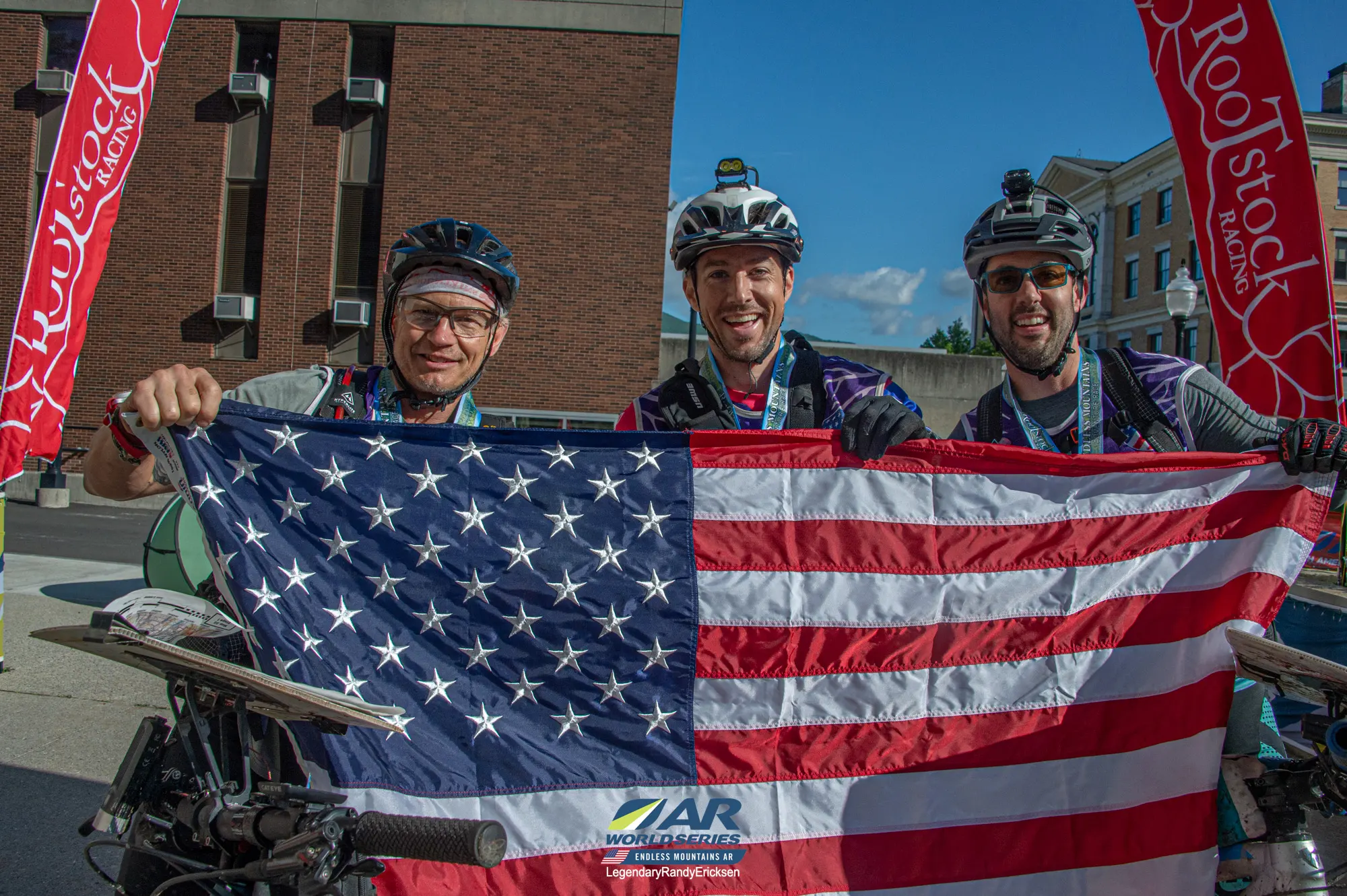
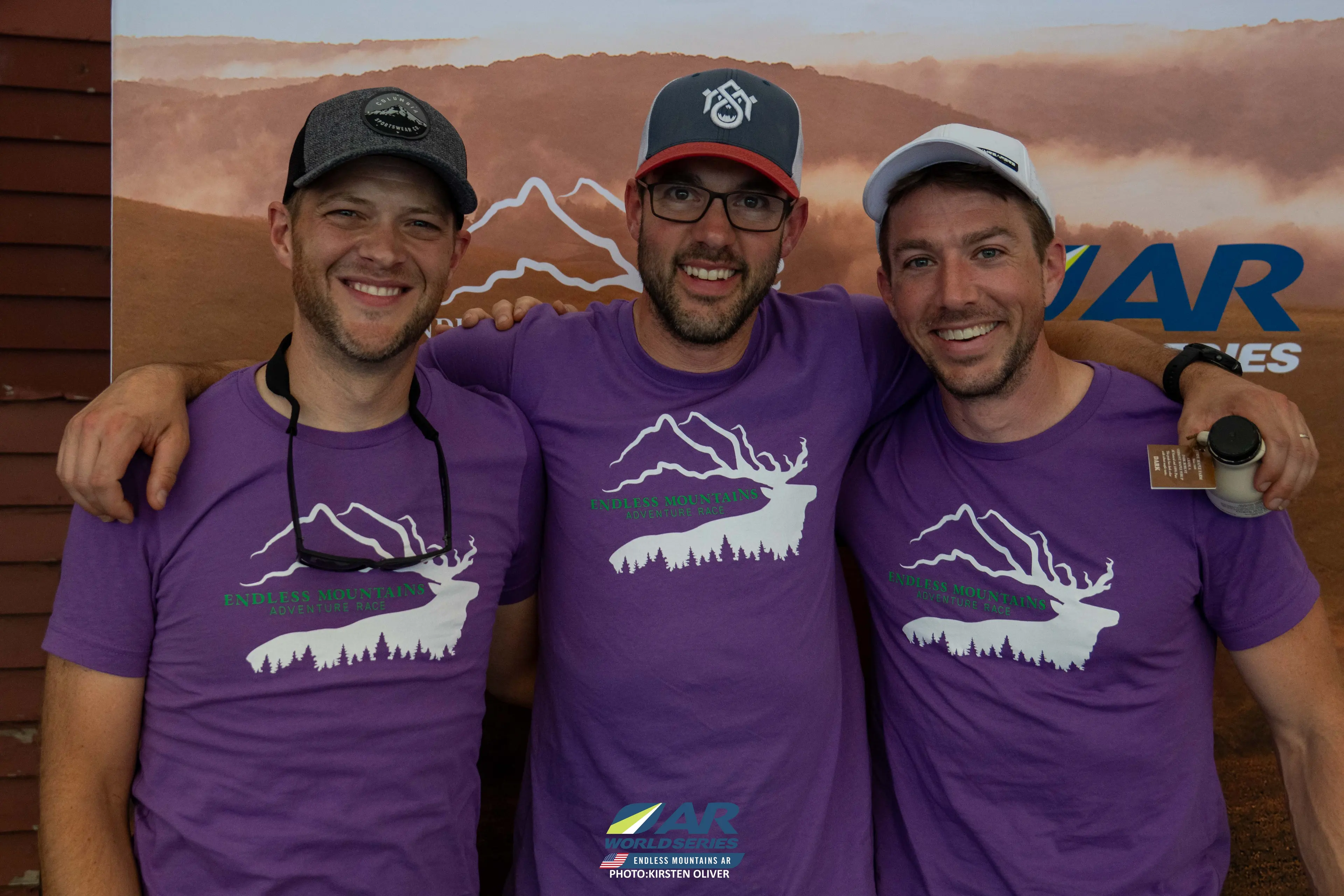
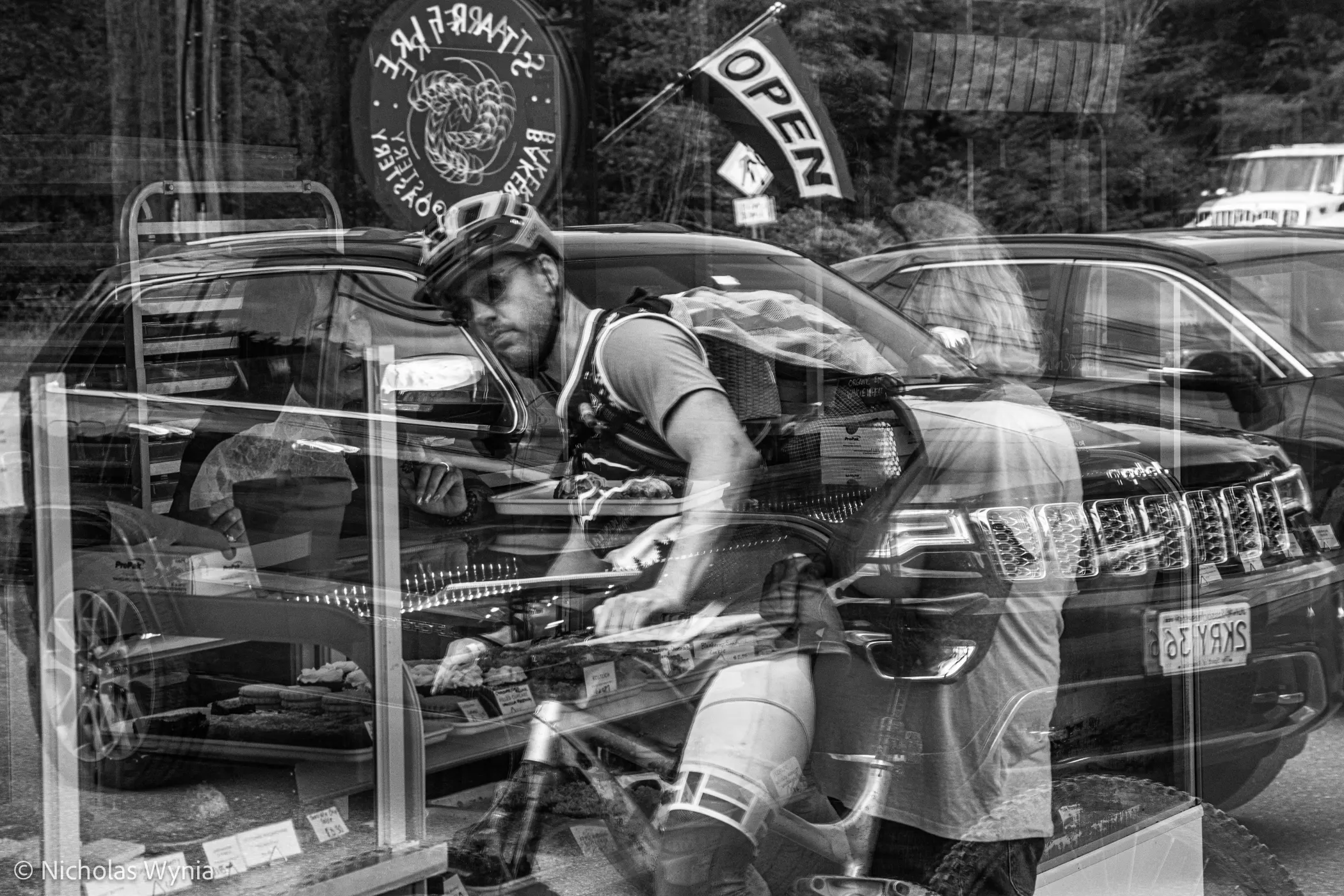
At the finish line of the 2025 seven-day race, we joked that we’d finally earned ourselves a year off. Then Brent got up at awards and announced Endless Mountains was coming back to Vermont in 2026. We looked at each other, laughed, and started planning. When I ran into Abby a few months later at the GMARA Bitter Pill, she brought it up again just to make sure. Don’t worry, we told her. We’ll be there.
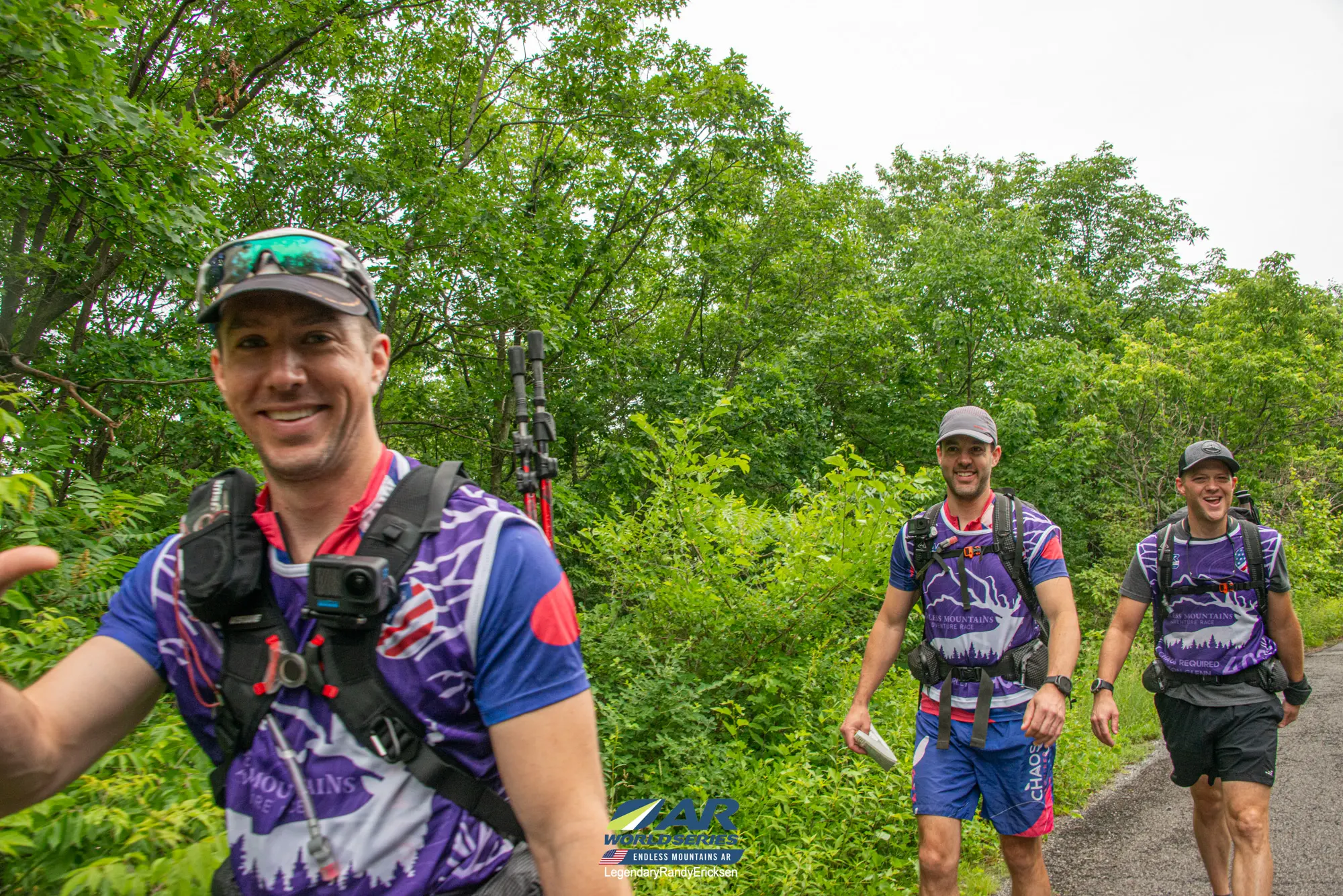
We ended up “there” as basically three different races stitched into one: a full three-person squad to start, then just JP and me after Jason’s leg pulled him out of the race and into a Vermont hospital bed, then a three-person Northern Chaos once we picked up Steve from Team NorthStar at TA5. All three versions of that team hit their mandatories, nailed their navigation, and pushed hard right to the line, which is the short version of how we ended up unlisted on the scoreboard and inside the top ten anyway.
Event Video
Course Resources
Three Instead of Four
The second registration opened, I messaged our crew: Ryan, Jason, JP, and me. Turned out Ryan had just gone through some pretty gnarly knee surgery, so our usual fourth was out before we’d even really gotten going. Jason was on board instantly. We reached out to a couple other friends who’d raced Chaos Required events with us before, but a multi-day commitment like this is a big ask, and totally understandably nobody else could commit on short notice. So it was going to be the three of us: me, JP, and Jason, all with a full six months to get ready this time around, a real luxury compared to the six weeks Jason had to scramble through the year before.
The venue helped. Endless Mountains was only a few hours from home again, starting this time in North Adams, Massachusetts, with the course looping up through New York and Vermont before dropping back down. Five days instead of seven. We felt a little better mentally about that, even if none of us had done any real bike-raft prep and we were more than a little nervous about what that discipline was going to throw at us.
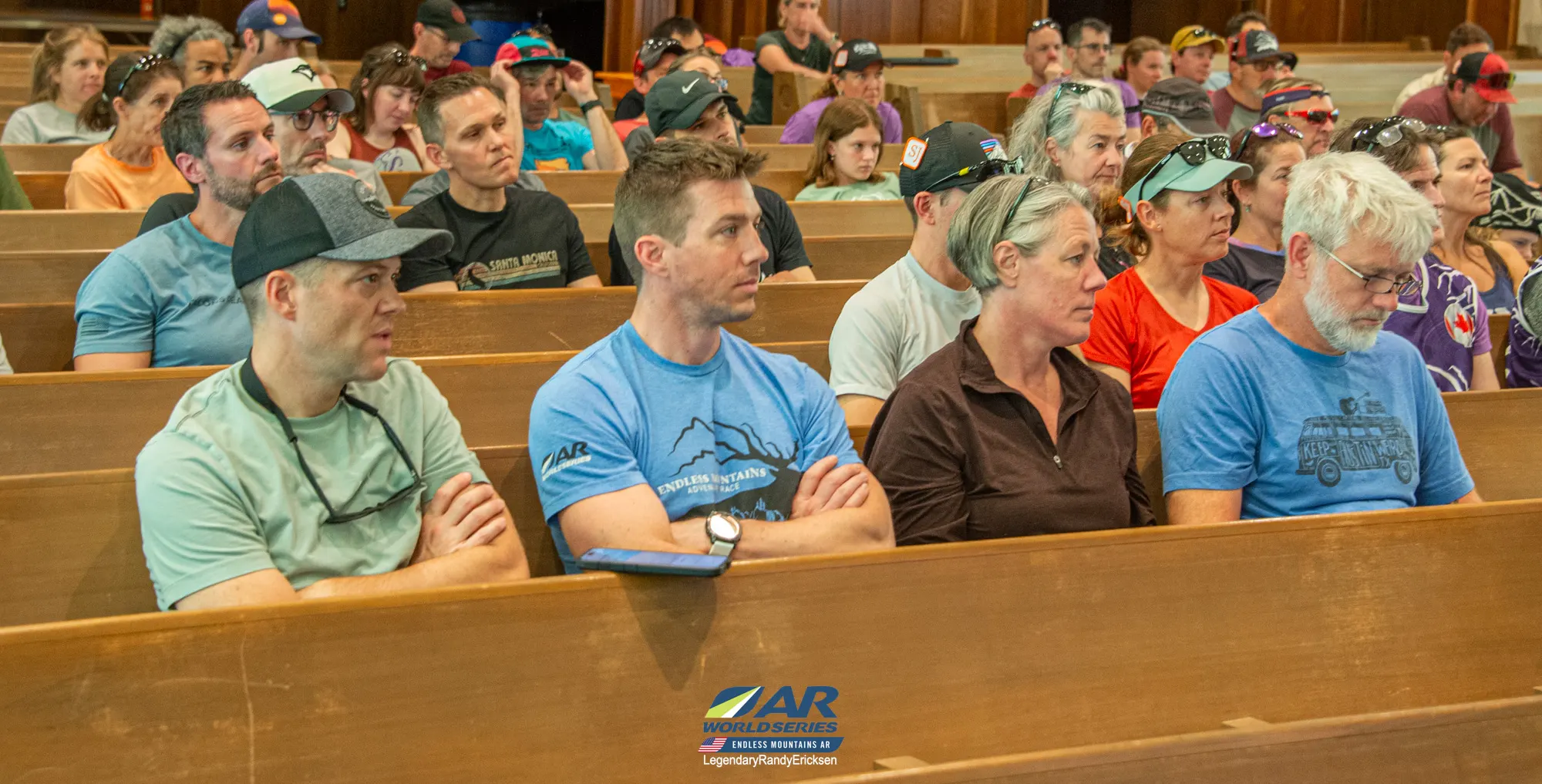
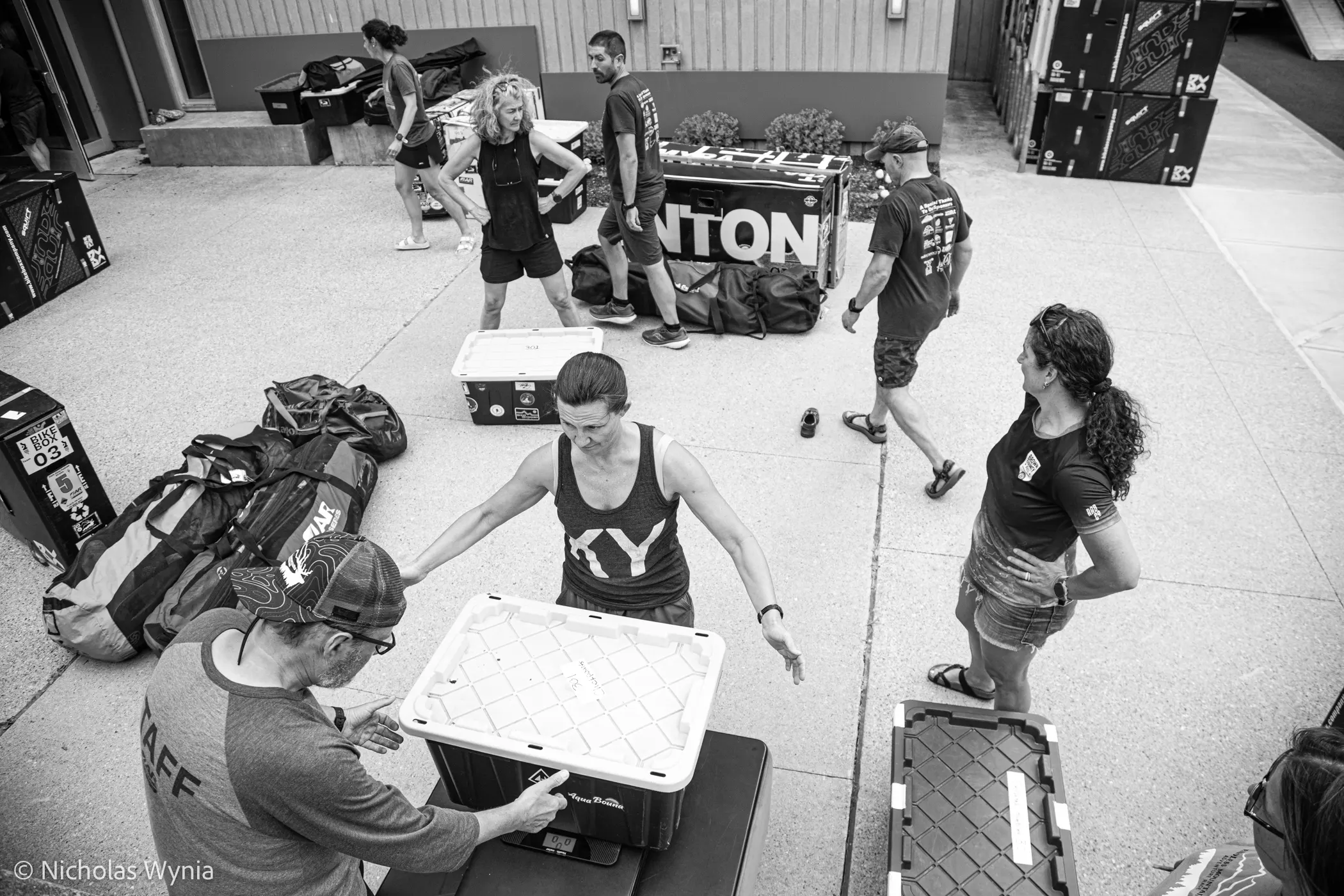
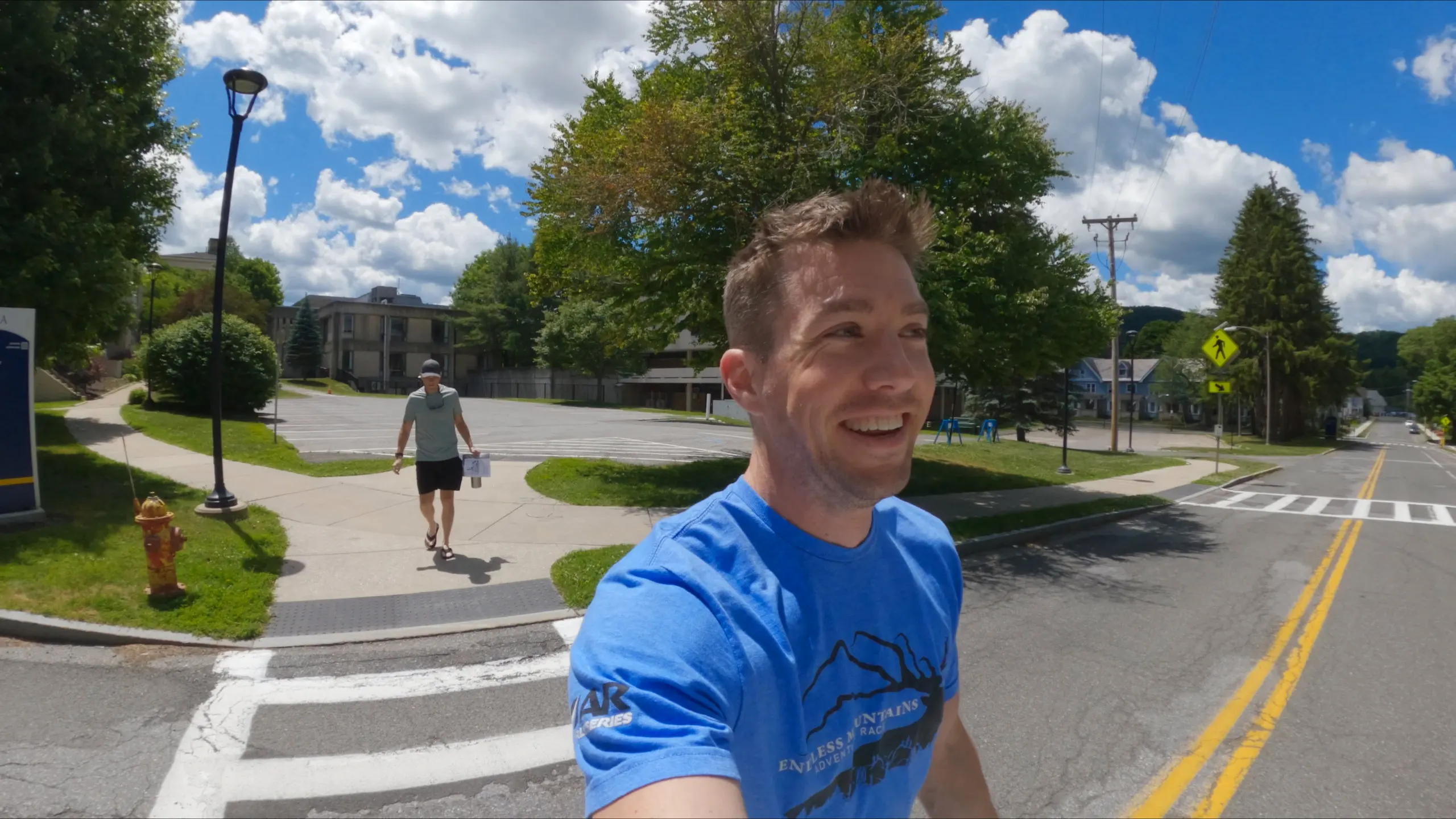
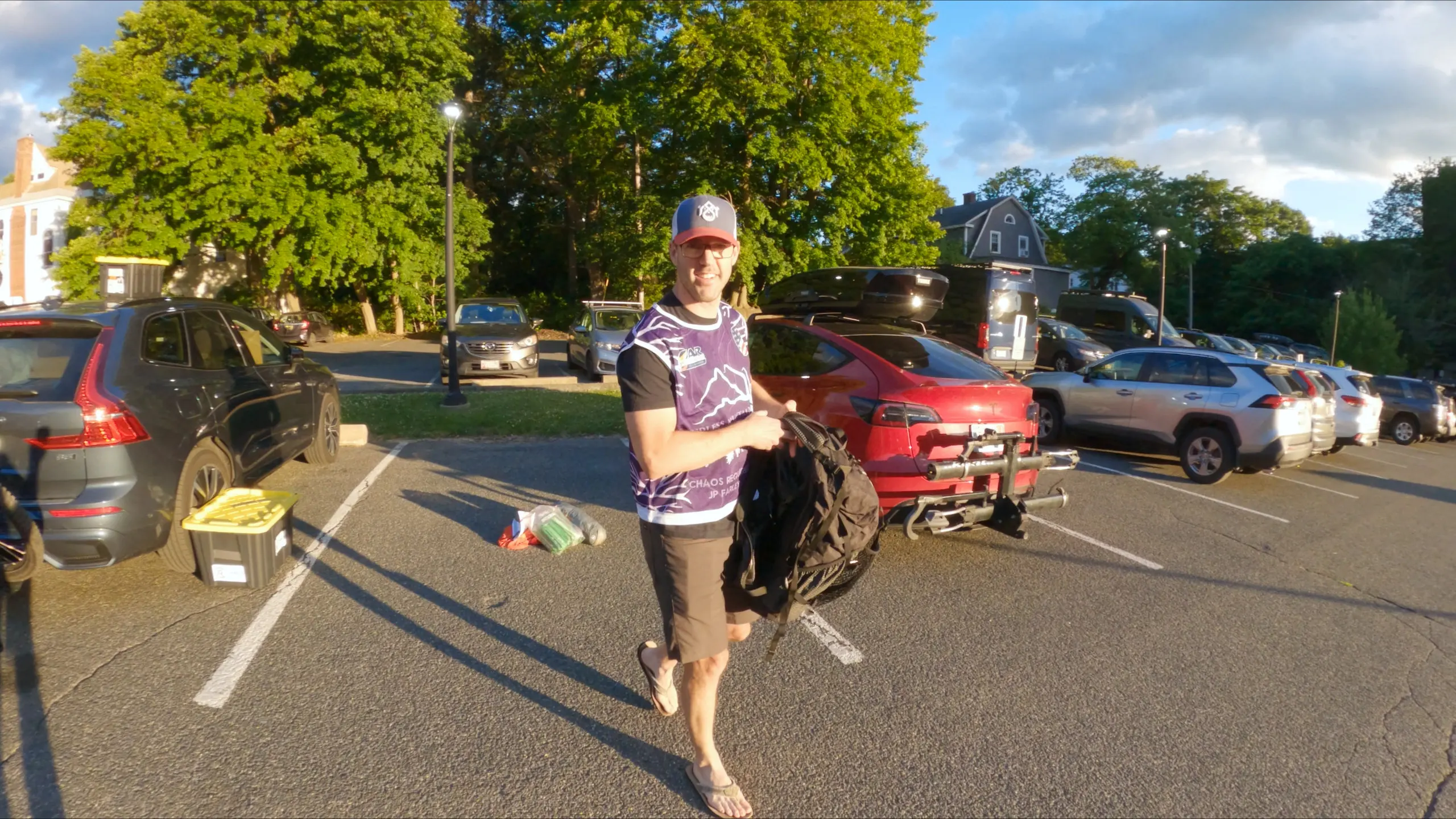
Jason flew up from Missouri, and I drove down to Connecticut Saturday morning to grab him. Everything went smoothly, which we counted as a small win since JP hit a deer and totaled his car on the drive out last year, and nobody wanted a repeat. JP got in a little later, so the two of us checked in, started laying out gear, and waited for him to join us for dinner. We started packing that night and it was, hands down, the fastest and most confident any of us had ever felt getting ready for one of these. I was running a new USWE pack this year, smaller than what I’d used in years past, and somehow everything fit with room to spare. After enough of these races between the three of us, a couple dozen combined at this point, you learn how to pack.
Of course we still needed one hiccup before the start, and JP delivered: watching me load my headlamp into my bin, he suddenly realized his own headlamp and all its batteries were still sitting at home. JP met his wife Colleen halfway while the rest of us held down camp, an hour and a half drive each way for him, which beat the alternative of driving all the way home and back. Saturday night we ate at the brewpub that would end up hosting the post-race party. Sunday night was a much fancier Italian spot we were nowhere near dressed for, sitting at the bar while the bartender told us she hoped not to see us in the missing persons reports later that week. We hoped so too.
Prologue: A Long Expected Party
Mount Defiance, Ticonderoga: Day 0, Hour 0
4.8 mile run
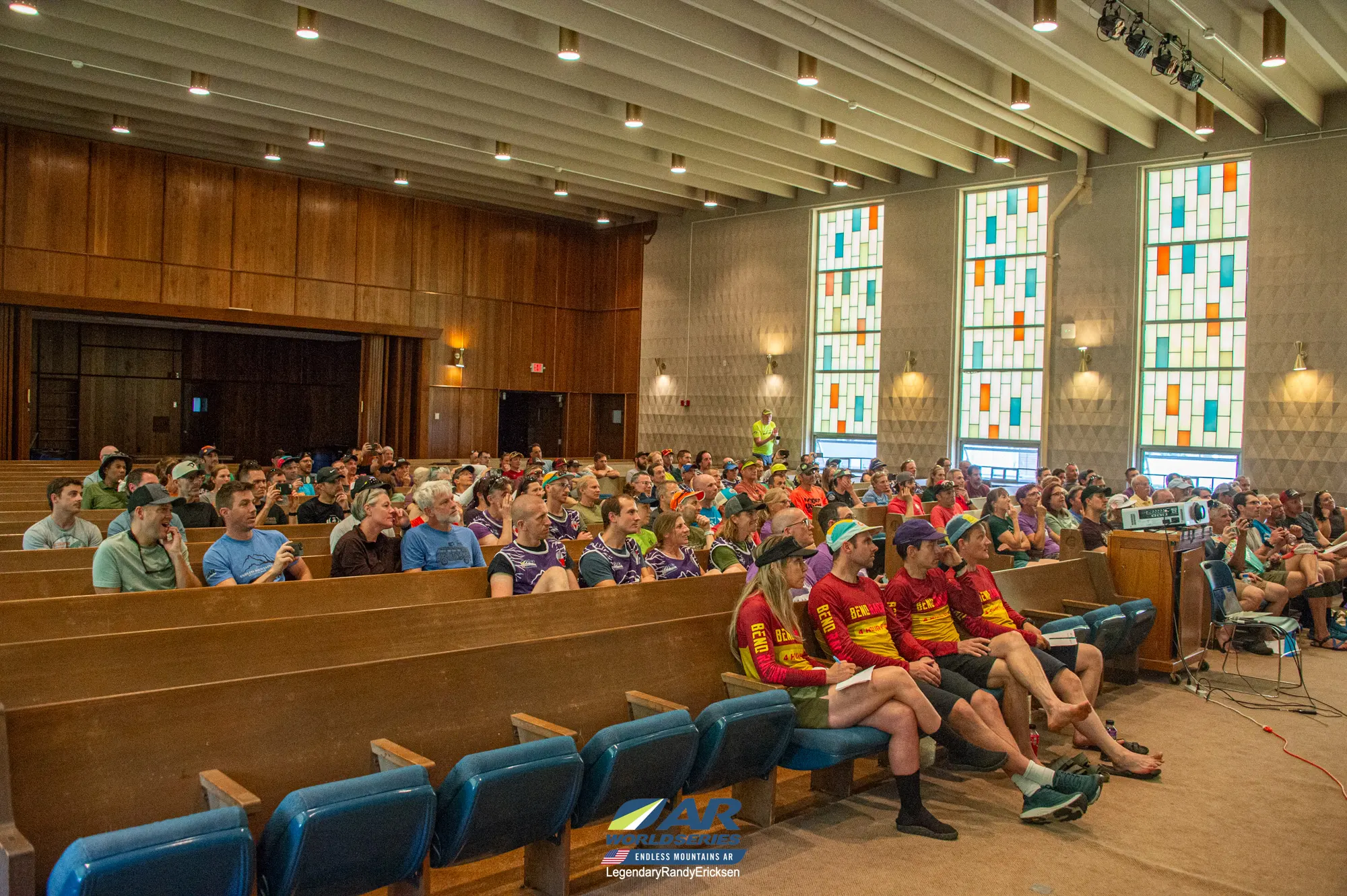
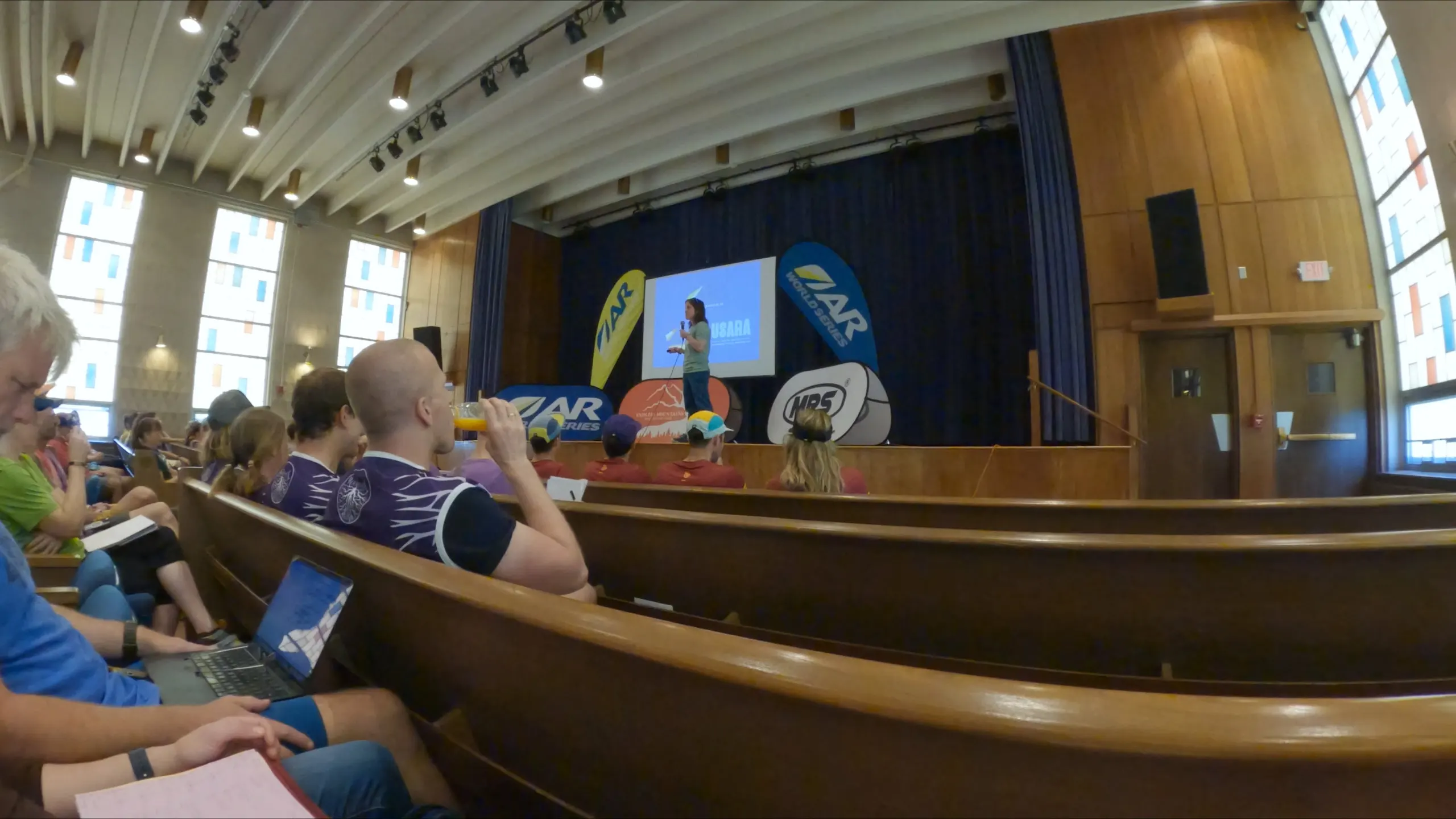
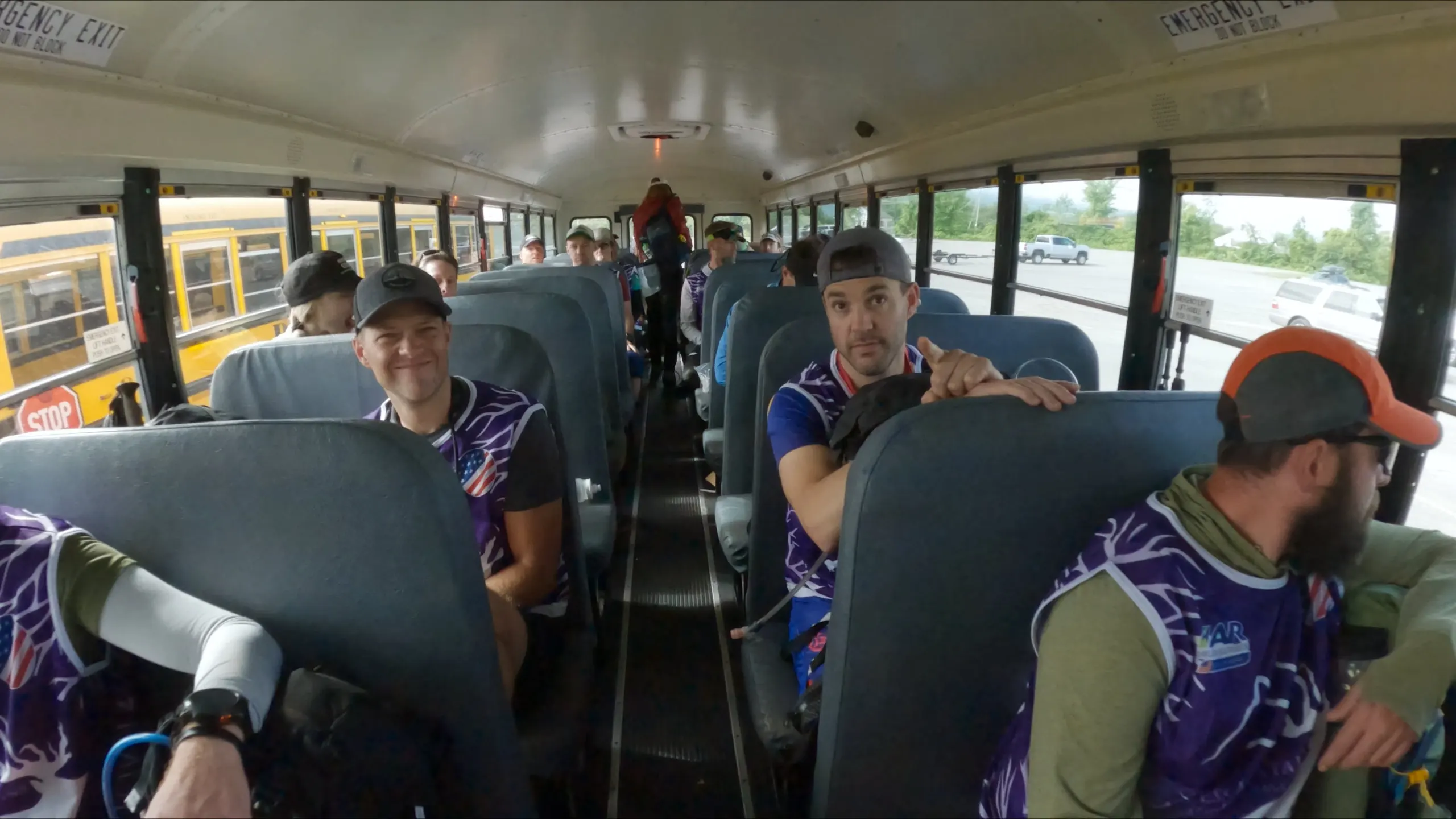
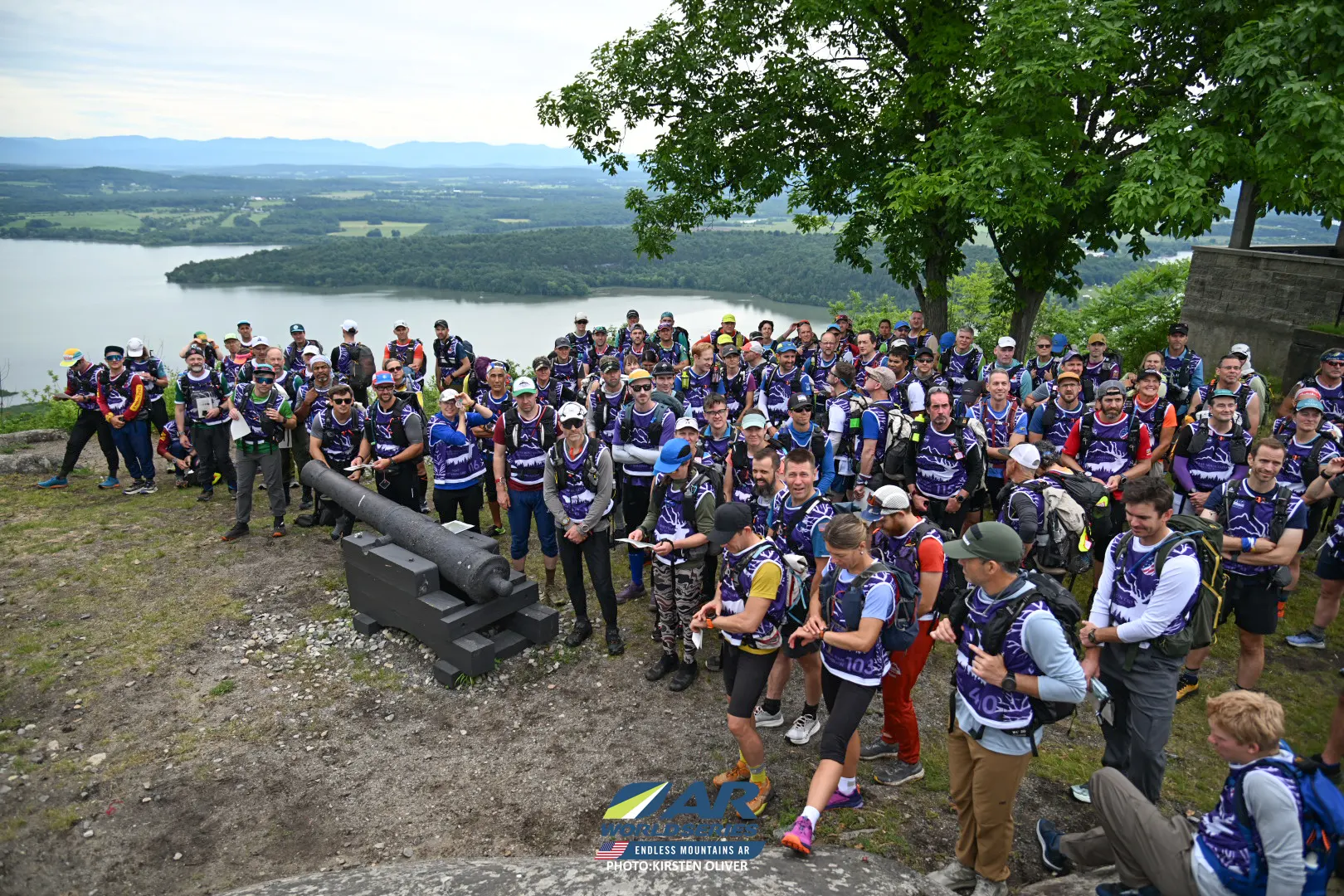
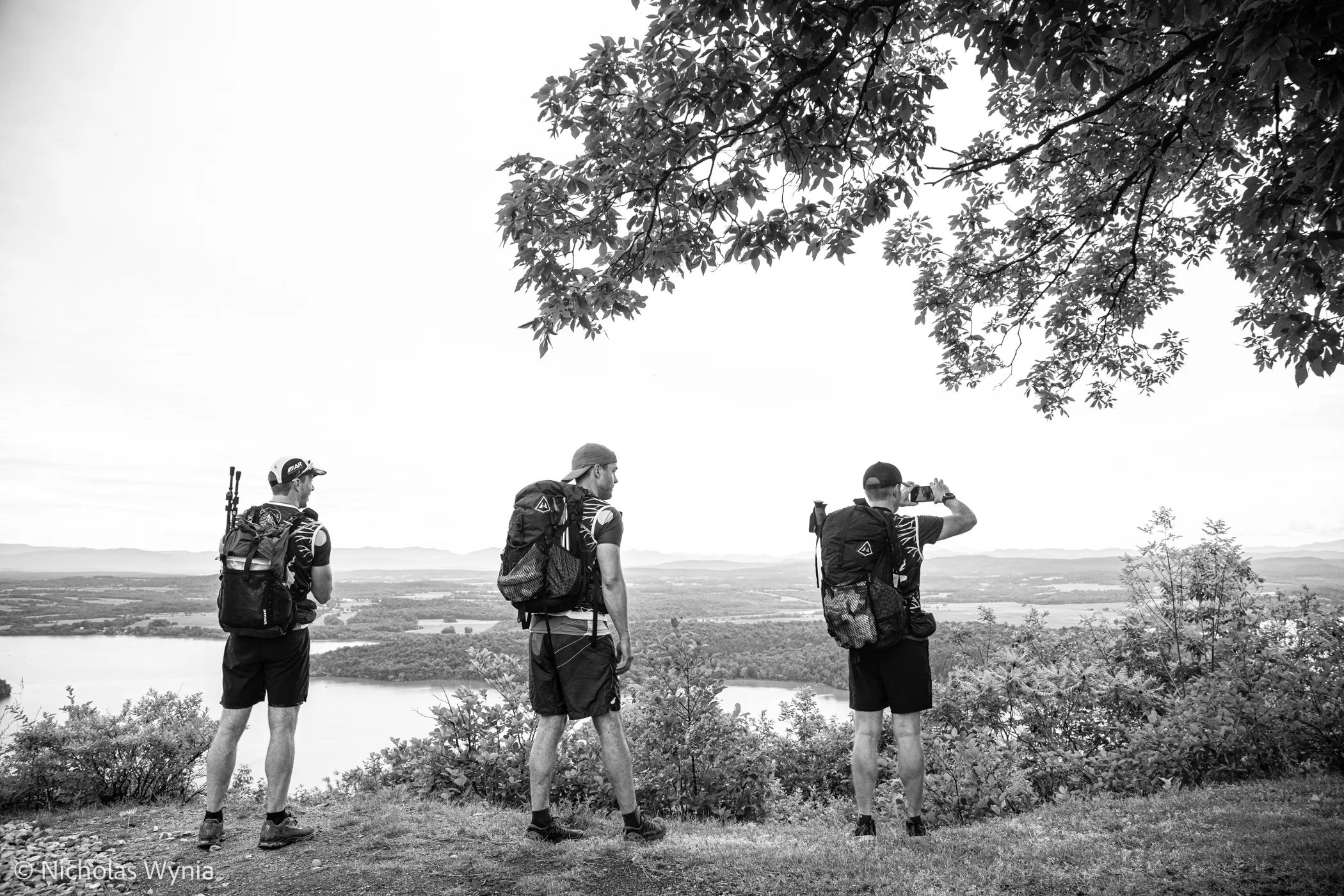
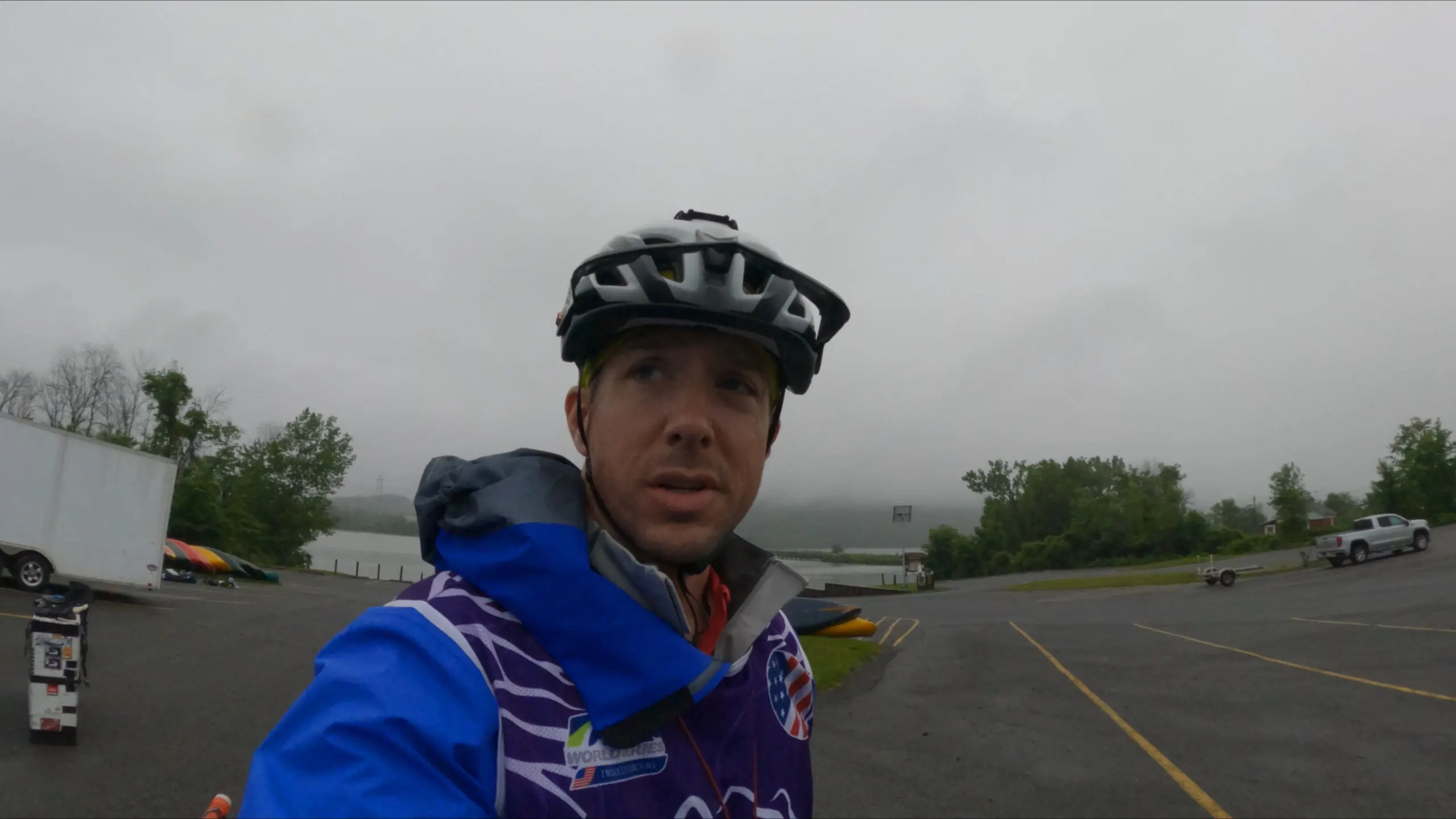
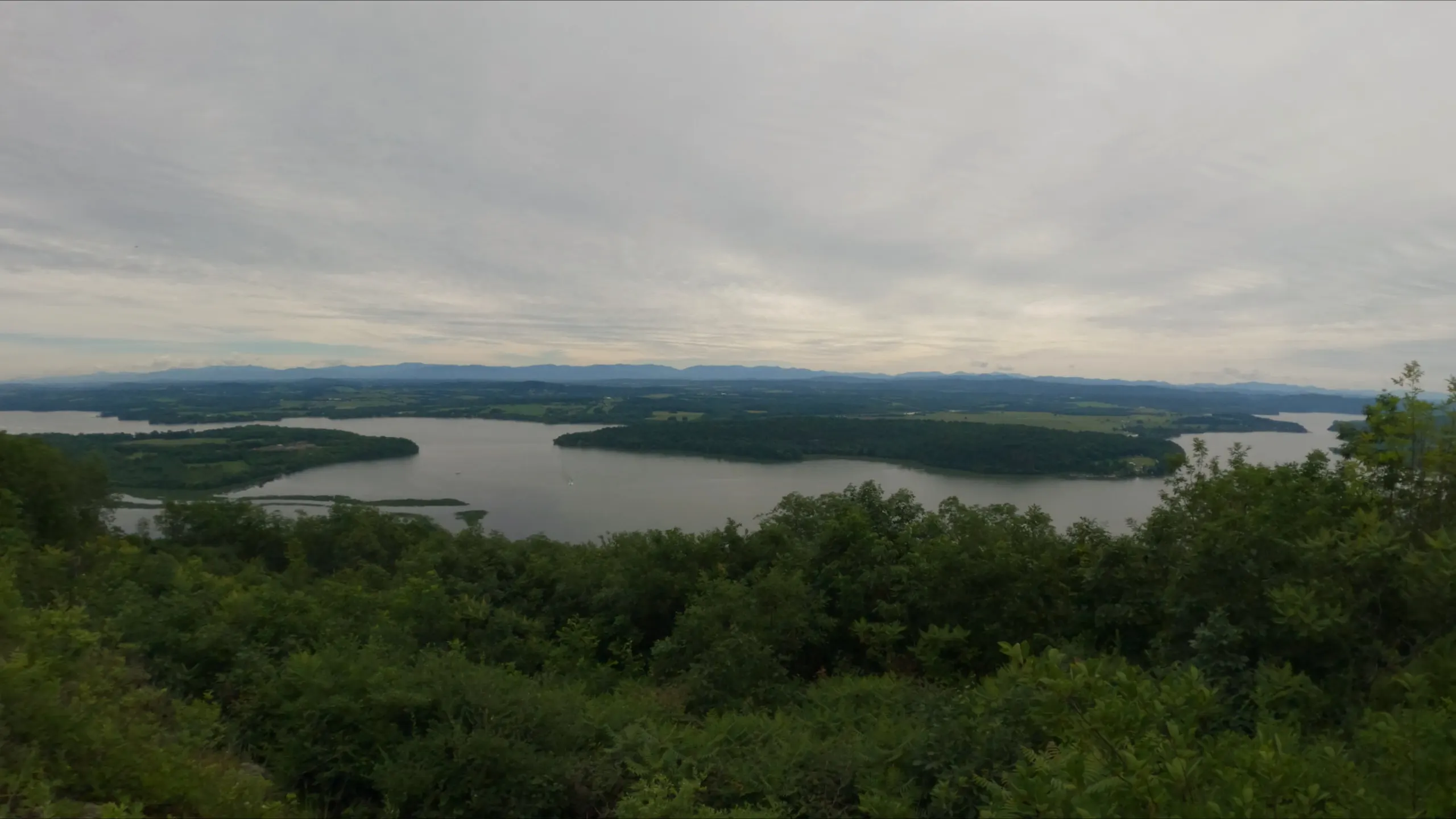
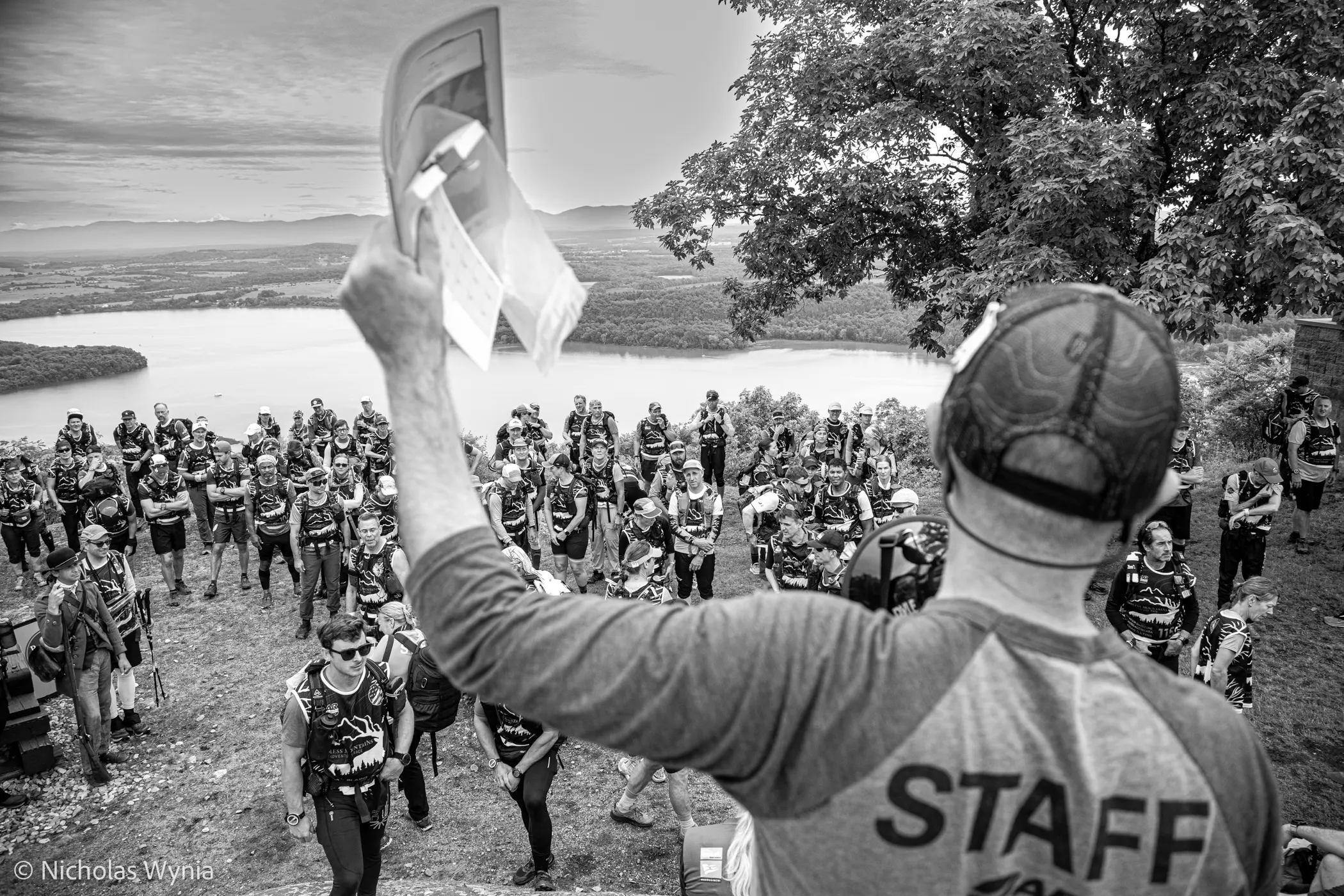
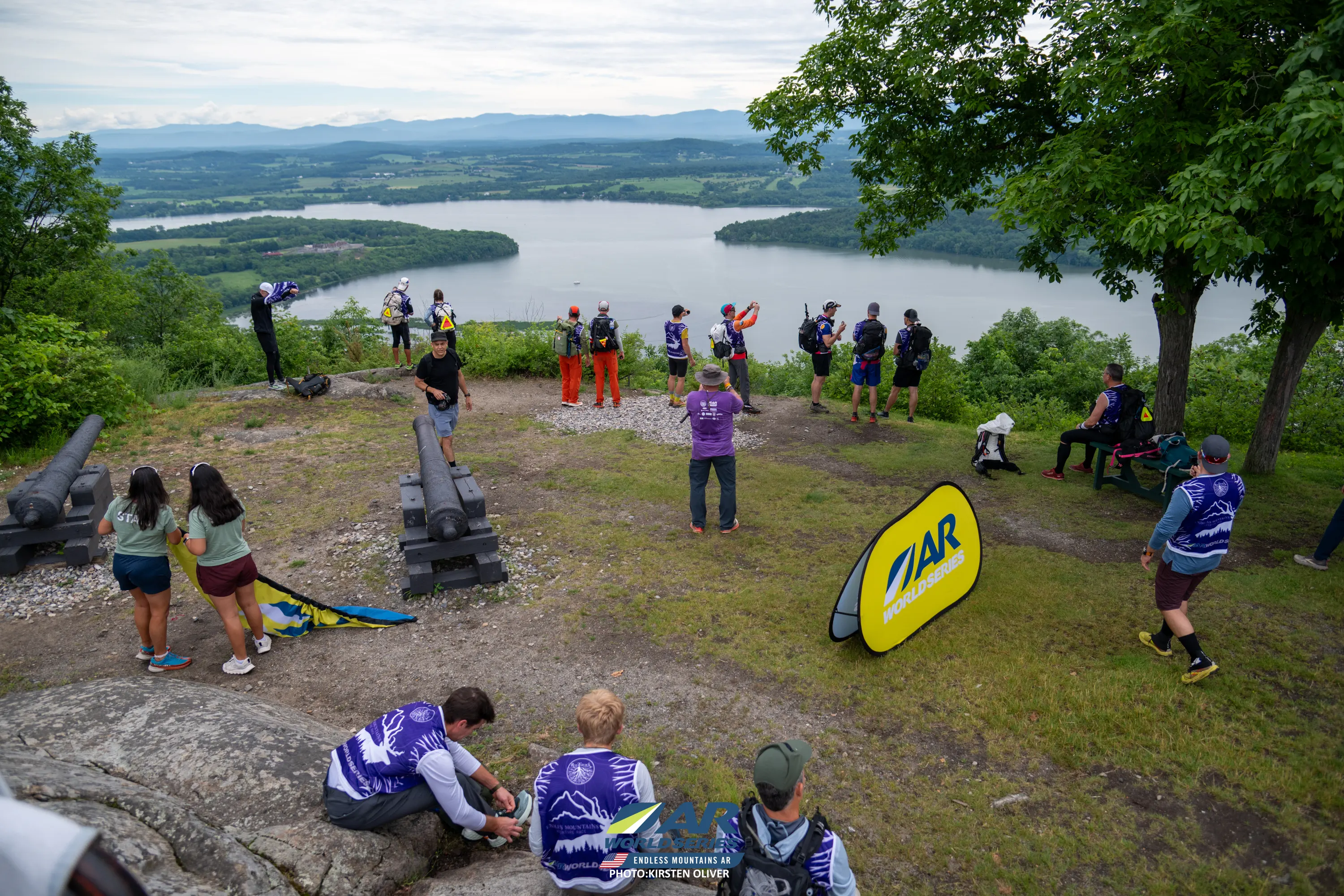
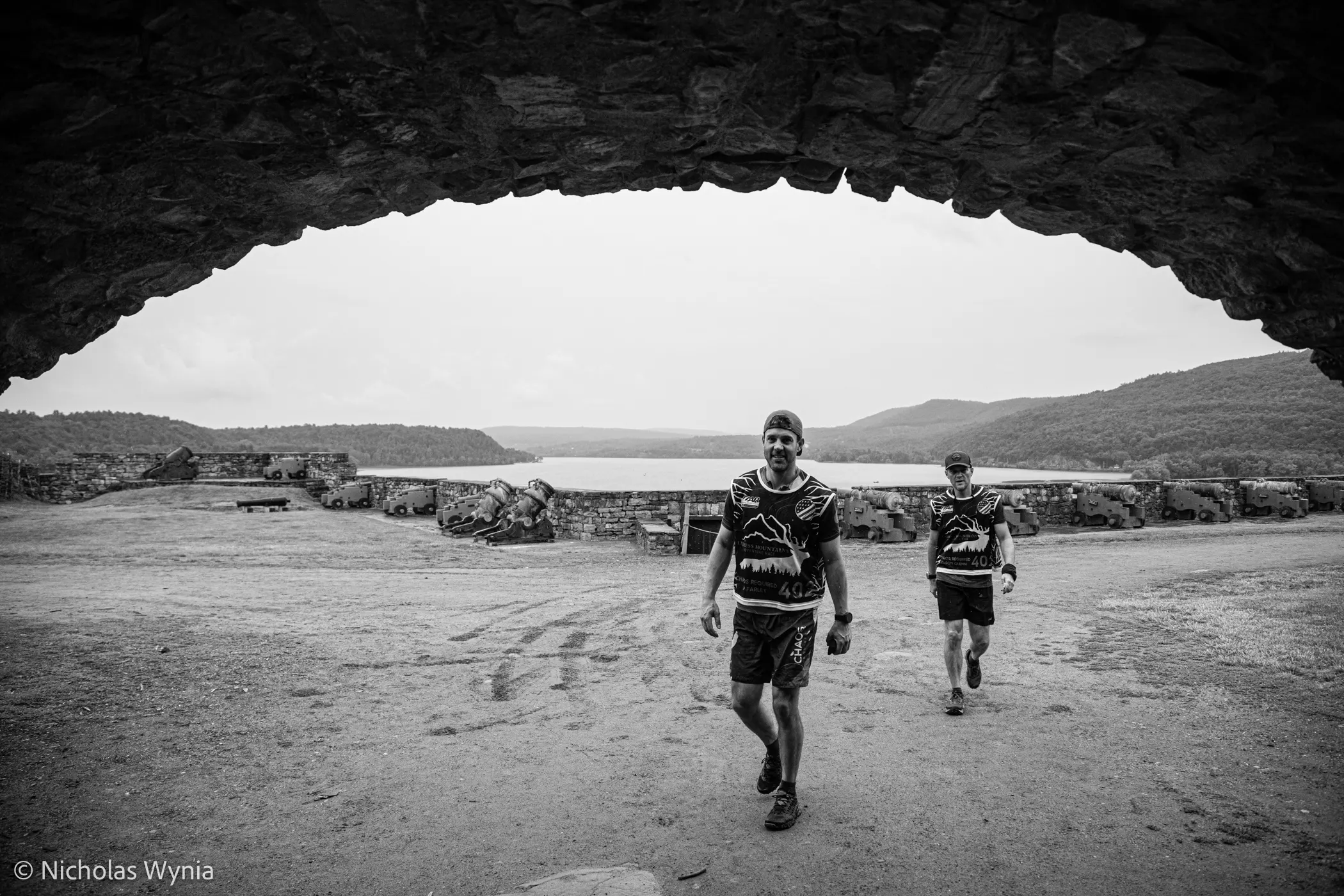
Bus rides to a mystery start are always a treat, and I slept through most of this one aside from a quick stop for a captain’s briefing. We rolled up to Mount Defiance, the hill overlooking Fort Ticonderoga on the New York side, and found out we’d be racing through three states before this was over: starting in New York, spending most of the race in Vermont, and finishing in Massachusetts. Three states, one race. Pretty cool way to kick things off.
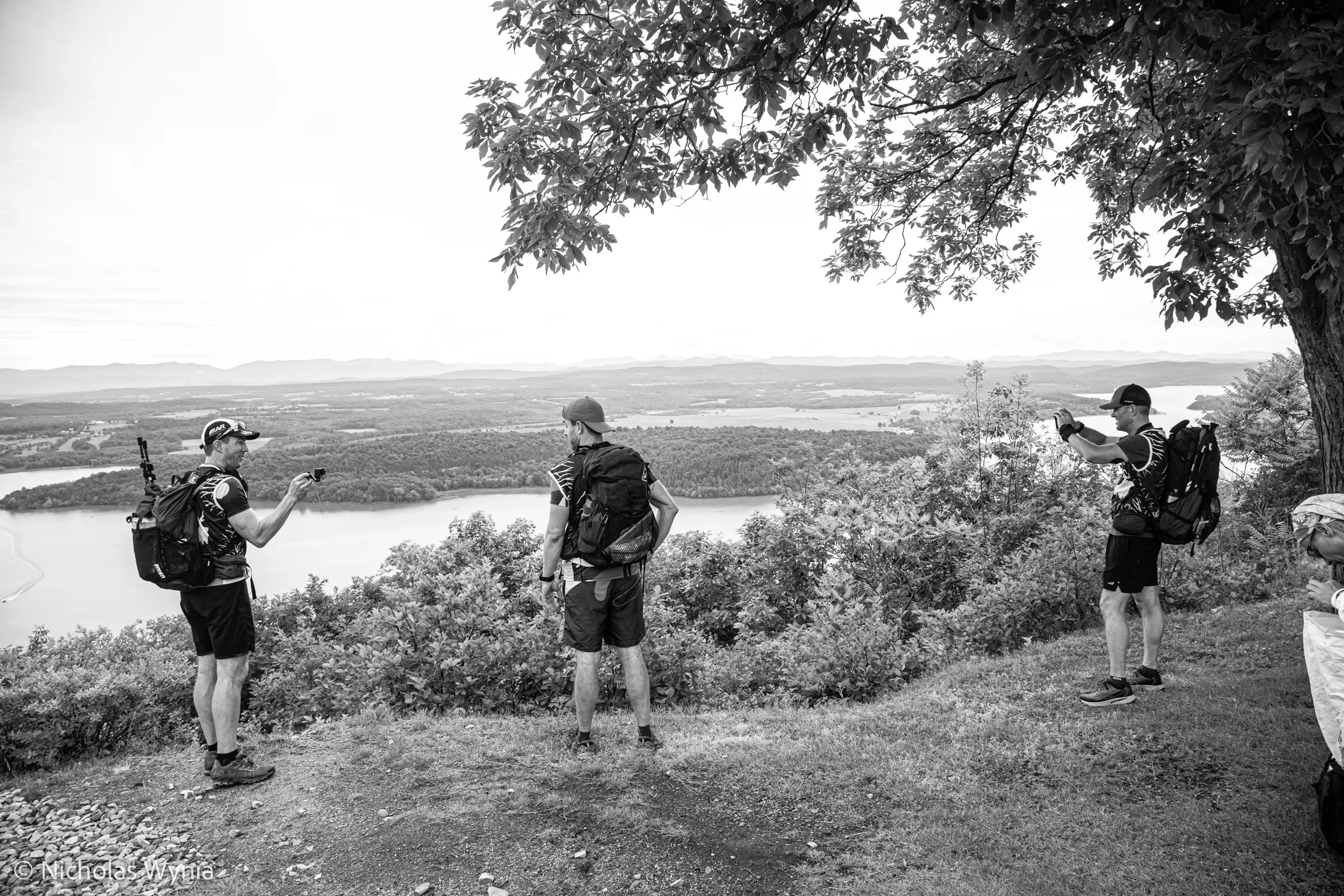
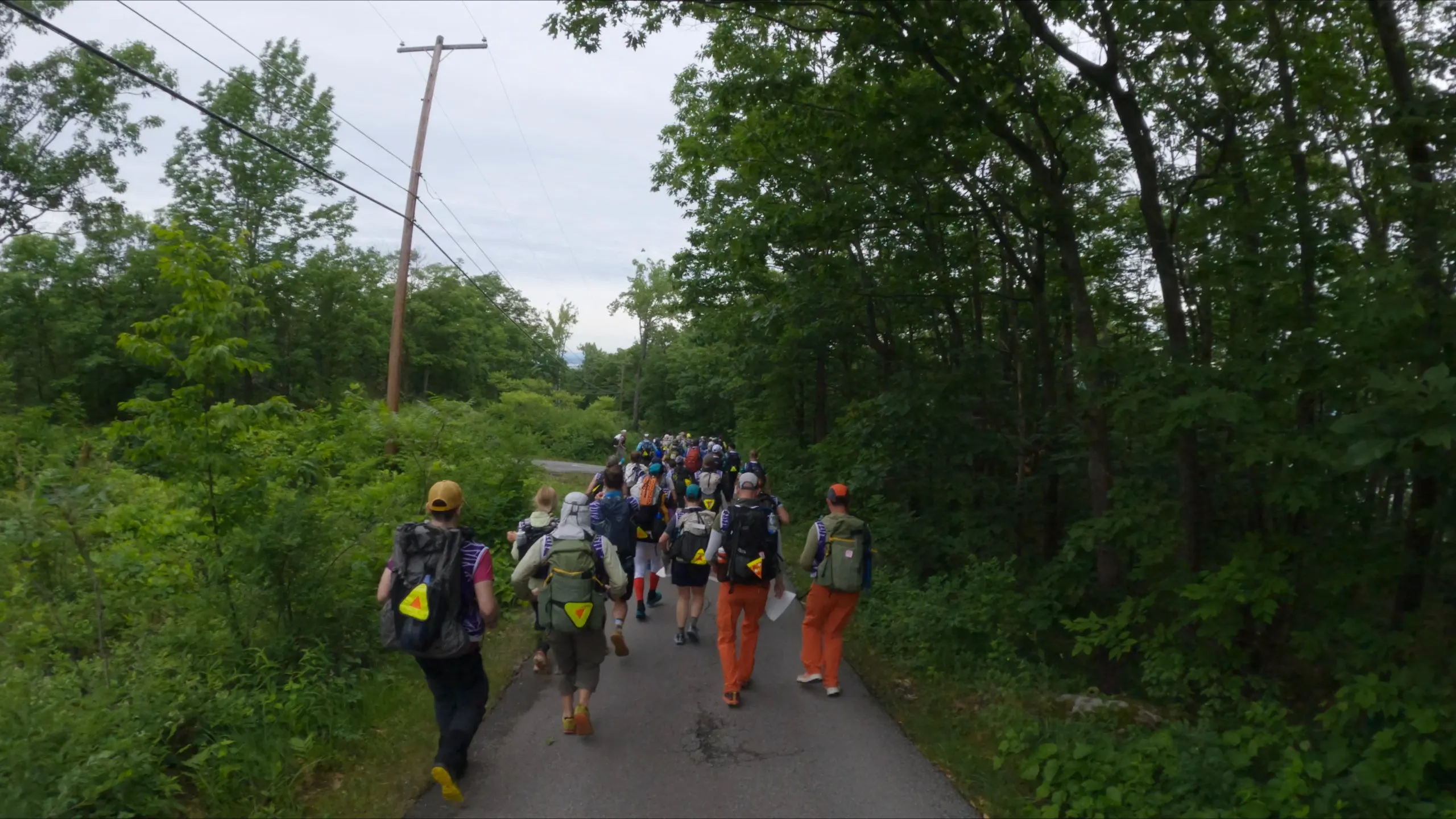
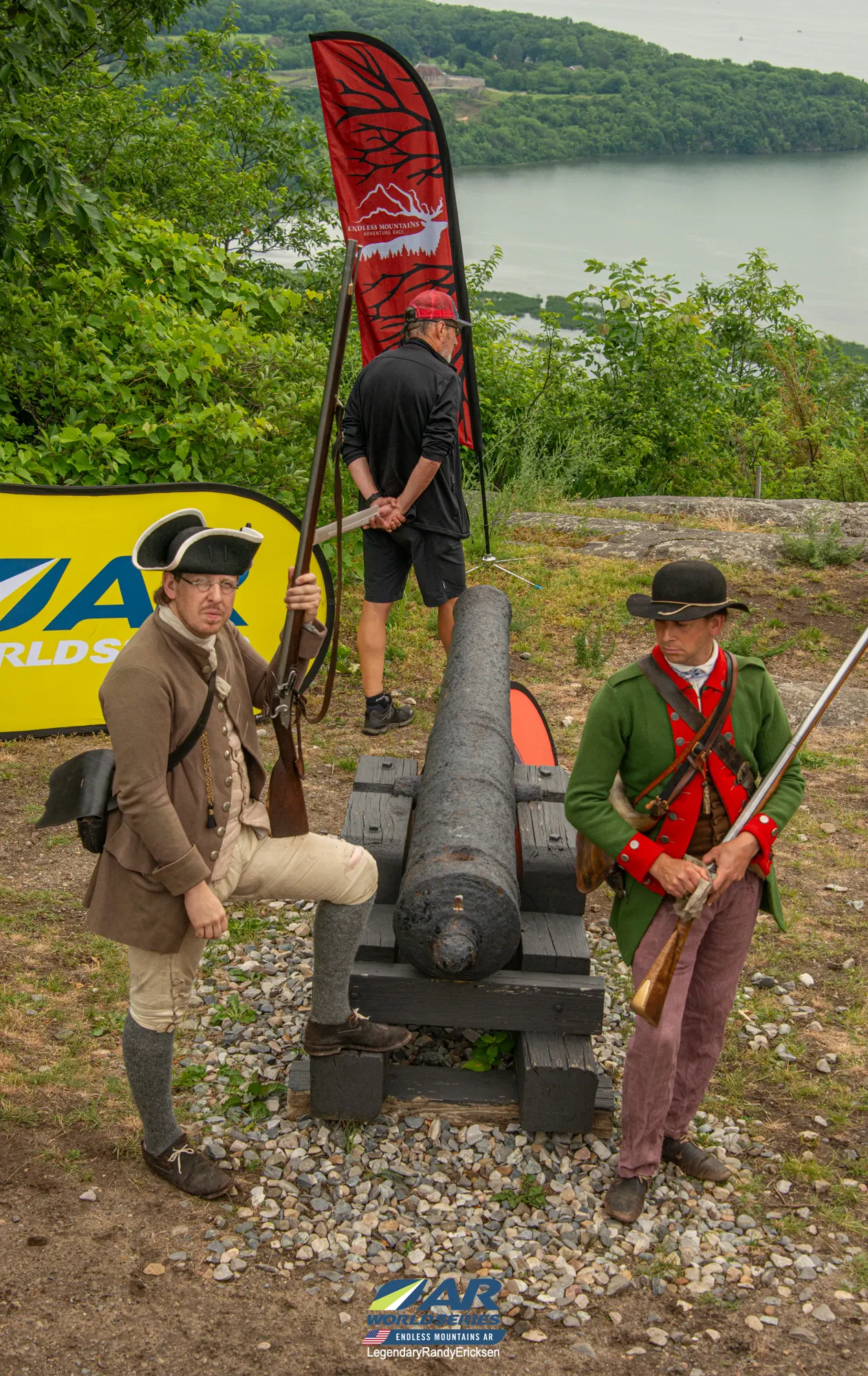
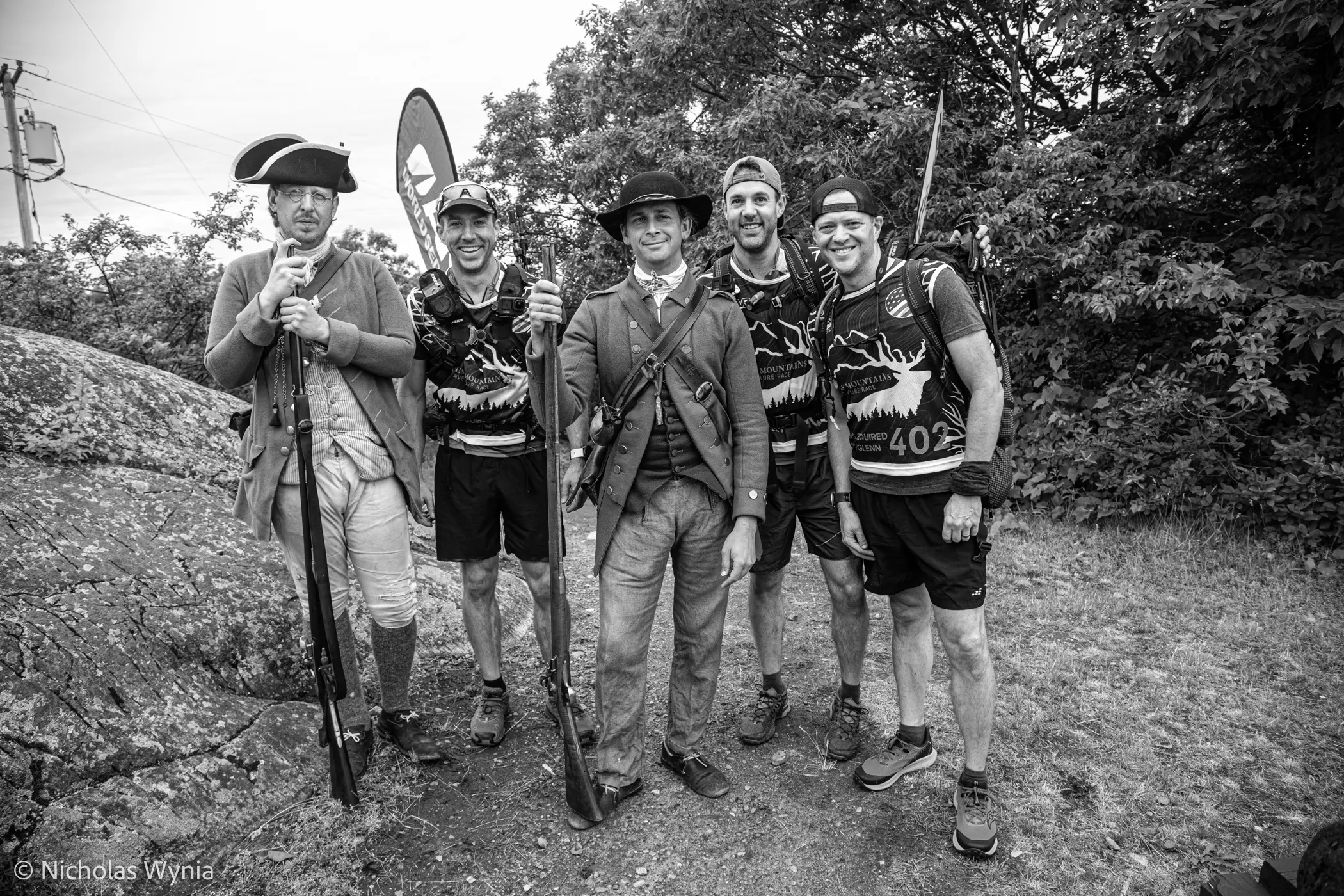
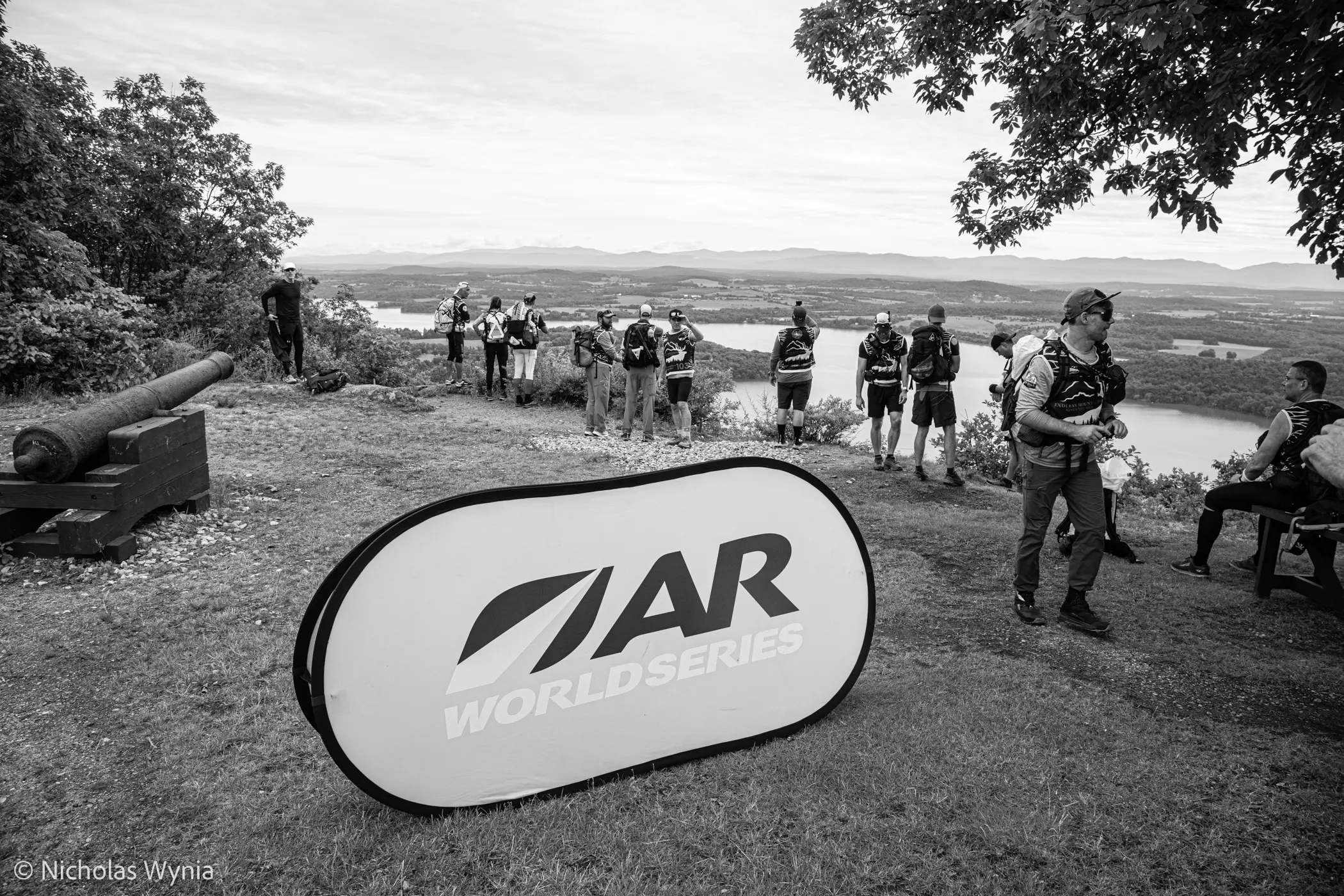
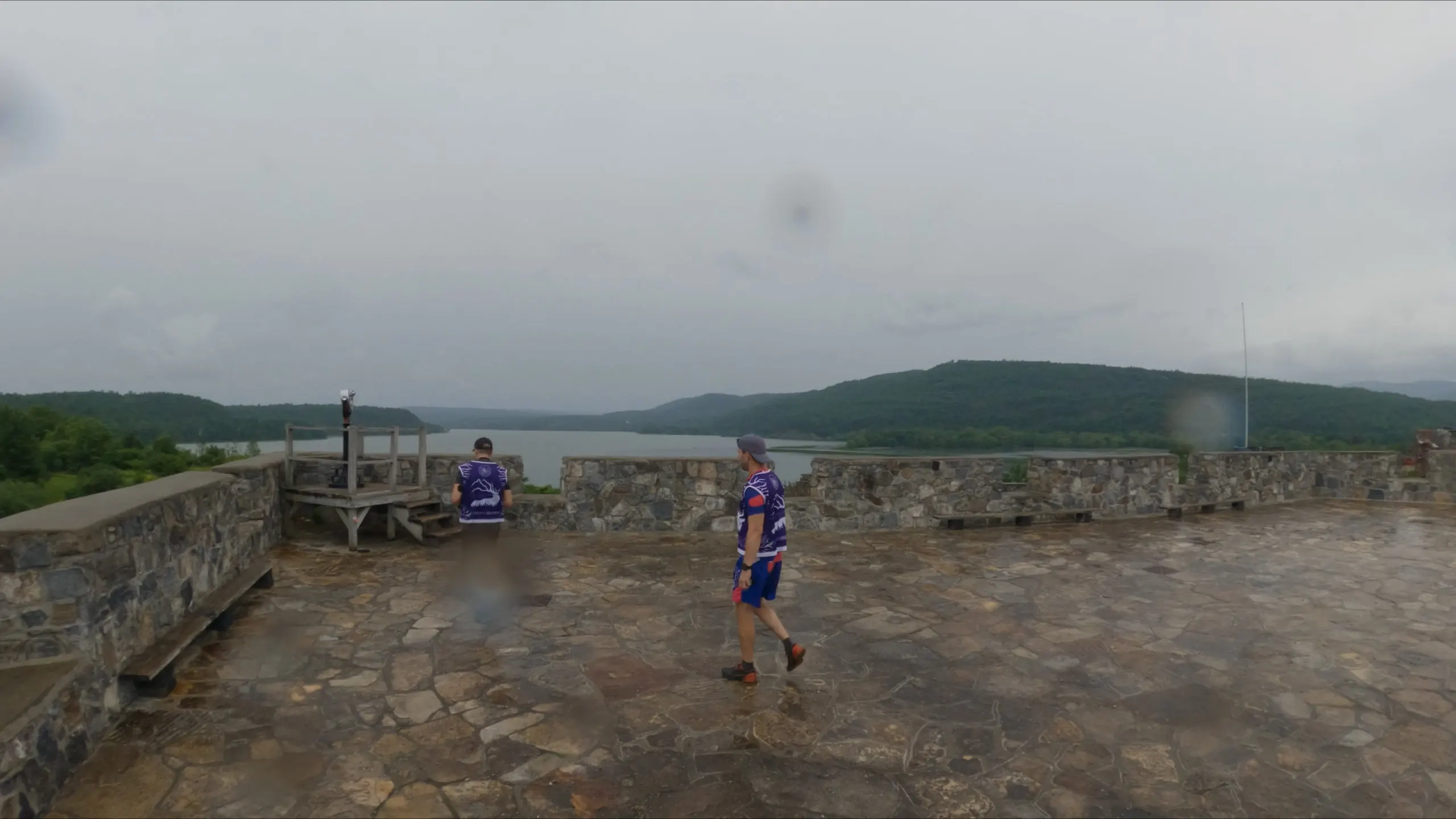
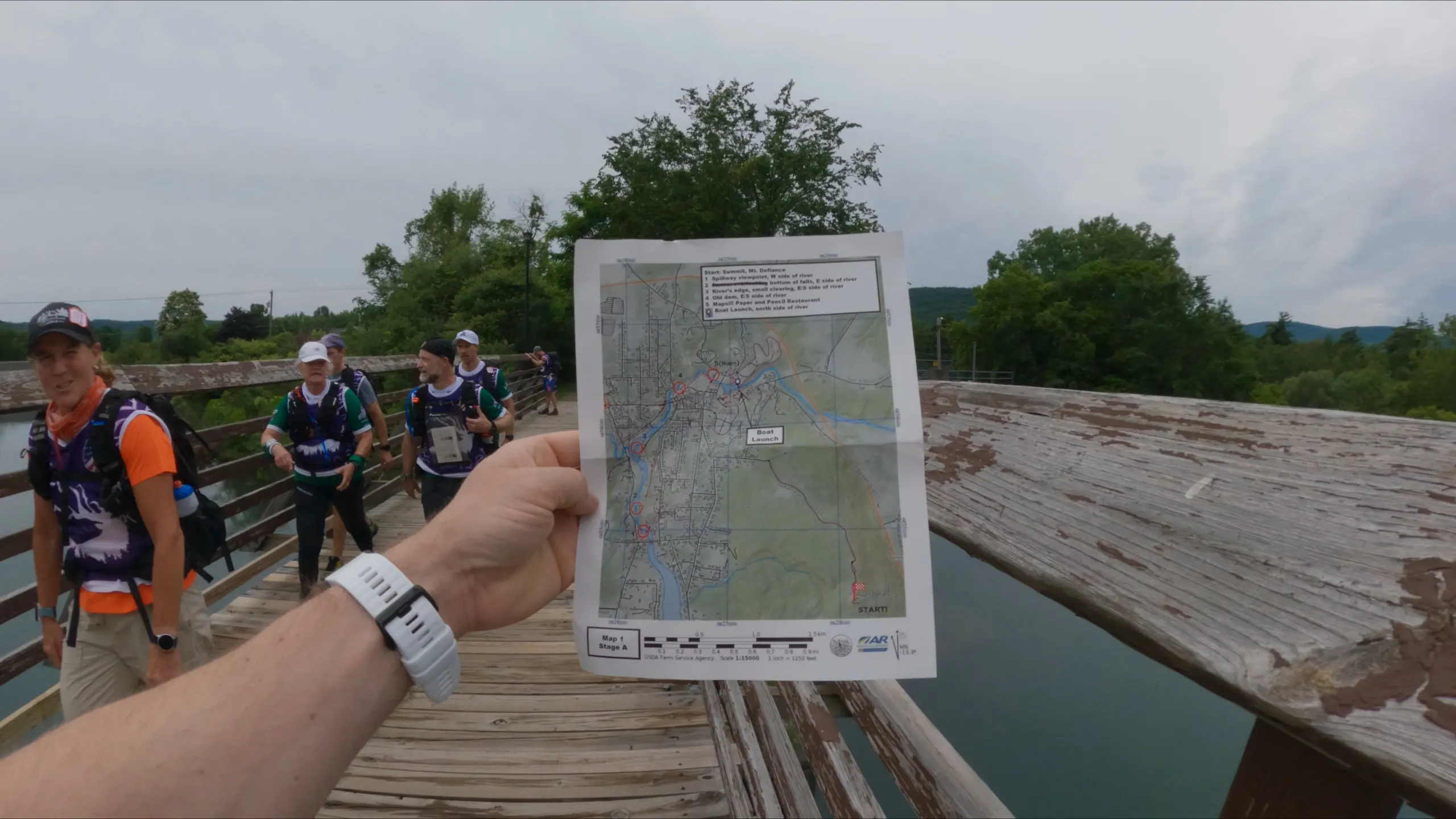
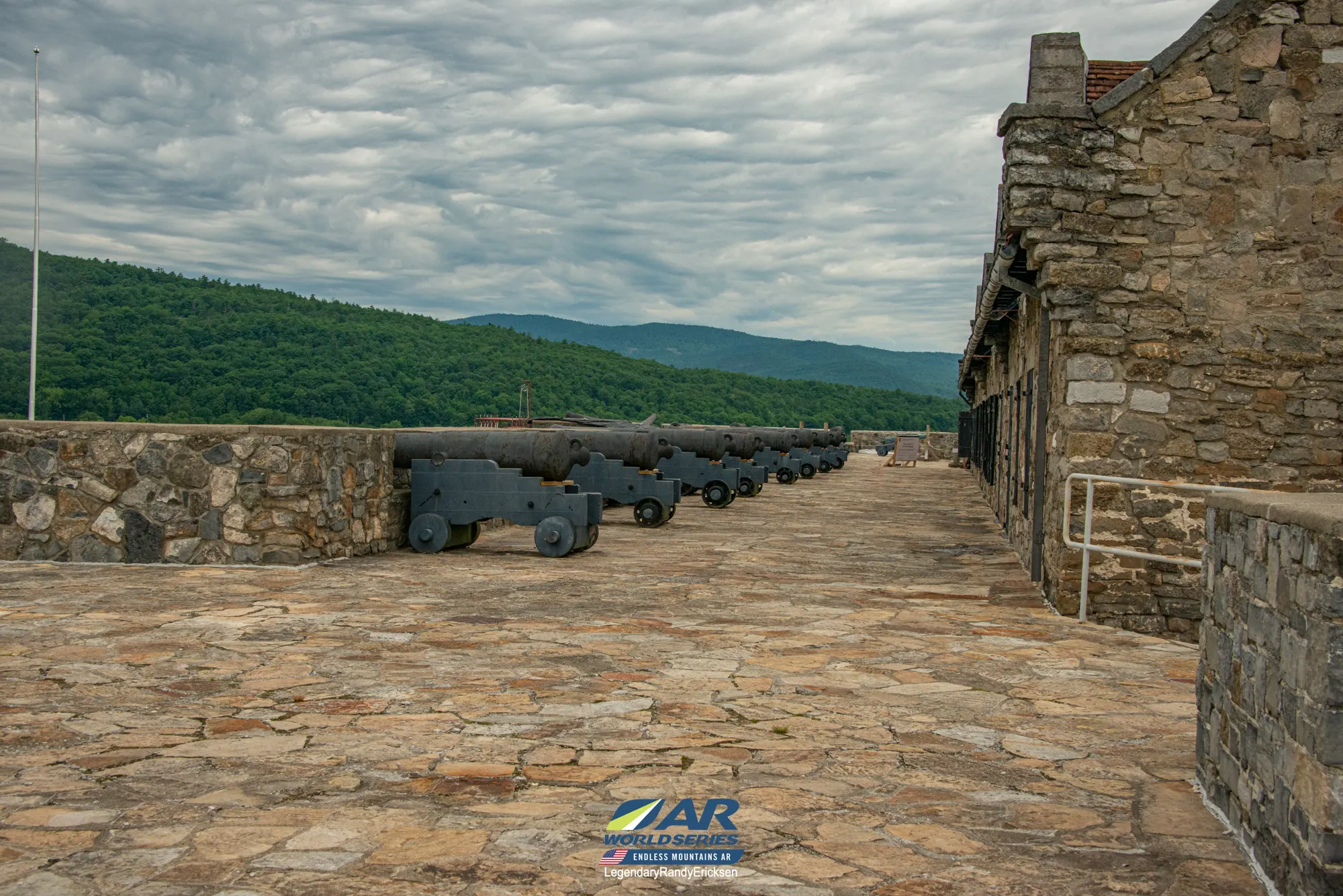
Race start had historical reenactors firing muskets, a beautiful rendition of the Canadian and American national anthems, and a ton of international teams milling around, always great to see. We hiked to the top of Mount Defiance with no maps at all, just a quick beautiful mile with a killer view of the fort below, then turned around and ran the same route back down along the river, picking up our first five checkpoints along the way. We came in toward the back of the field, and we weren’t worried about it.
Our team’s whole approach is marathon, not sprint. We trust our navigation, we hit every mandatory, we grab as many optionals as we reasonably can, and we’d rather bank a calm start than blow up chasing a fast one.
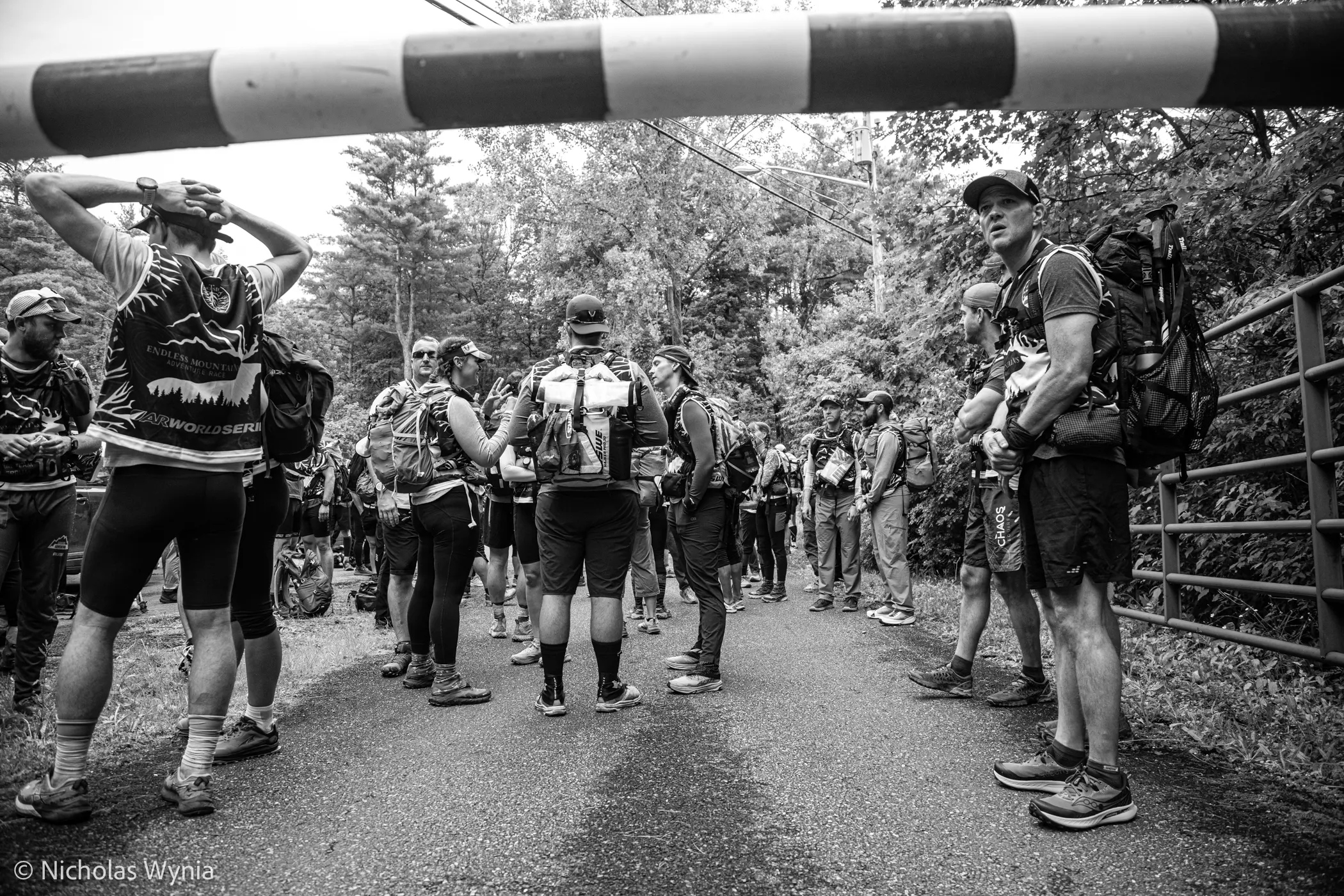
CP5 was The Paper and Pencil restaurant in Ticonderoga, where we finally got the rest of our maps along with coffee and breakfast sandwiches. Once we started spreading everything out and cross-referencing the course book, it became clear this was going to be a race to Friday. There just weren’t a lot of options once you hit the orienteering relay and the final trek, so hitting a hard internal deadline mattered more than usual.
We decided right there we wanted to be through the orienteering by 4am Friday, which would leave us six hours of daylight buffer for a final bike leg that Brent had specifically warned us not to underestimate. We’ve learned over the years that when Brent flags something like that ahead of time, it’s worth taking seriously, so we built the extra cushion in without much debate.
Stage A: The Ring Goes South
Lake Champlain, Fort Ticonderoga & the Saddles: Day 0, Hour 2
28.7 miles paddle, 14 miles trek
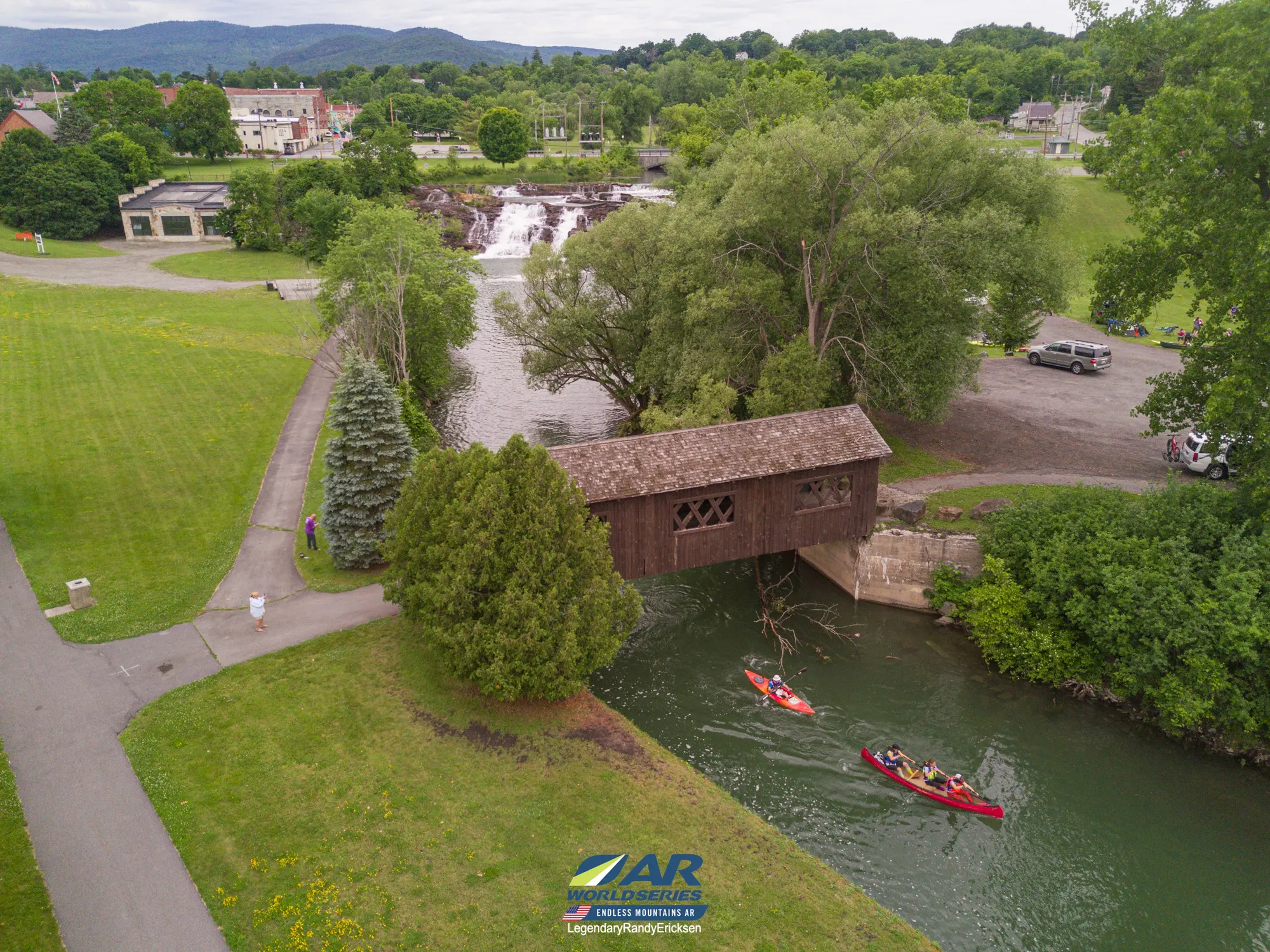
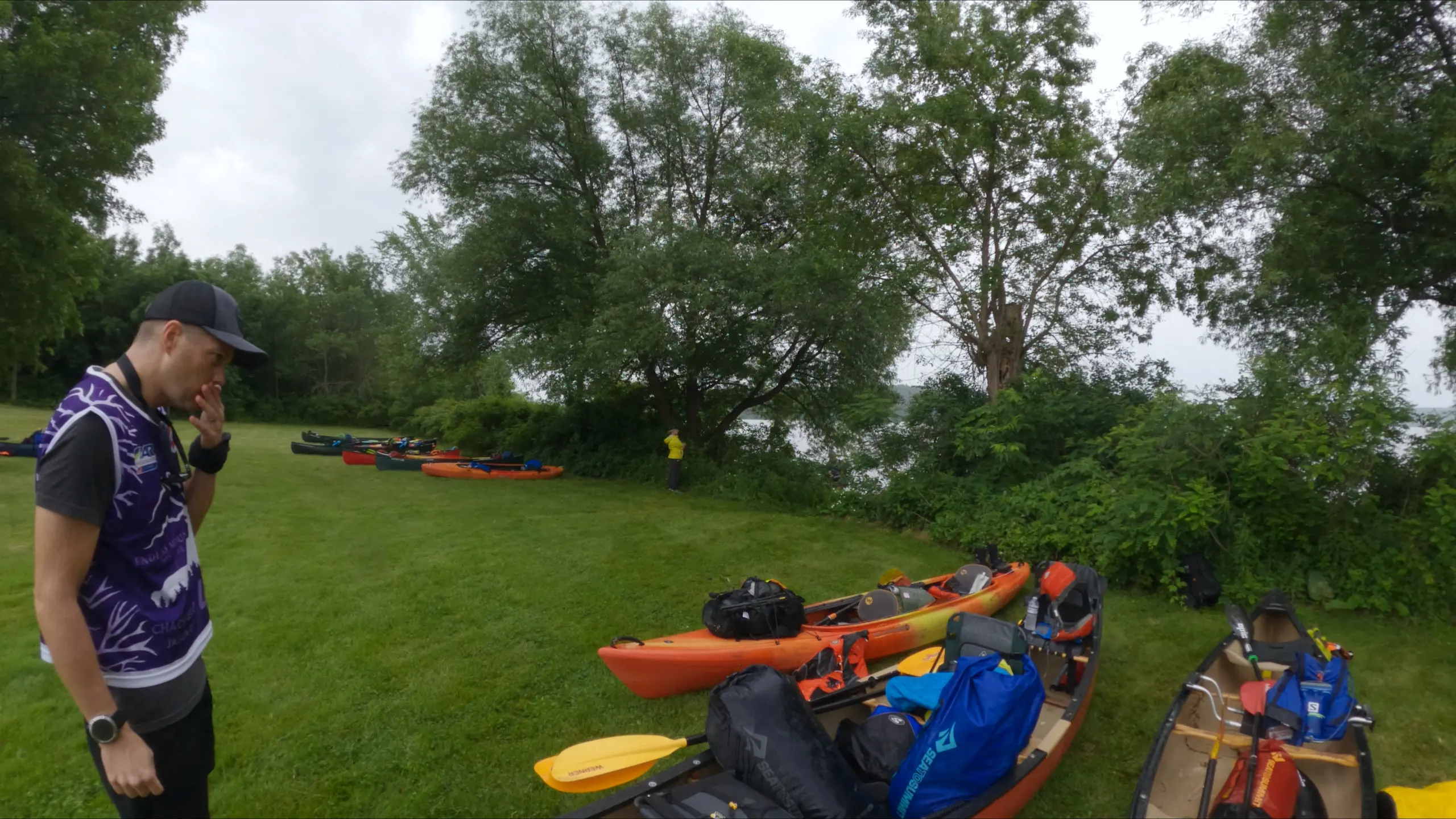
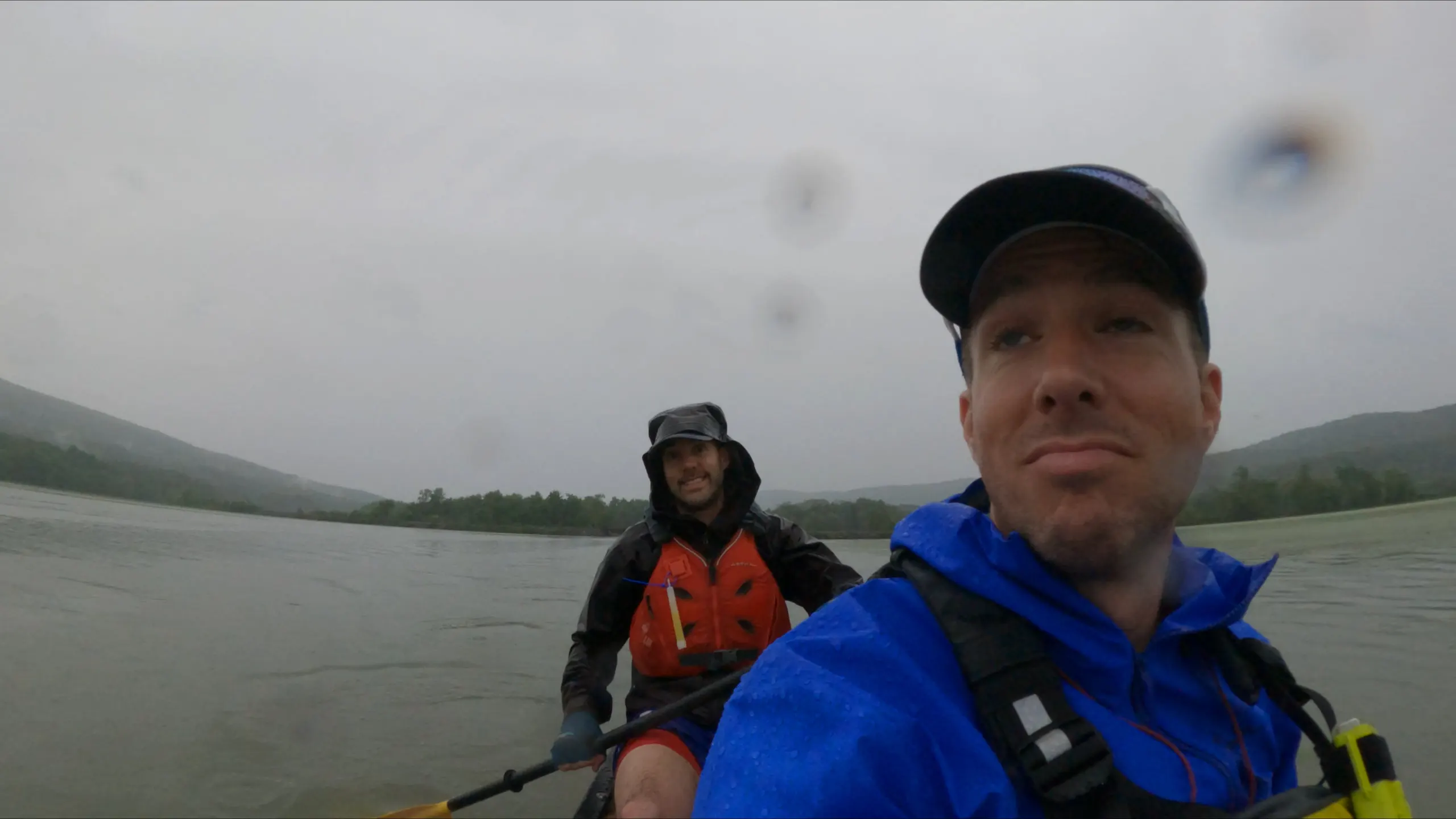
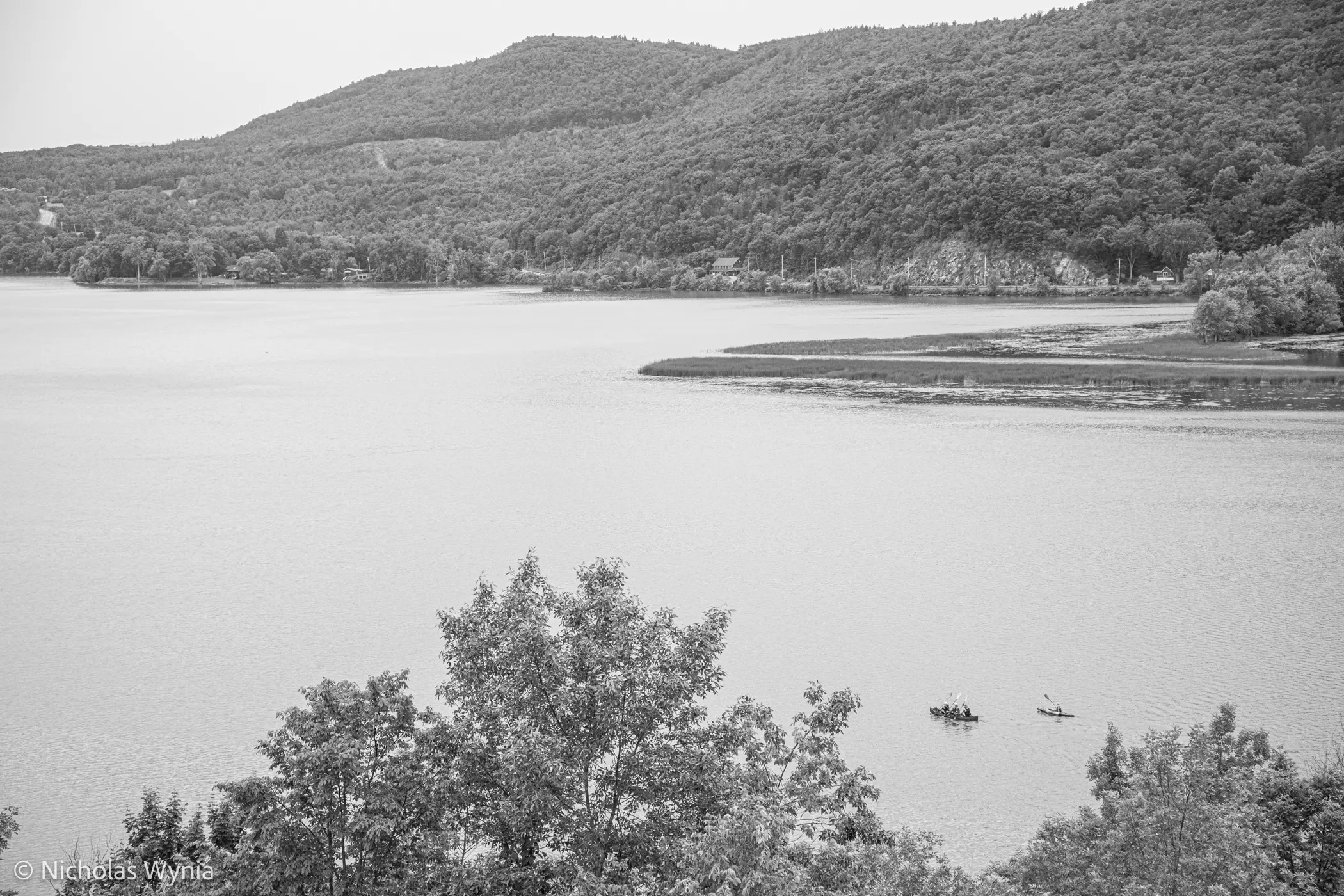
Out of CP5 we got in our kayaks for a short paddle down to Fort Ticonderoga itself, where we ran a fun, fast micro-orienteering loop around the fort grounds. That’s also right about when the weather turned. We knew from the forecast that the first 16-20 hours were going to bring real rain, and we were mentally braced for it. I put on my neoprene paddling pants, one of the best gear purchases I’ve ever made, and my coat, knowing it was about to get cold and windy.
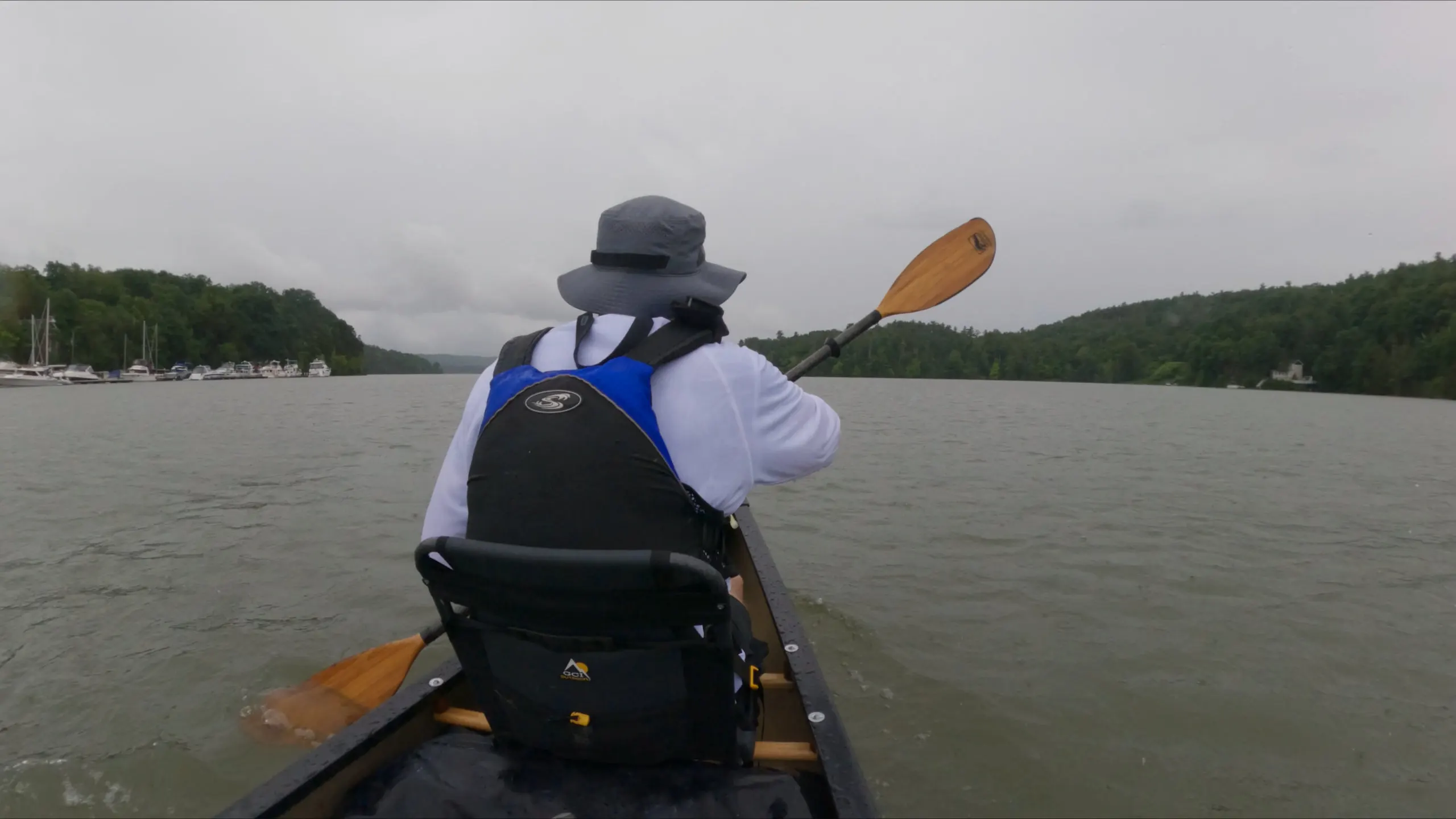
From there it was a long slog, close to 24 miles down the southern tail of Lake Champlain, probably 8-10 hours on the water. We blasted music the whole way, which turned out to be a huge mental boost, and started reeling in boat after boat, clawing back all the ground we’d given up coming into CP5 near the back of the pack. The lower lake is all agricultural runoff, though, so as pretty as it looked, you couldn’t drink it even filtered or treated. We’d made a pit stop at a gas station before launching just to load the boat with water and Gatorade so we wouldn’t have to think about it. CP9 needed a careful approach through marshy reeds. We nearly grounded the boat before finding a better line in, and we pulled out at the Saddles takeout right around dusk, cold enough that changing into dry clothes even in the rain felt like a small miracle.
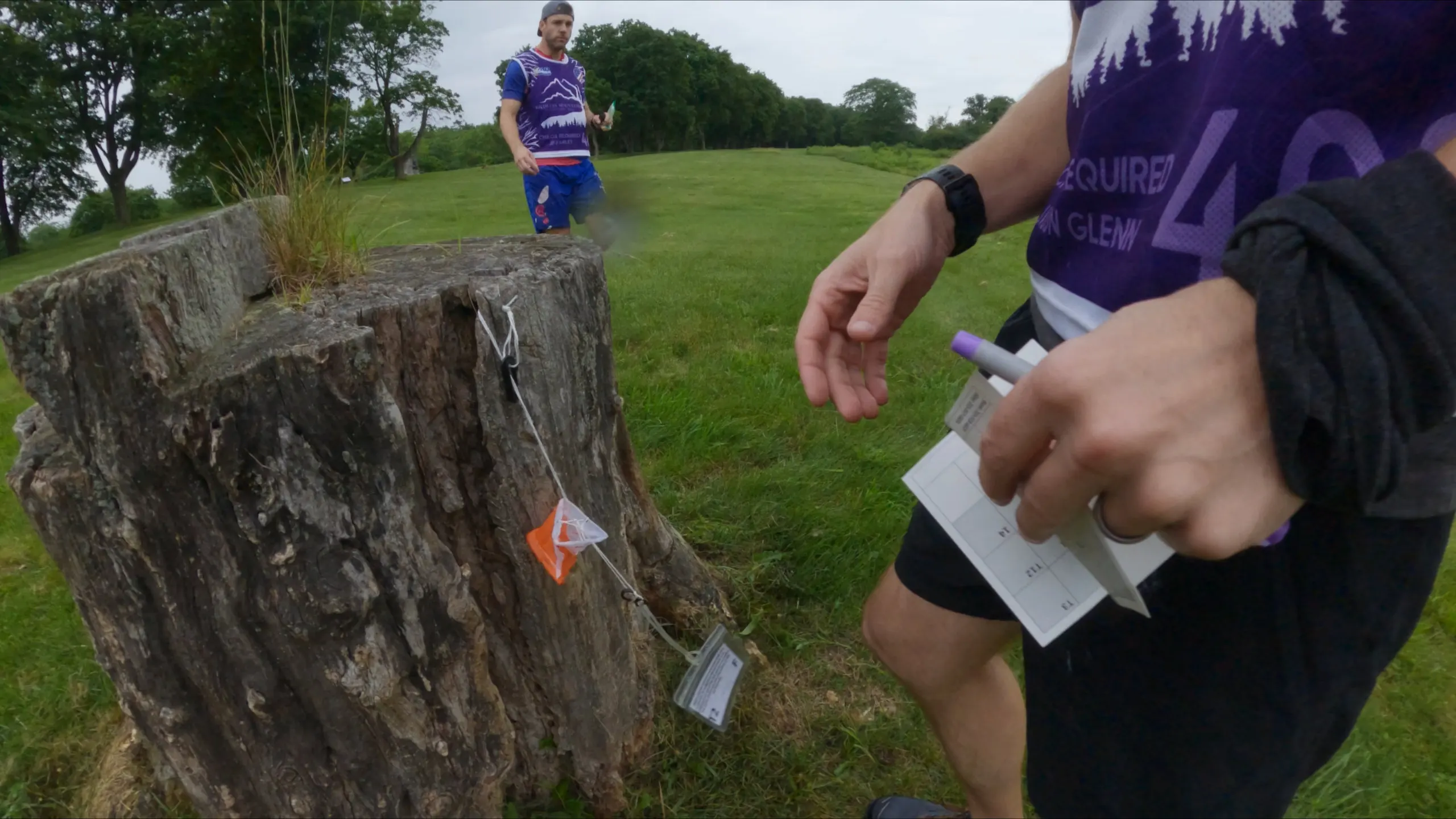
The Saddles trek was checkpoints 10 through 14 with optionals A1 through A7 scattered through some serious elevation. We climbed a cliff off the water to grab CP11, then ran the loop clockwise, picking off A2 along a jeep trail, A1 near a beaver dam, and skipping A3 once the trail conditions turned sketchy. The blazes up there were far enough apart that you could easily wander onto a game trail without realizing it. We heard afterward that a lot of teams got badly turned around in this section, and we ended up helping several of them get reoriented, which always feels good when your own navigation is dialed in. We backtracked from the high point at CP12 to pick up A6 and A4 too, partly betting that the rain would let up the longer we stayed in the woods before getting back on the water.
That bet paid off, the rain was gone as we were getting to the boats.
Then disaster, on the same cliff we’d climbed hours earlier to get CP11. I went down first and called up that it was fine. Jason came down, slipped at the bottom, and the sound he made had me expecting a compound fracture. His headlamp went flying. When we got light on it, there was no compound fracture, but there was bone visible under a three-inch flap of shin that had sheared clean off and was bleeding freely. Jason’s a PA, so between his training and the wilderness medicine courses I’ve taken, we irrigated it, got it gauzed and glued shut with dermabond, and asked him what he needed. “Take care of the boats. I’ve got this,” he said, and he did. He was rattled, it was a big laceration, but confident he could keep moving, which was good, because we were a long way from anywhere he couldn’t self-extract from under his own power.
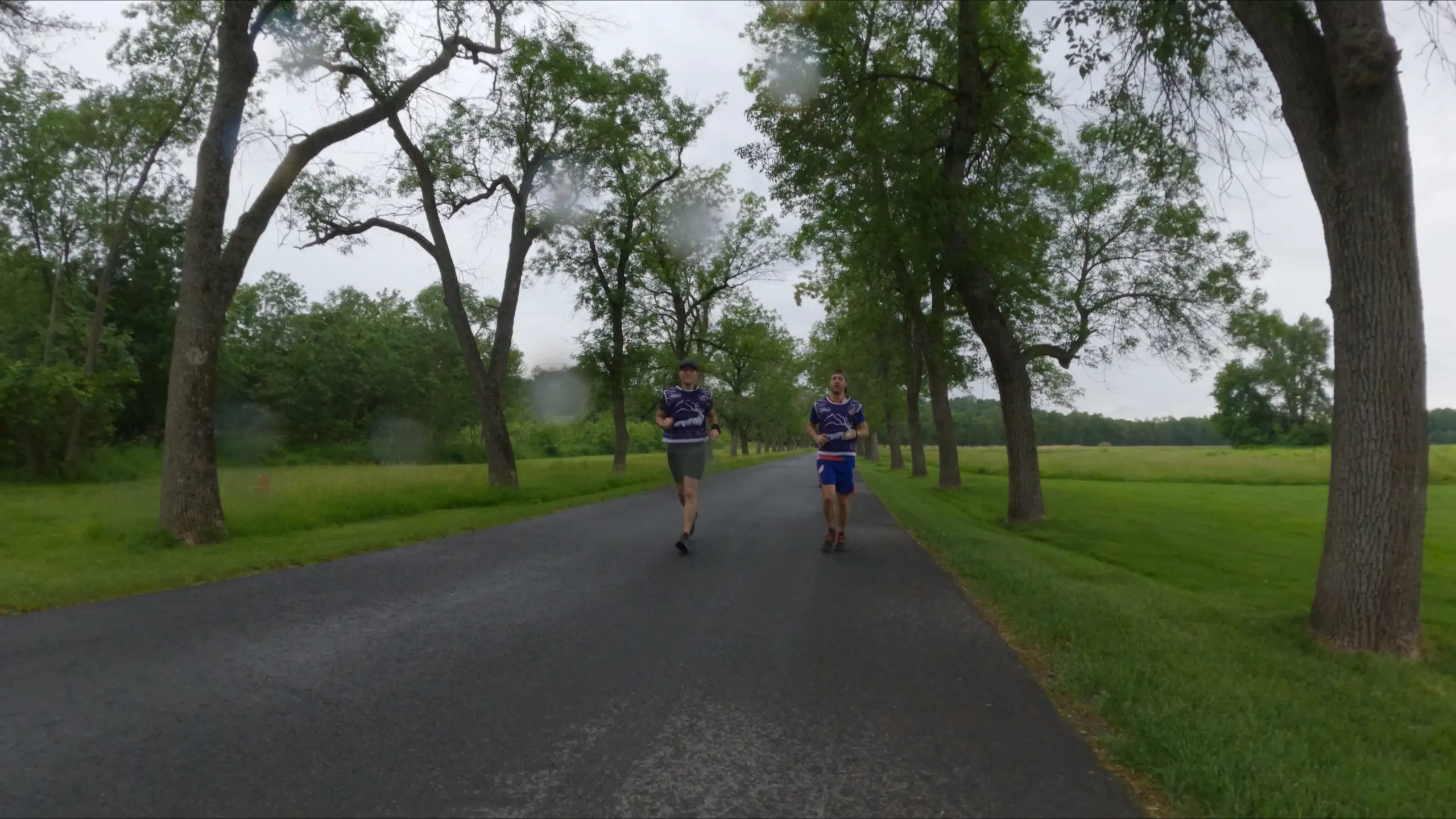
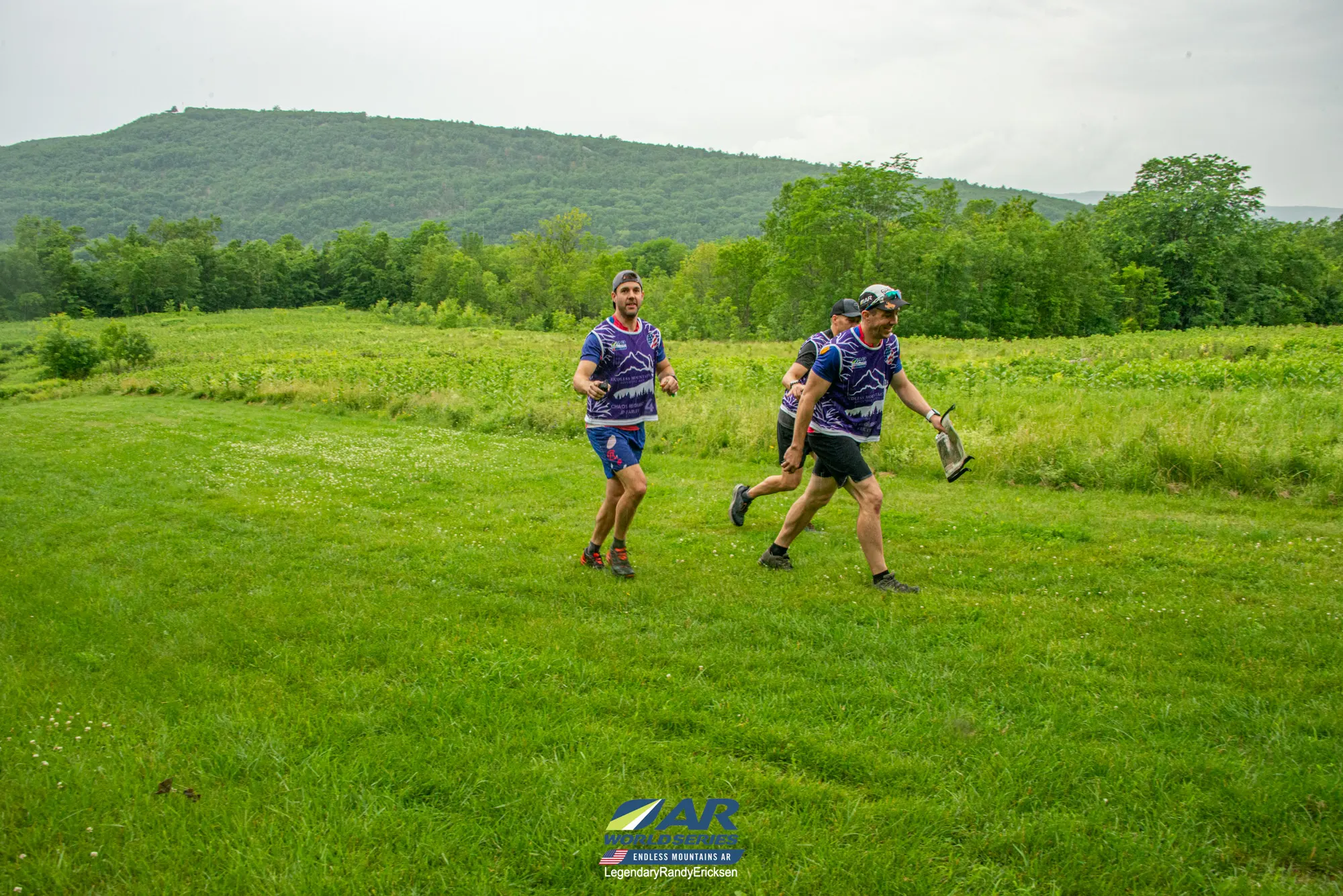
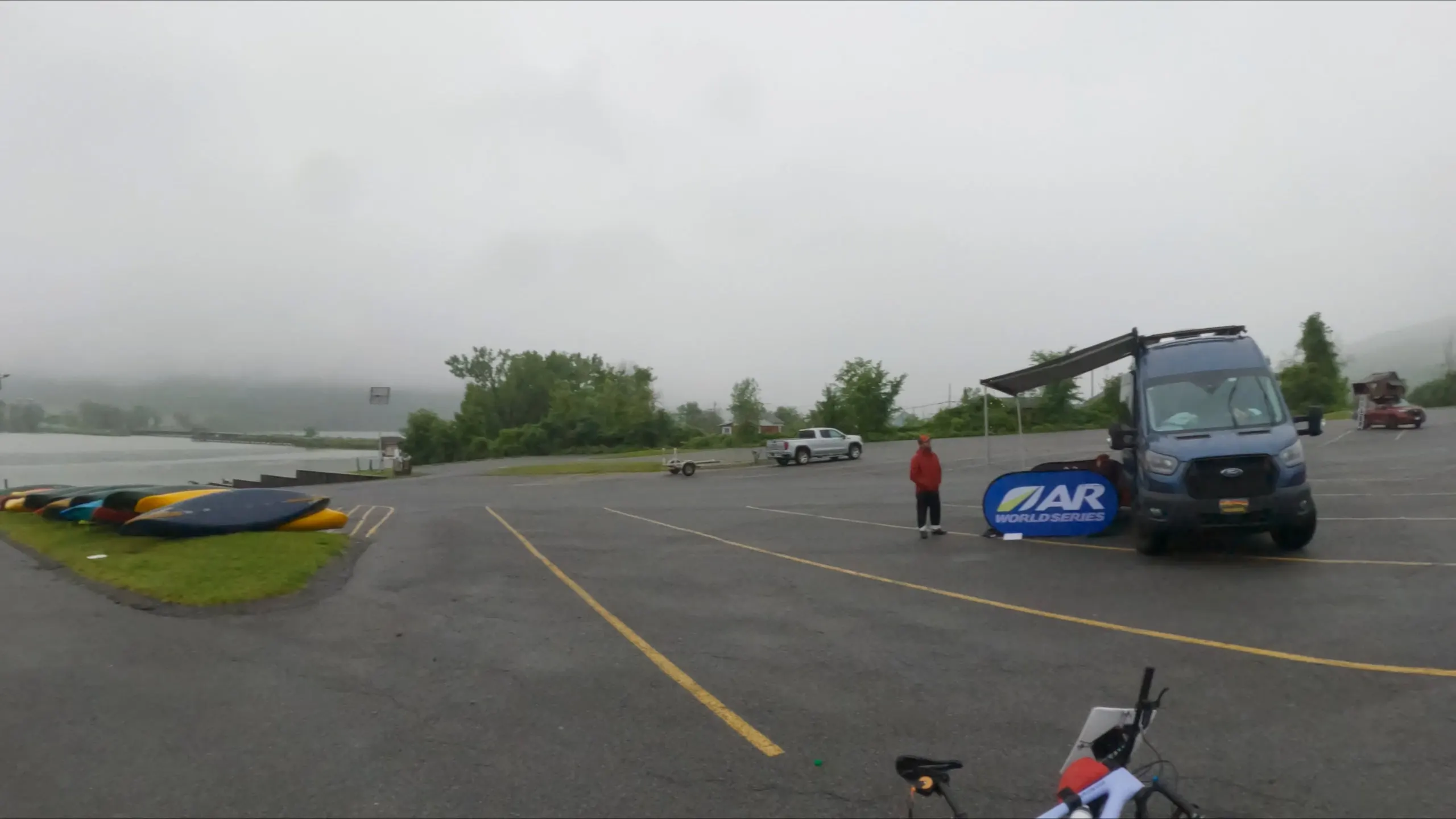
We paddled the last hour back to TA1 through that same gross agricultural lake water, which did his leg zero favors, but he gutted it out. Sun was coming up as we pulled in. We took a little extra time in transition so Jason could look his leg over again. “It’s holding,” he said, which was about the best we could ask for, and then we clipped into bikes for what we knew was going to be a very long day.
Stage B: The Passage of the Marshes
Poultney River, Carver Falls, Slate Valley Trails: Day 0, Hour 18
70 miles bike
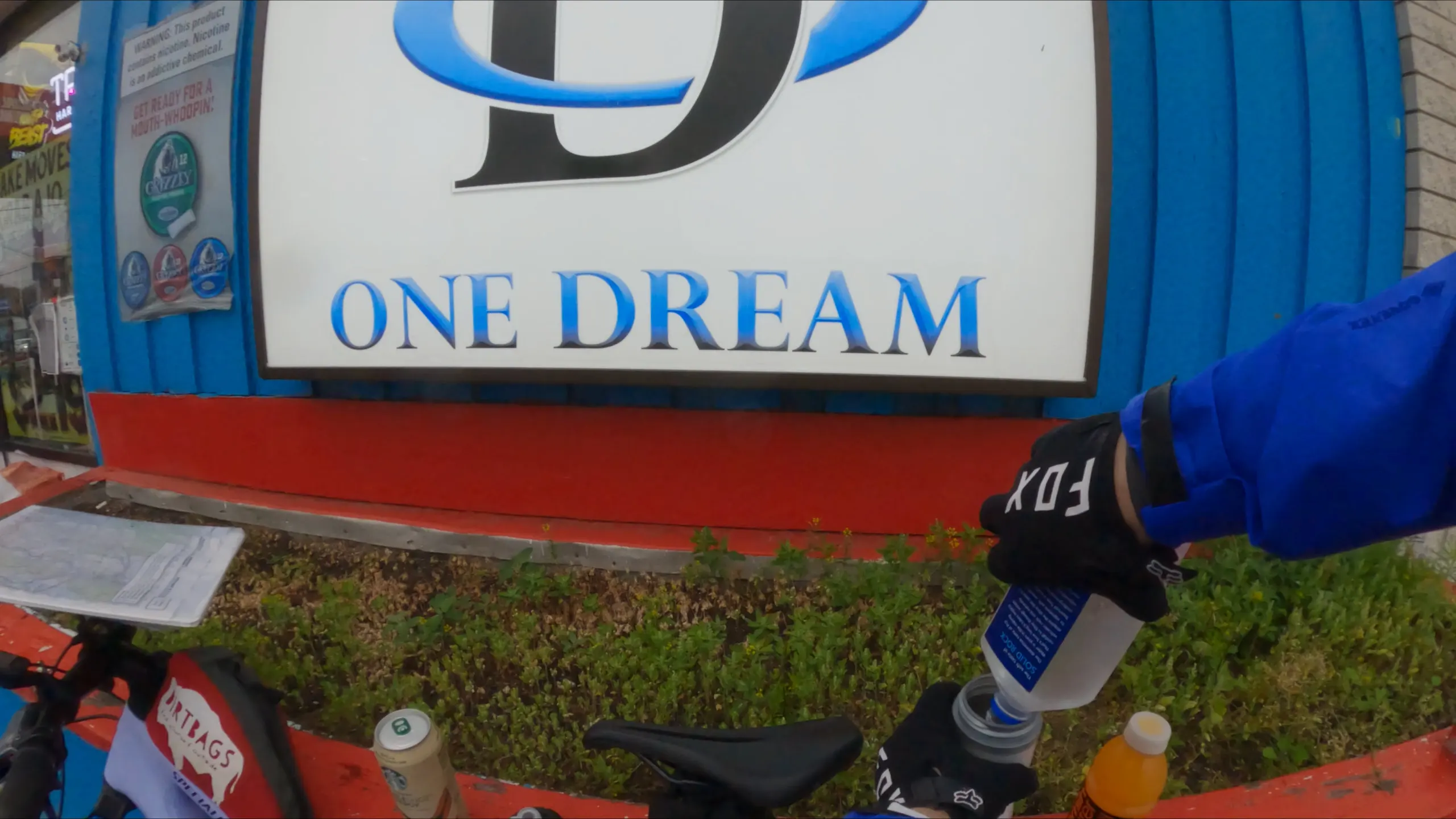
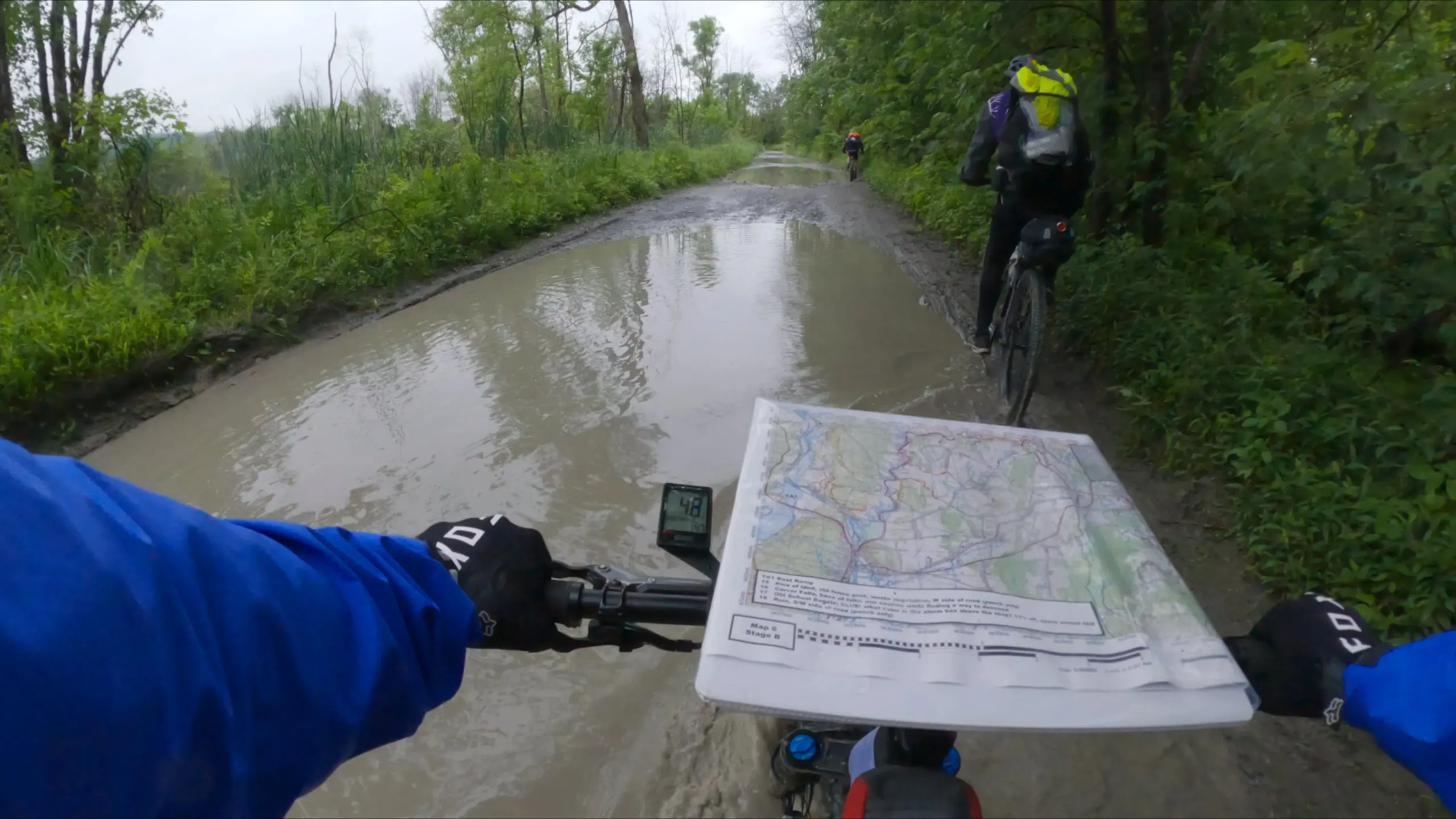
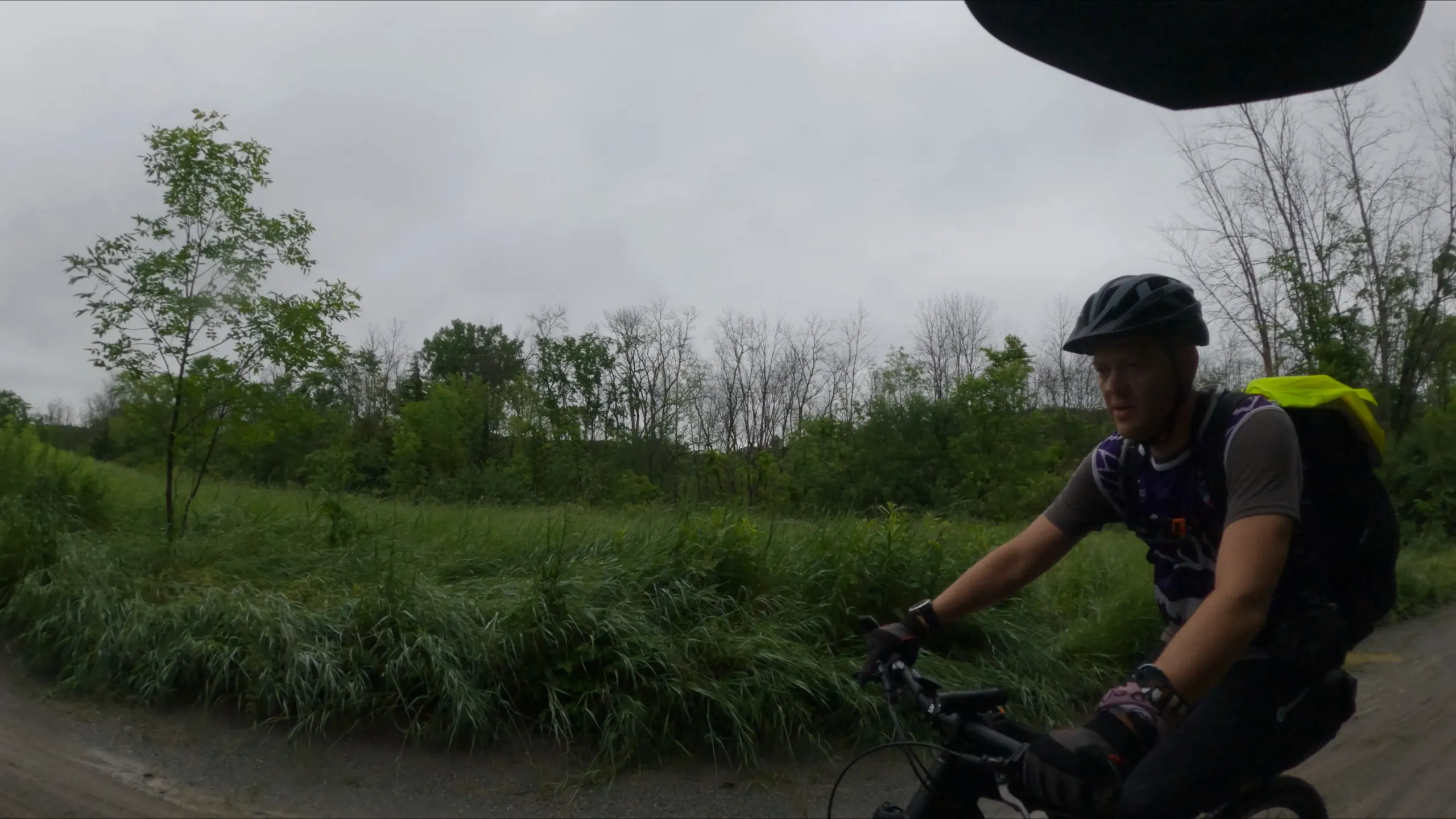
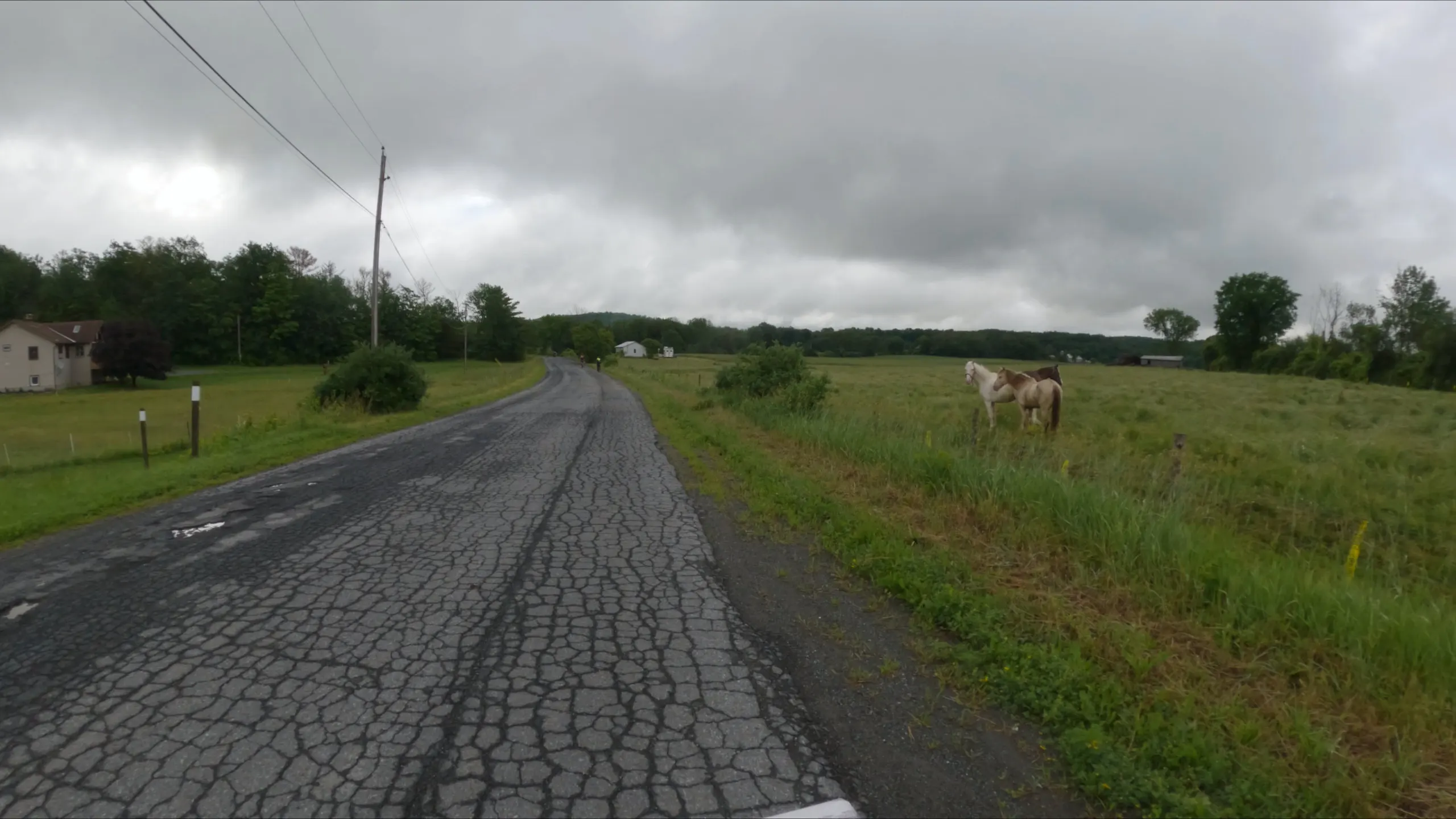
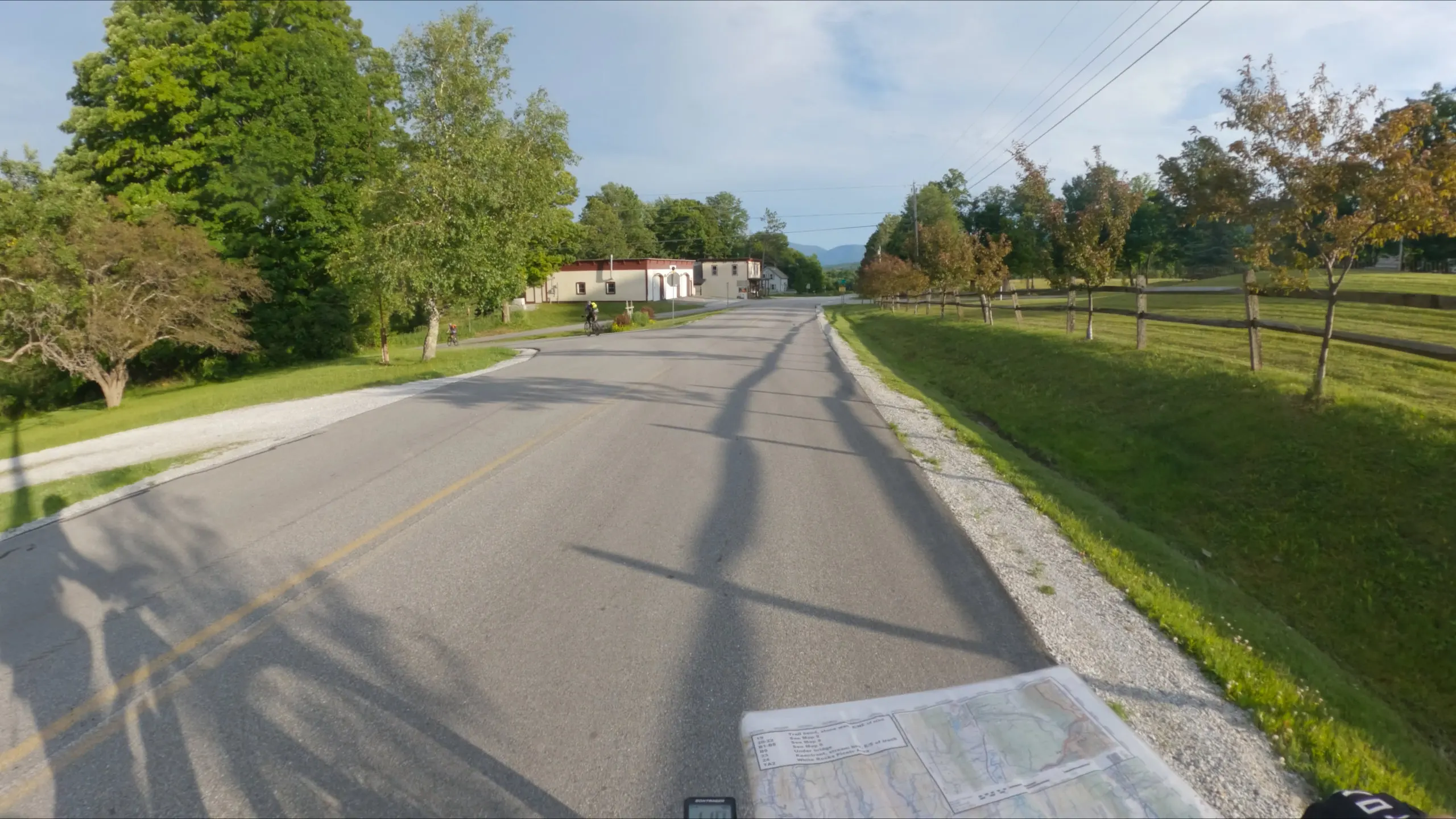
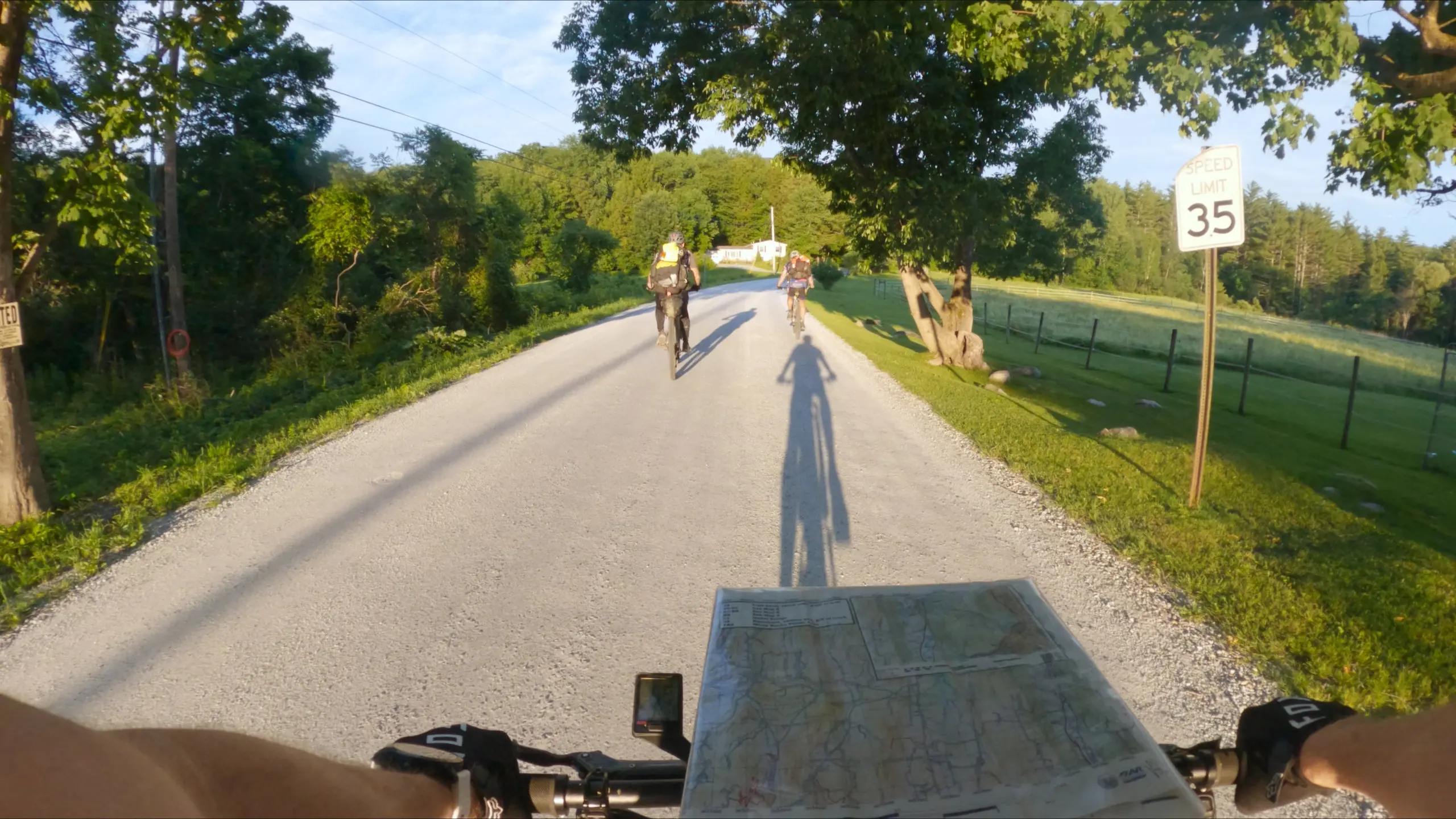
We stopped in Whitehall for food, my first 5-hour Energy of the race, and some real coffee, then rode a long, windy dirt road along the river that had clearly flooded recently. We later heard there was a sign somewhere warning the road was nearly impassable in high water, which would have been useful information before we plowed through puddle after puddle, some of them twenty feet long and eight inches deep, up to the hubs. Other teams apparently took the longer, drier route around, and in hindsight that probably would have been the smarter call, but we just put our heads down and suffered through the mud anyway.
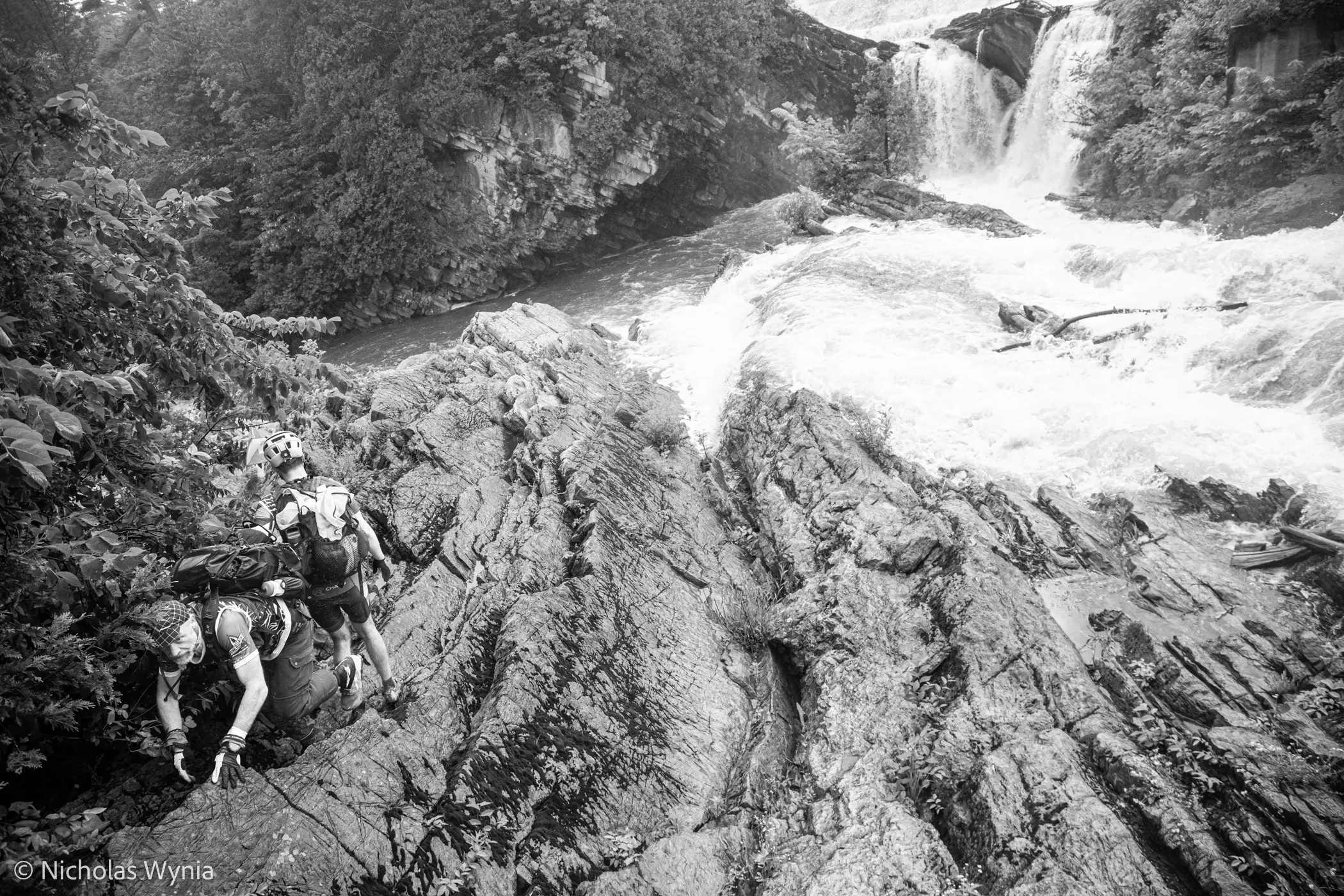
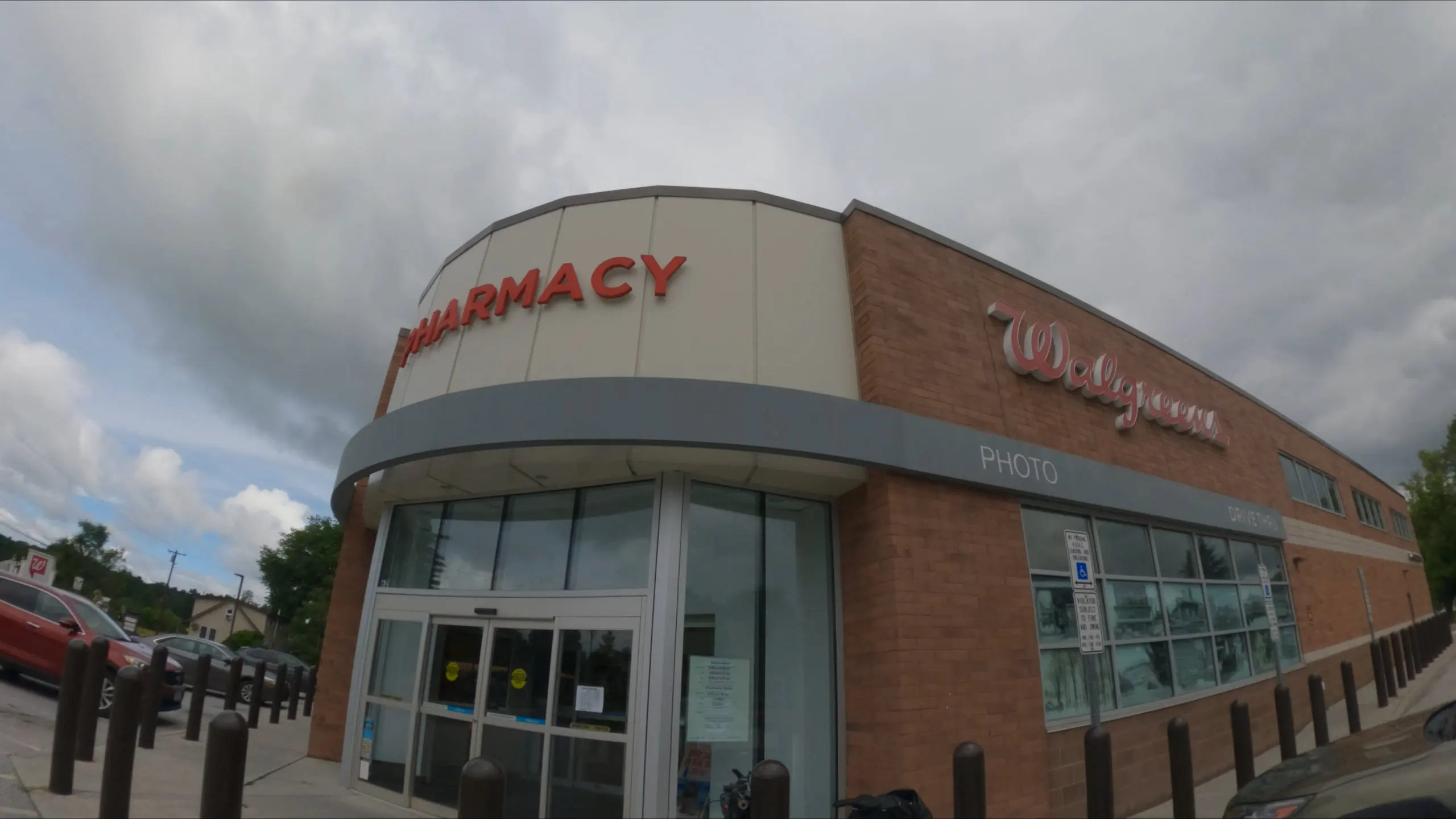
CP16 was a genuinely beautiful dam at Carver Falls, and CP17 brought us into Fair Haven for bagels at Old School Bagels that were, hands down, one of the best pick-me-ups of the entire race. Real food on day two of a race changes everything. Jason wanted a fresh first aid kit for his leg, so Brent pointed us toward a Walgreens up the street. “Are you okay to continue?” he asked, and we said yes.
At the pharmacy Jason got his leg rewrapped and, since he was already there, figured he might as well grab a tetanus shot to be safe. He came out chuckling and told us that out of pure muscle memory he’d punched Misty’s phone number in at checkout instead of his own, so she was about to get an itemized text receipt for a hundred dollars of medical supplies and a tetanus shot with zero context. We knew we’d be hearing about that one later.
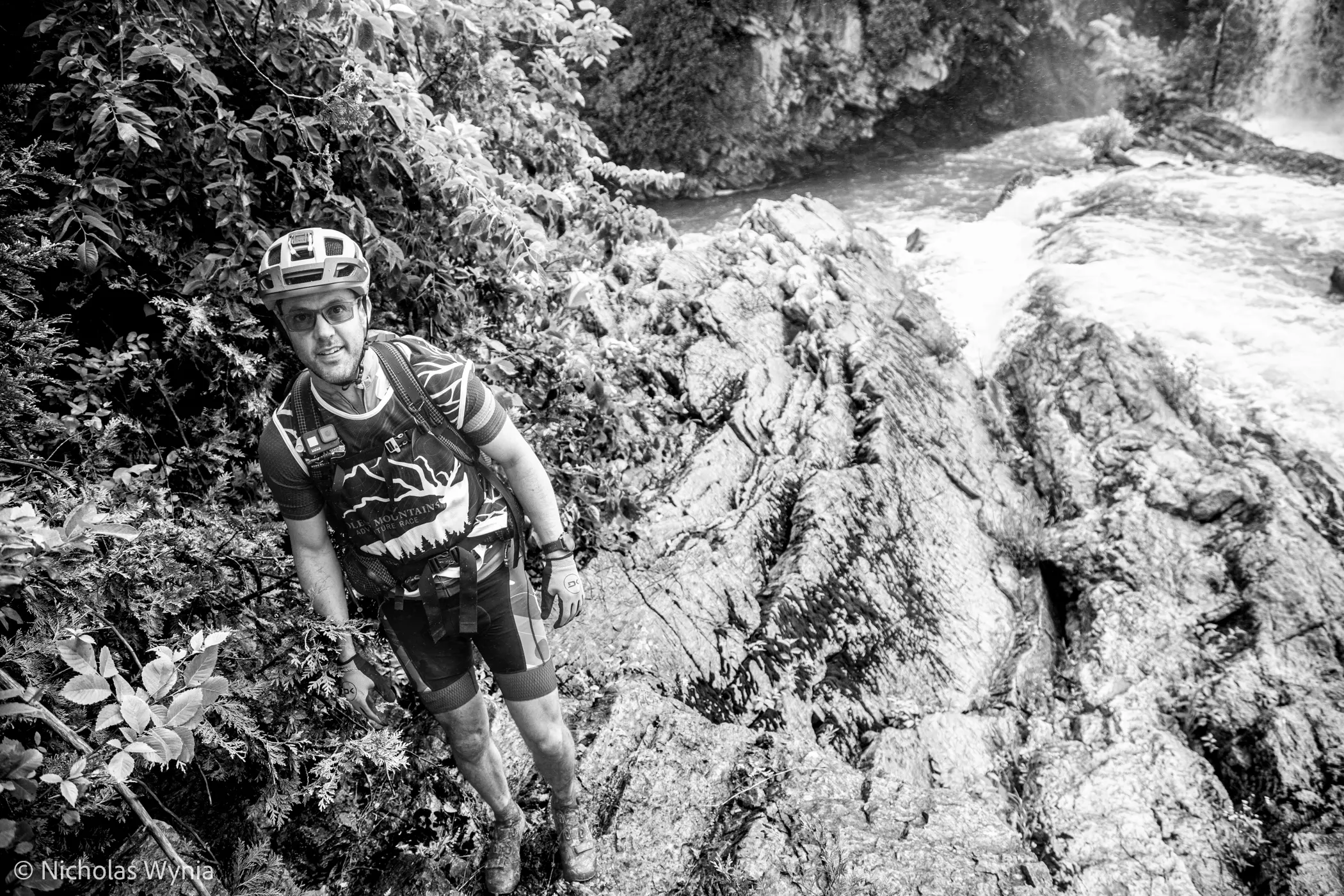
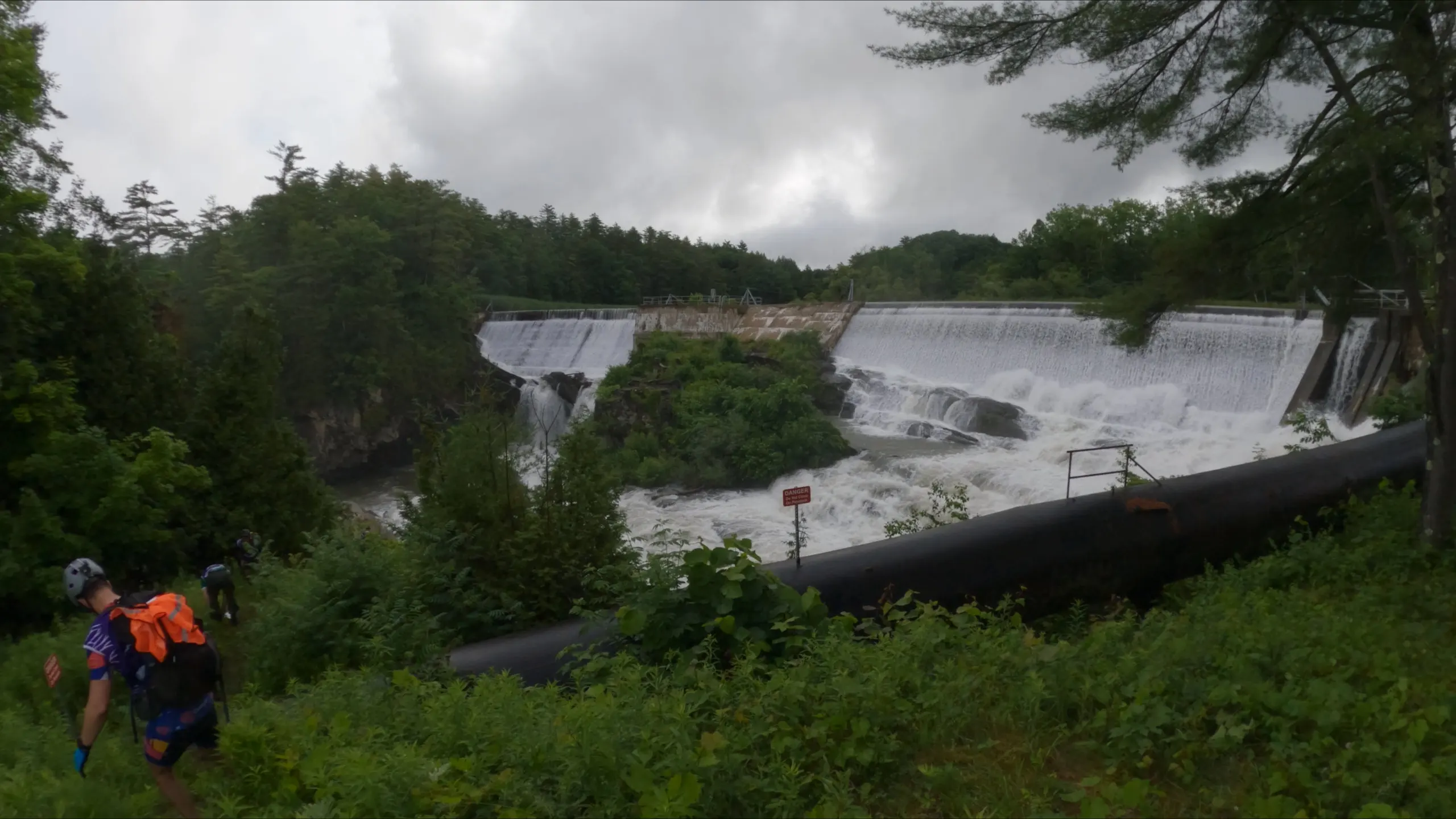
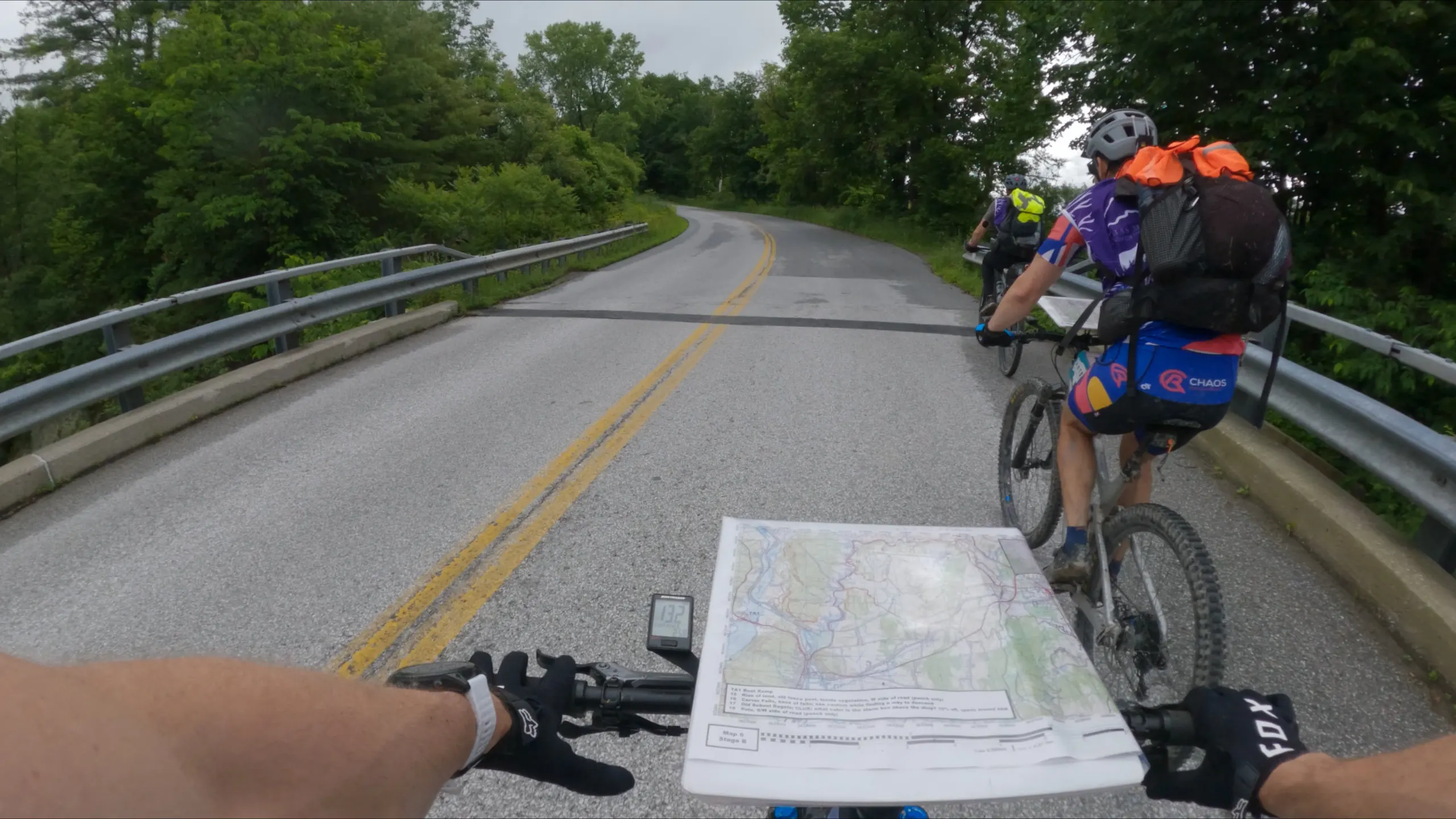
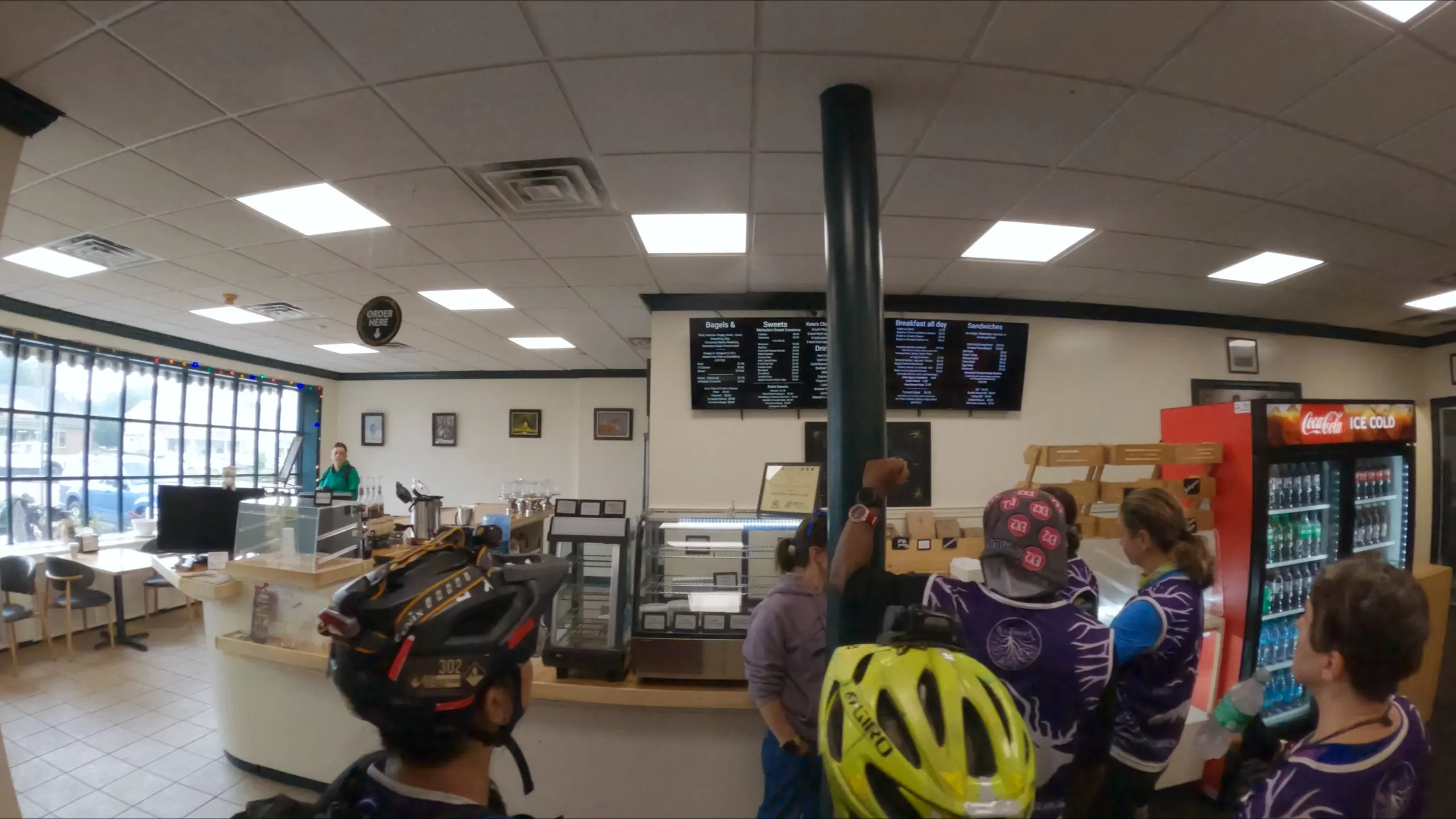
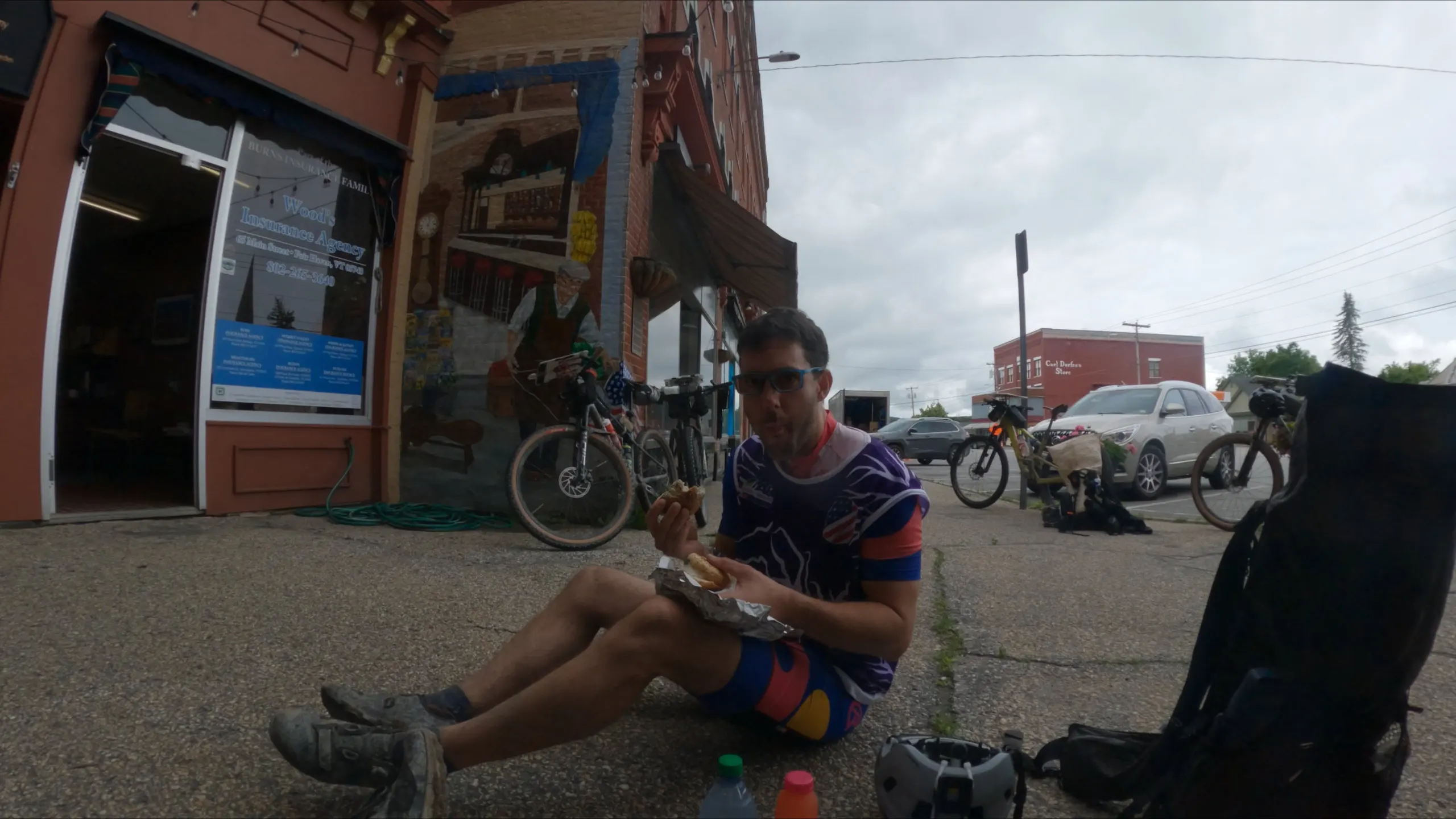
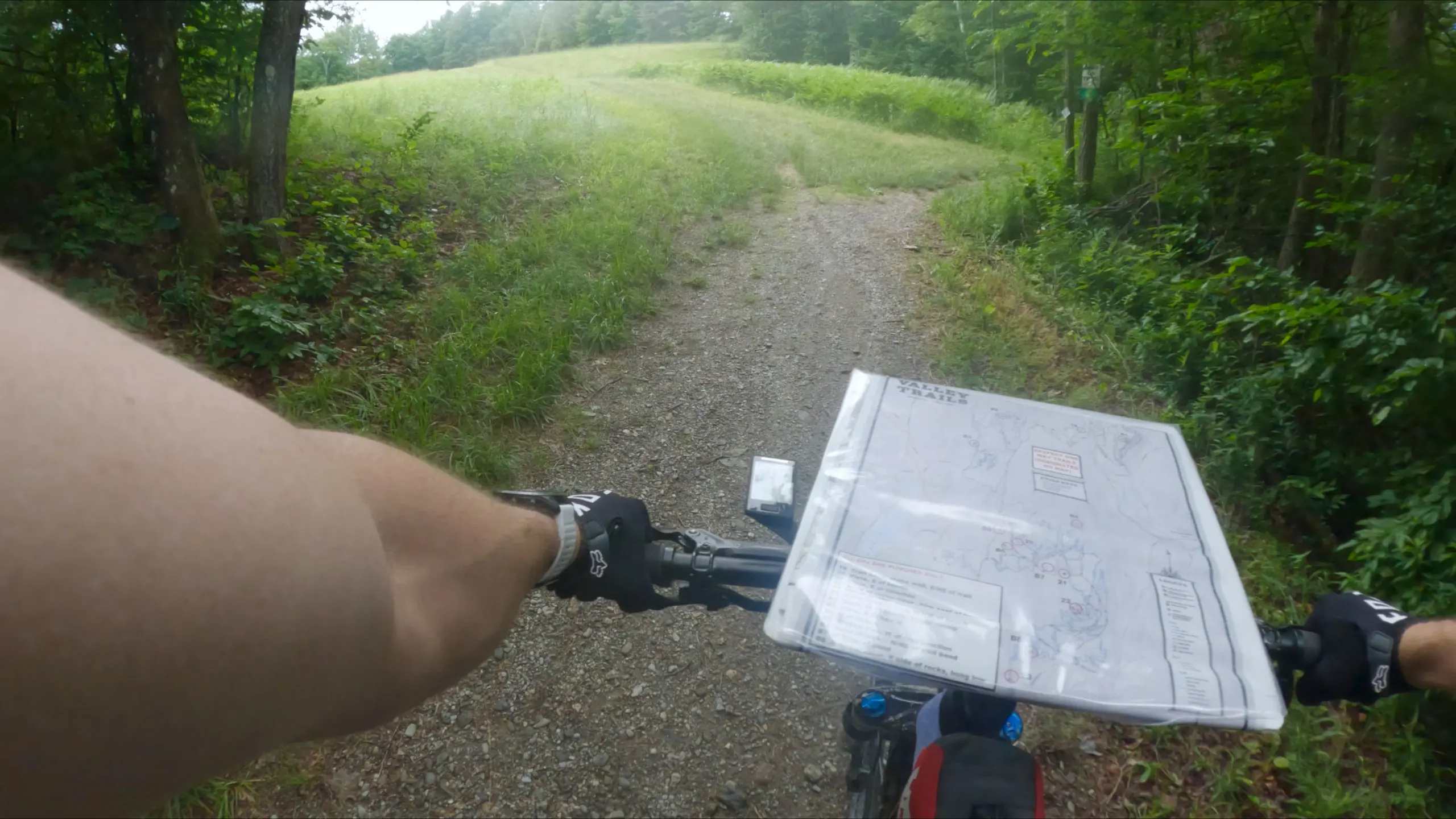
Slate Valley Trails came next, a bike park the locals swear is better than the Kingdom Trails. We went in skeptical, and honestly, we came out still skeptical, nothing beats the Northeast Kingdom for us, but it was a fun network in its own right. We’d planned to grab optionals B2 and B3, but with Jason’s leg and a brutal climb up the backside of the mountain ahead of us, we made a team call to skip them and bank energy for the southern part of the course instead. There was one climb where Jason caught his bad shin on his pedal and, by his own account, saw stars. He wanted to push on to see how the wound held, and somehow it did. I genuinely don’t know how he kept going.
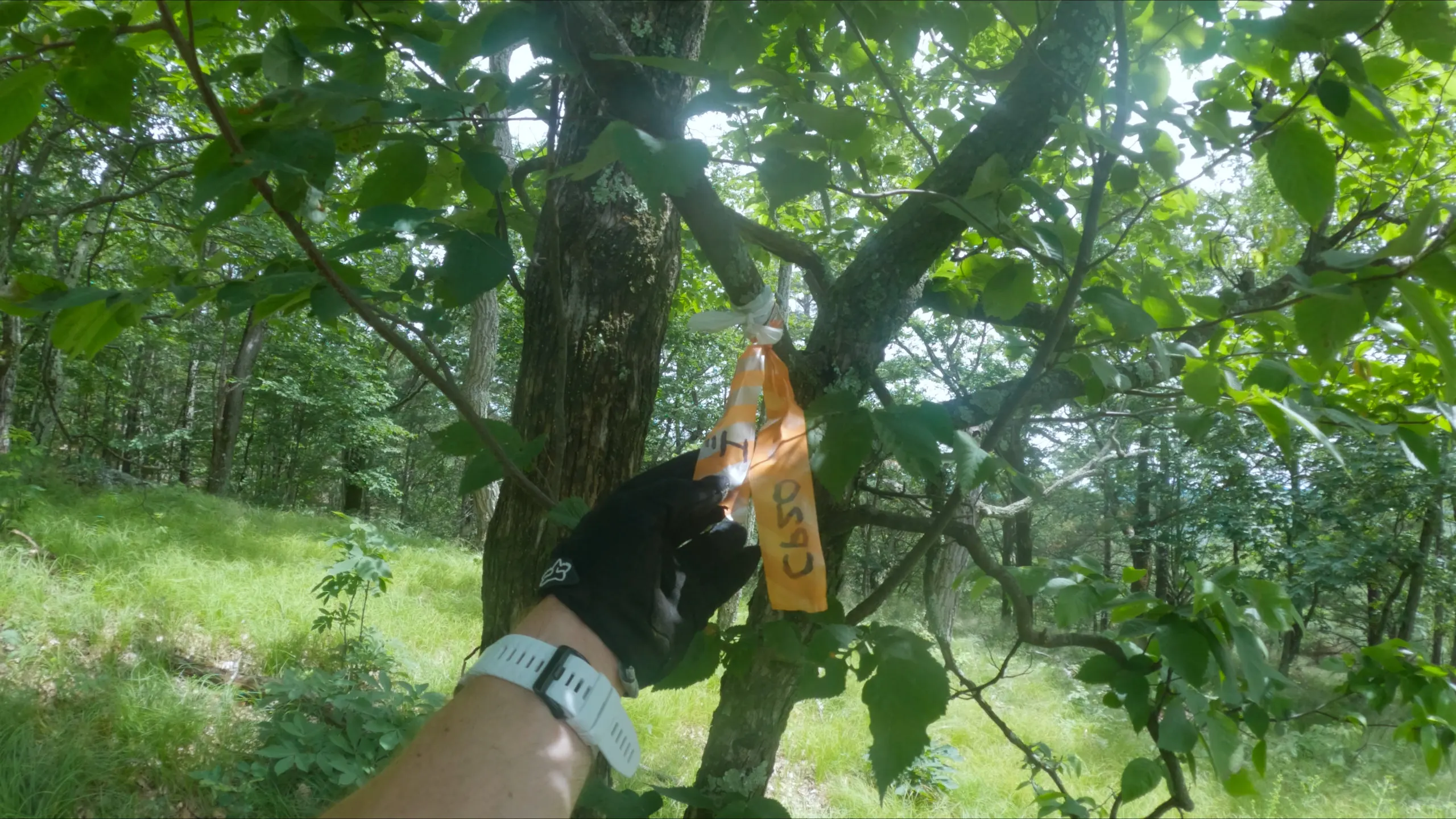
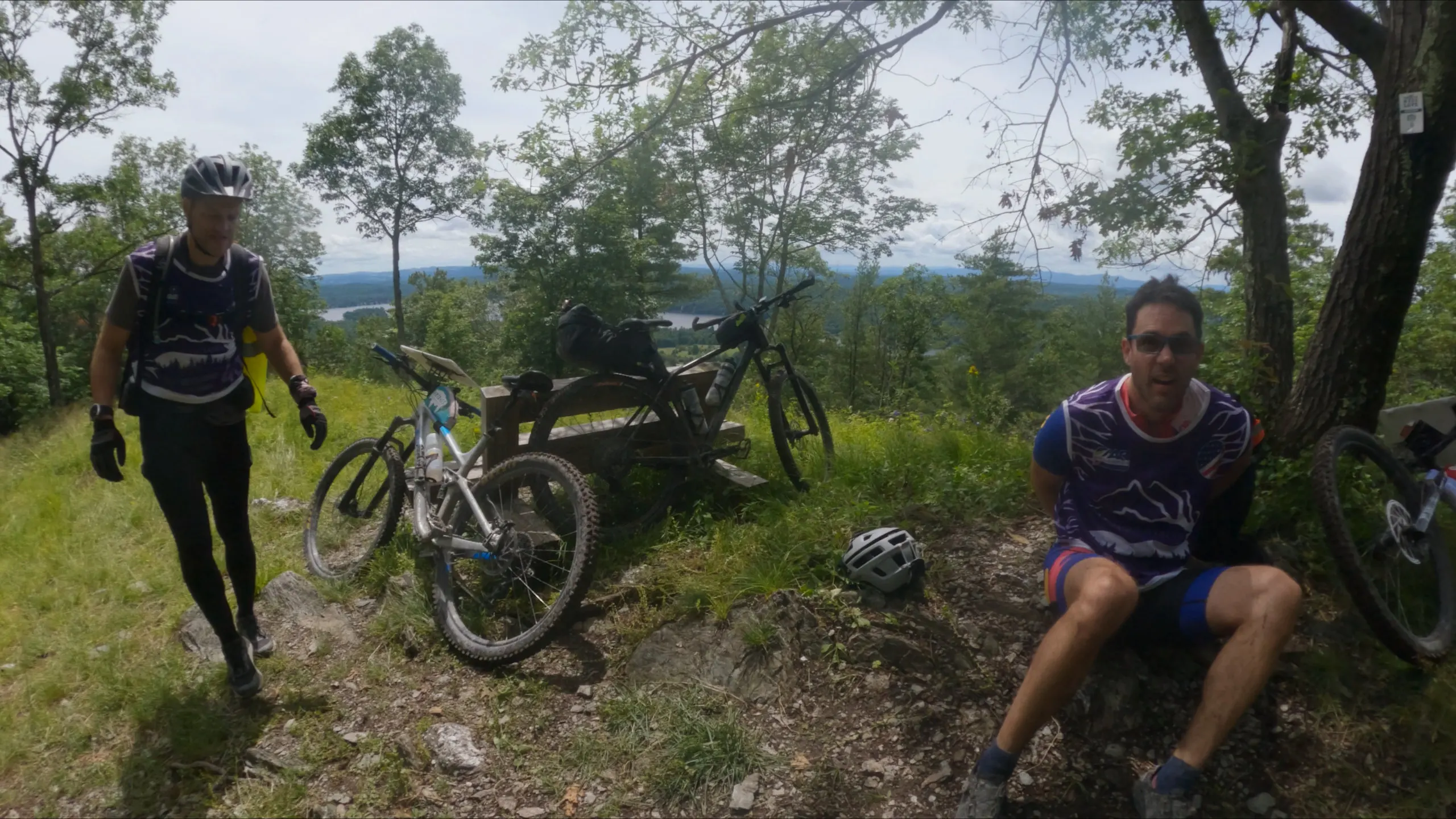
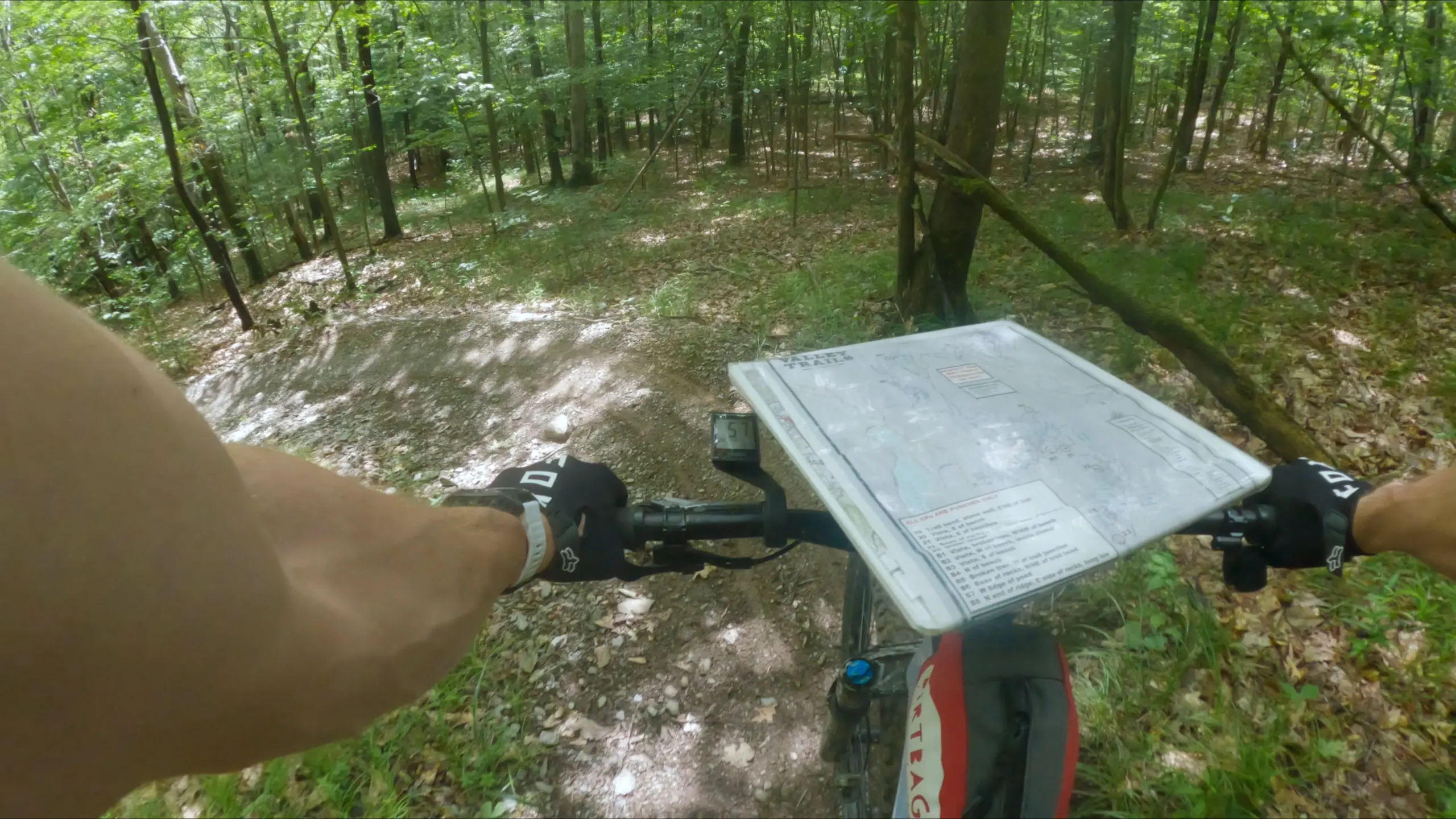
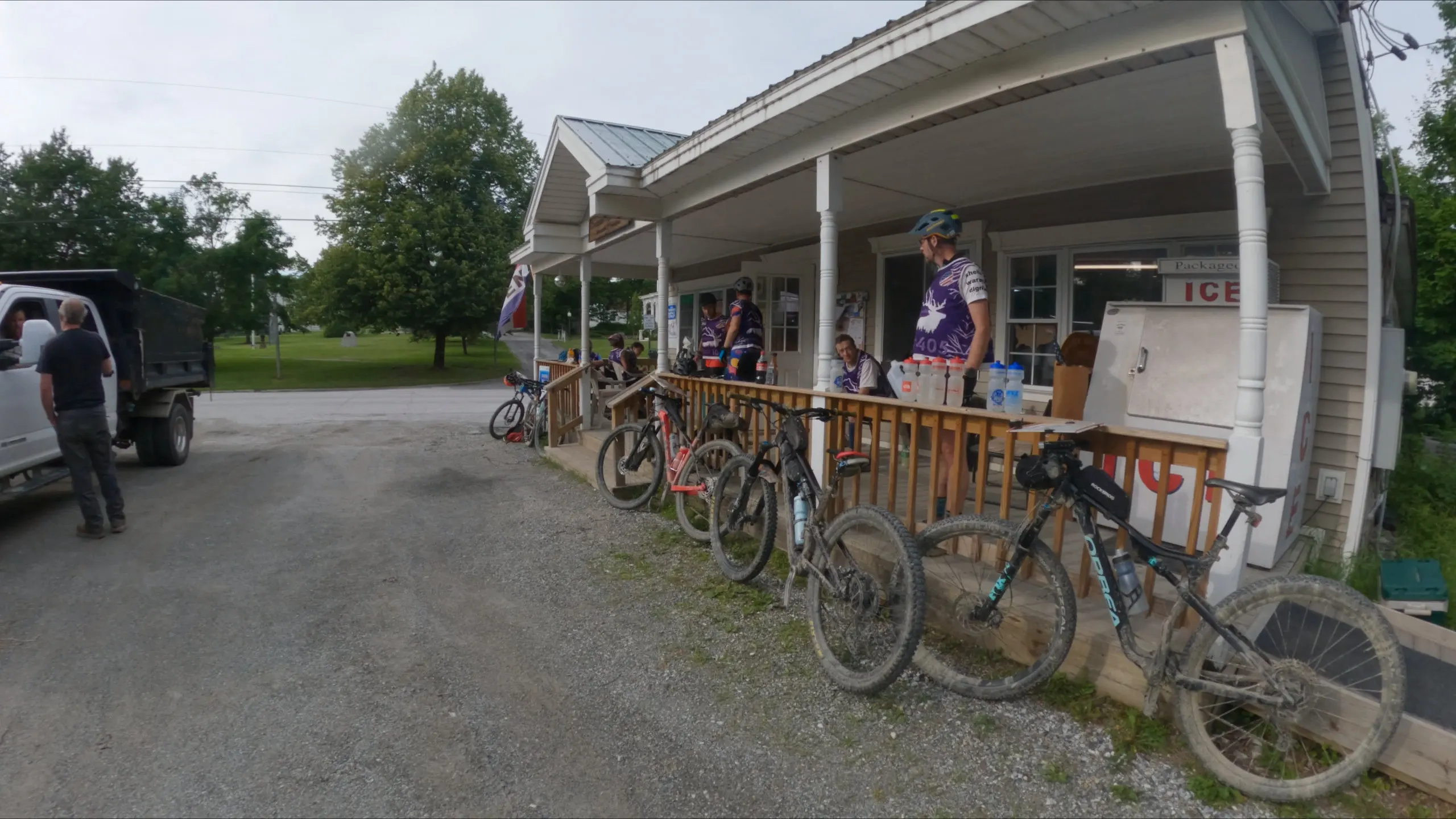
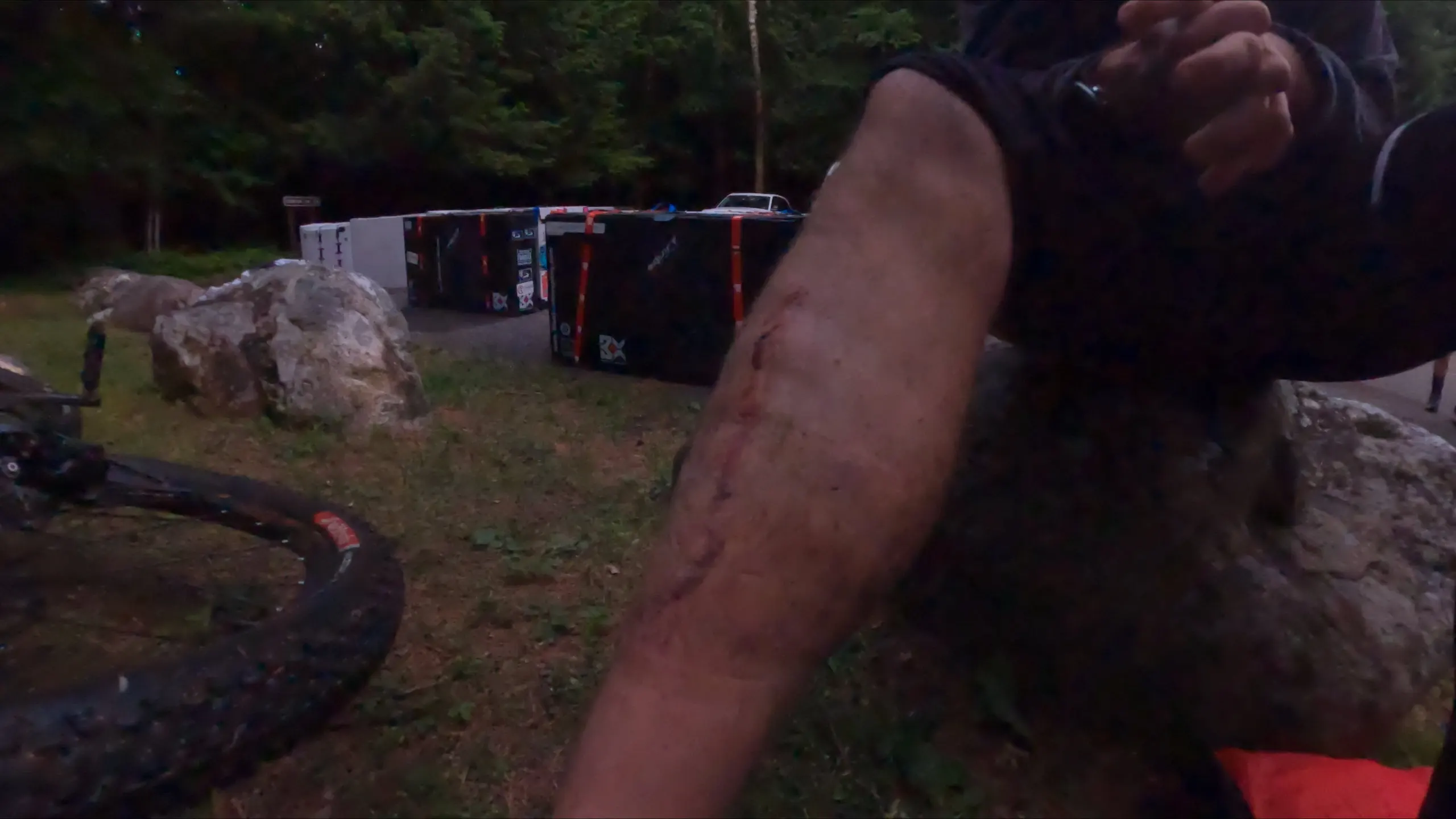
I nearly caused our own team oopsie coming down one of the black trails, when a porta-potty door swung open directly into the trail right as I was bombing down toward it. I grabbed the brakes hard, unclipped too late, caught a rock, and went over the bars in front of a very startled woman who’d just walked out of the outhouse. I walked away with a scuffed shoulder and my dignity mostly intact.
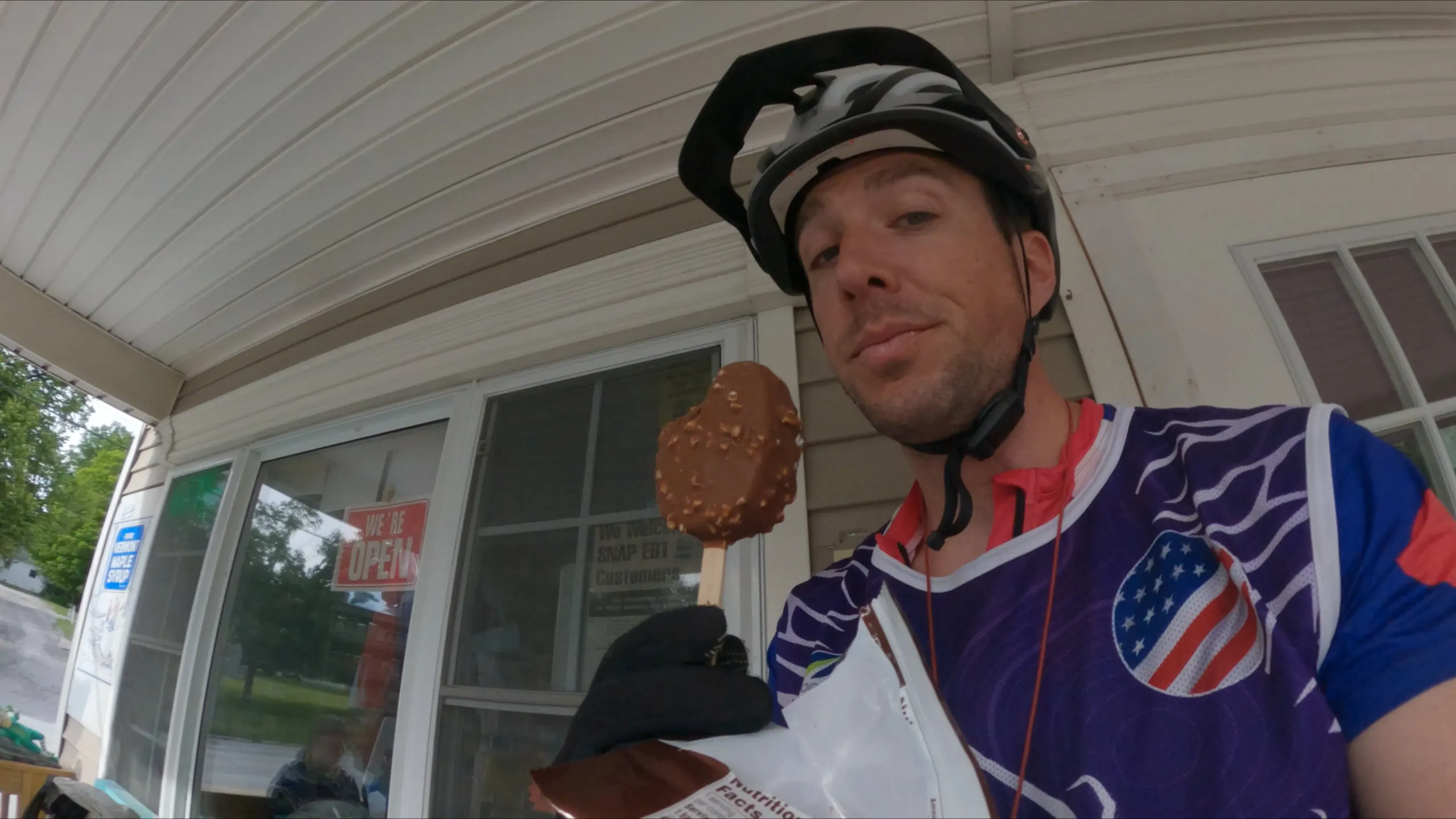
We skipped optional B9, which would have eaten an entire map for one point, though we still stopped at a country store on the way, because Vermont country stores are incredible, and kicked off a trend that carried through the rest of the race: sandwiches, drinks, and ice cream every time we passed one. From there we made a beeline for TA2, arriving just before nightfall. Jason’s parents were waiting (Misty and the girls were flying in the next day).
They’d already pieced together that something was wrong from the string of medical supply receipts and were worried sick, and medical took one look at his leg and said we’d done a great job keeping it clean, but this needed a real emergency room, not a race medic’s opinion. JP and I could keep going without him if we wanted. We didn’t even consider it. We told Jason to go get sorted, told the crew to knock on our tent the second they heard anything, and got some food and sleep.
Ninety minutes later, the word came: Jason wasn’t coming back on course.
My first thought was simple: we’d make him proud.
Stage C: Out of the Frying-Pan, Into the Fire
White Rocks National Recreation Area: Day 1, Hour 10
32.6 miles trek
JP and I had never raced as just a two-person team before, and honestly, we were excited. We’re both strong on our feet and both do a lot of the lead navigation on this team, so putting two full sets of eyes on the maps through White Rocks felt like an opportunity instead of a setback. We didn’t disappoint ourselves. We bushwhacked hard from CP25 up and over a mountain to CP26, where we watched several other teams badly turned around. It was clear early on that the dotted lines and red lines on these maps were not to be trusted; they might be a wide open gravel road or they might not exist at all anymore.
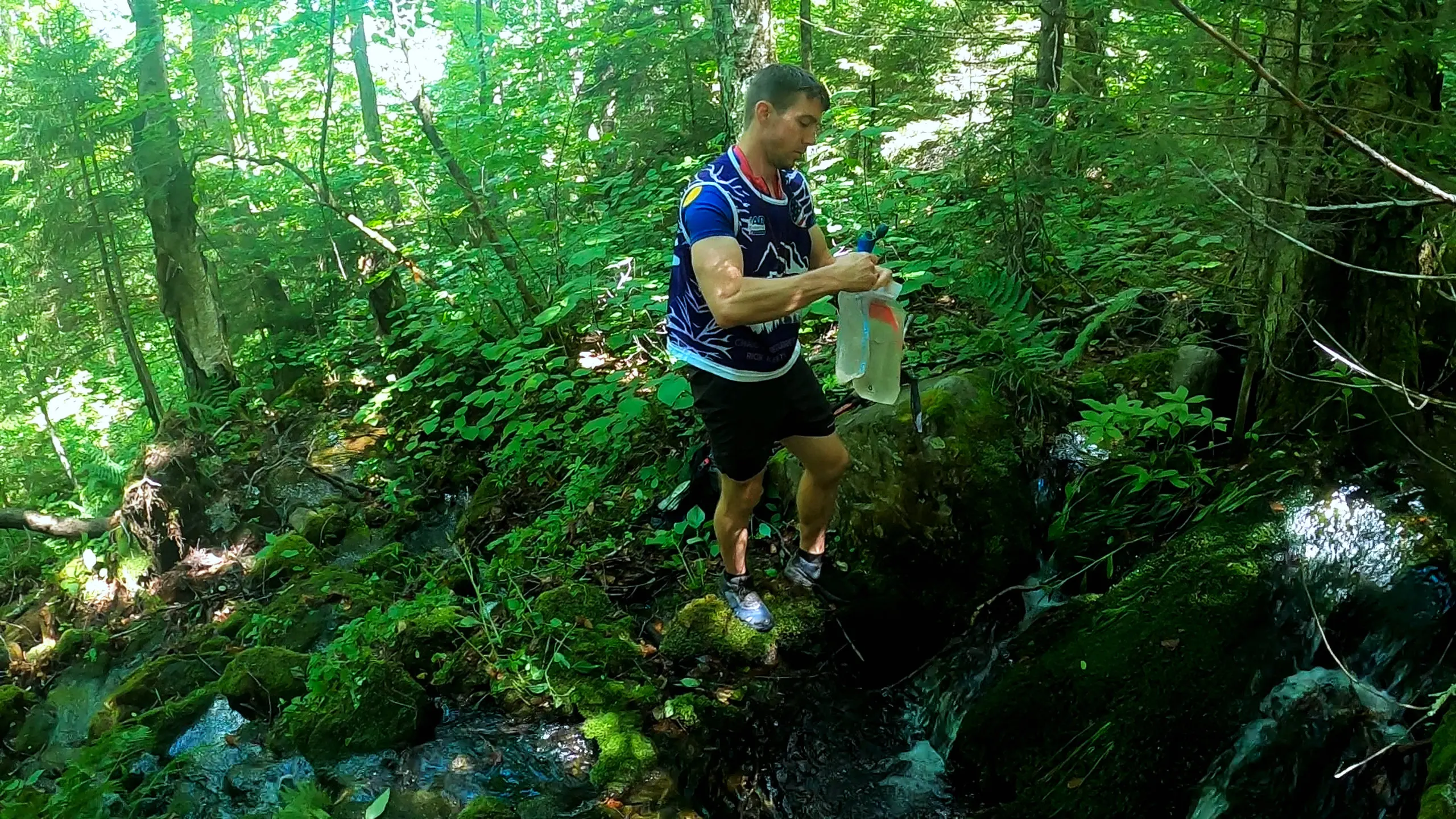
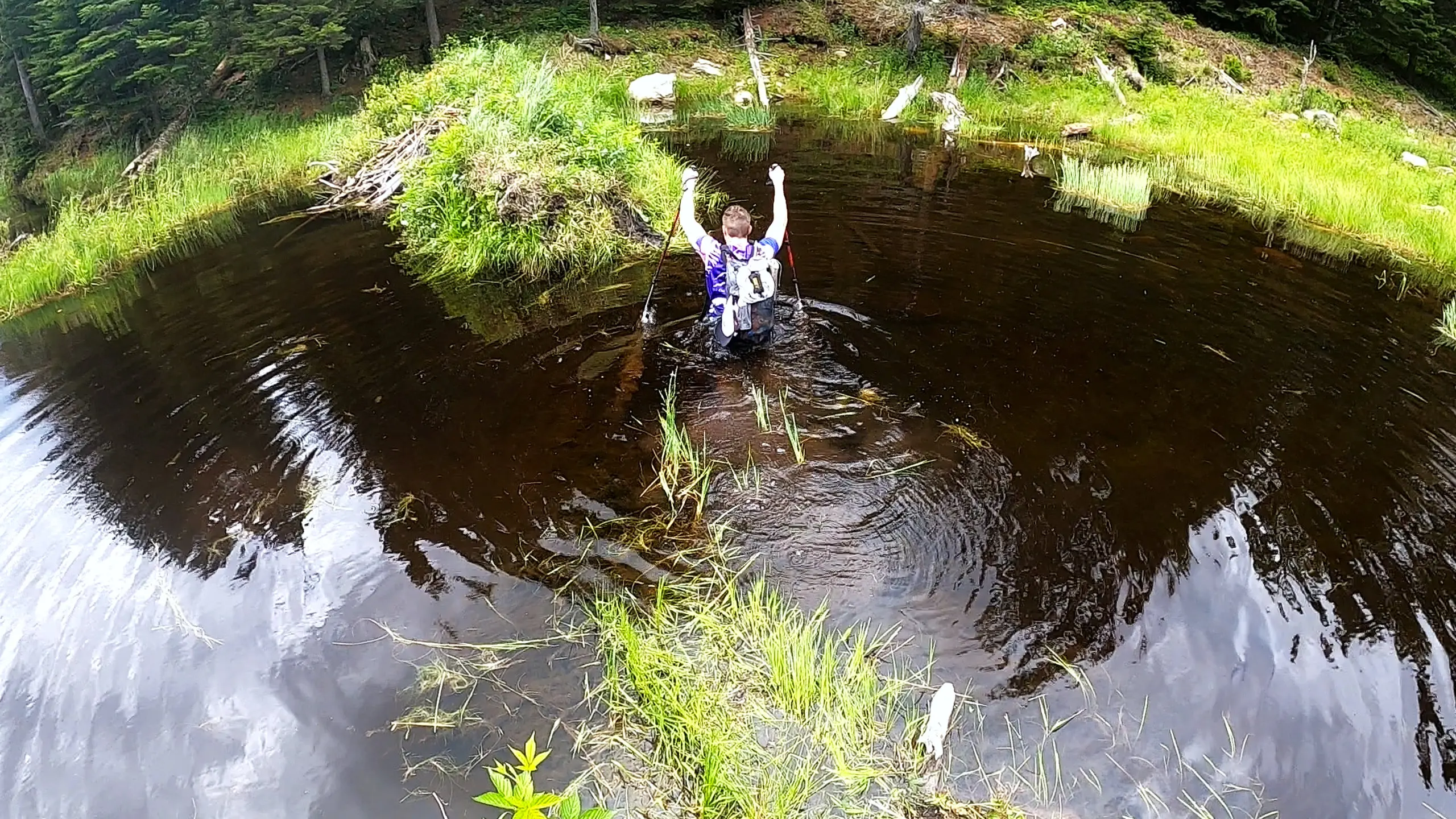
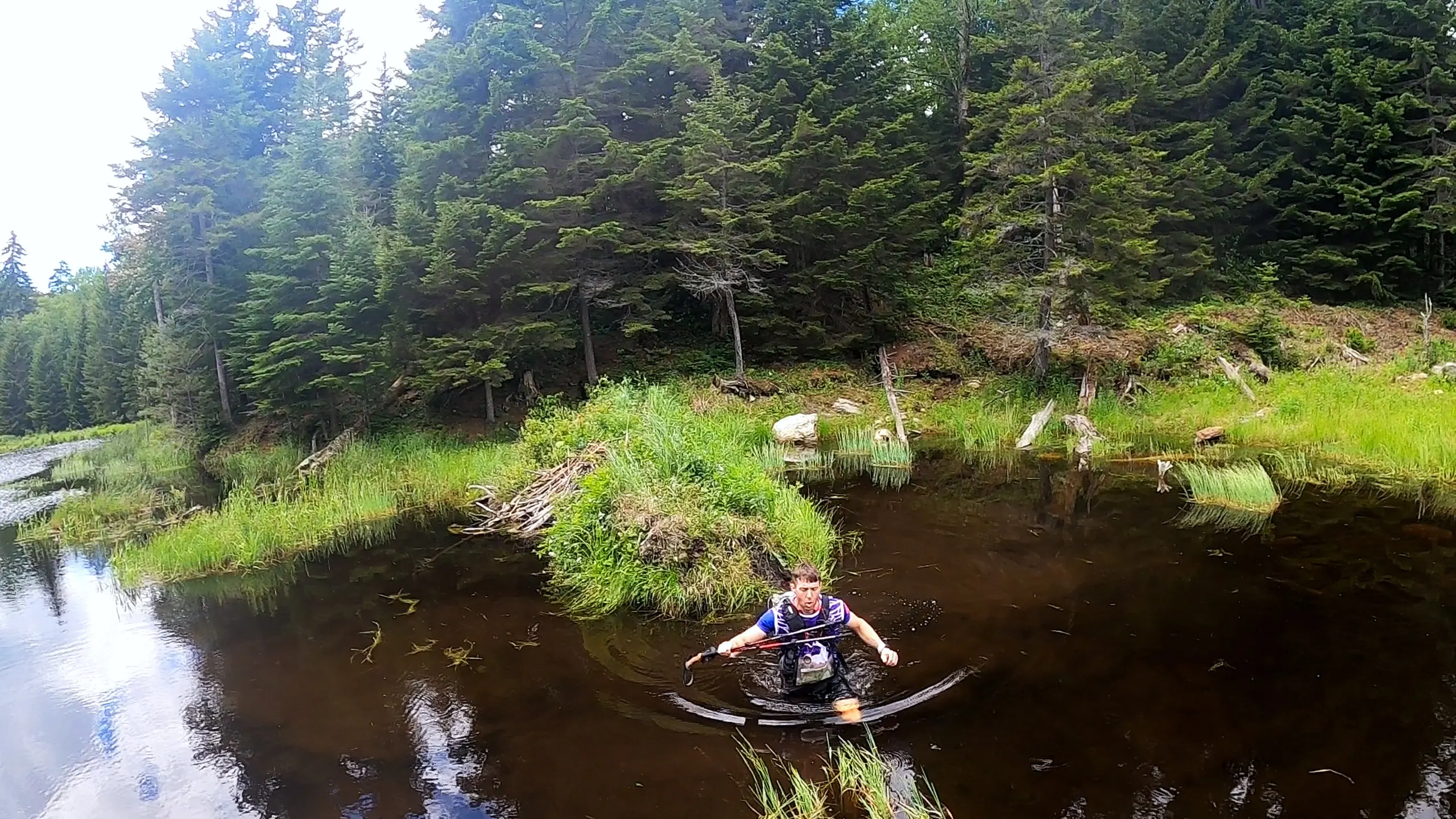
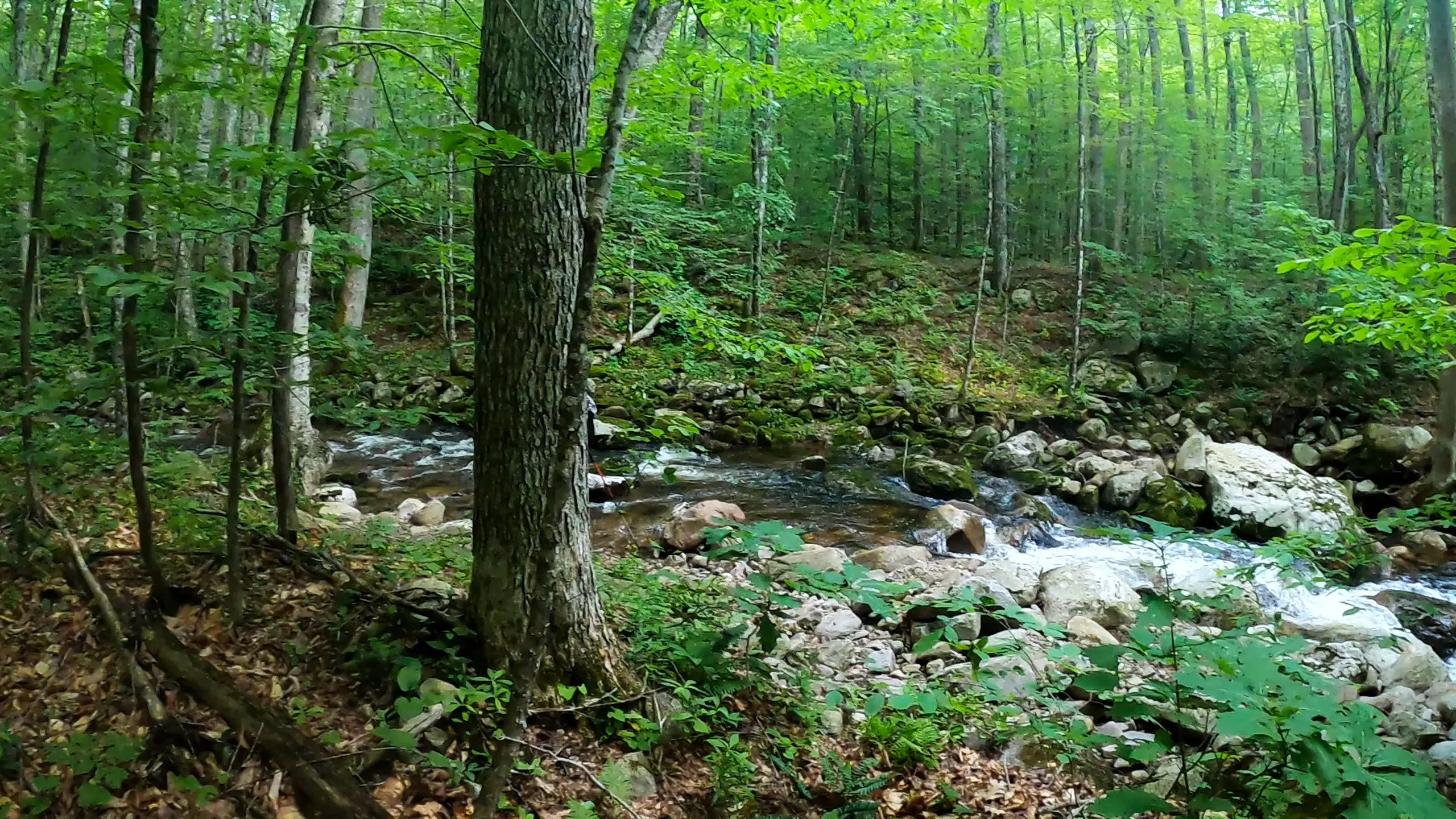
The weather turned gorgeous, a stark contrast to the year before, when this stretch of Vermont had baked us. We cut for CP29, then made a big move to CP32 with a great bushwhack to the top of a mountain, and JP had the idea to cut straight across to C5, a total audible that wasn’t anywhere in our original plan, and we nailed it. CP31 gave us the most grief of the day, some kind of beaver dam maze where whatever the map showed us, we ended up covering twice the distance to get there, cutting too far south on our first attempt before finding our way in. We crawled through beaver dam water to tag it, which felt like a fitting reward for the trouble.
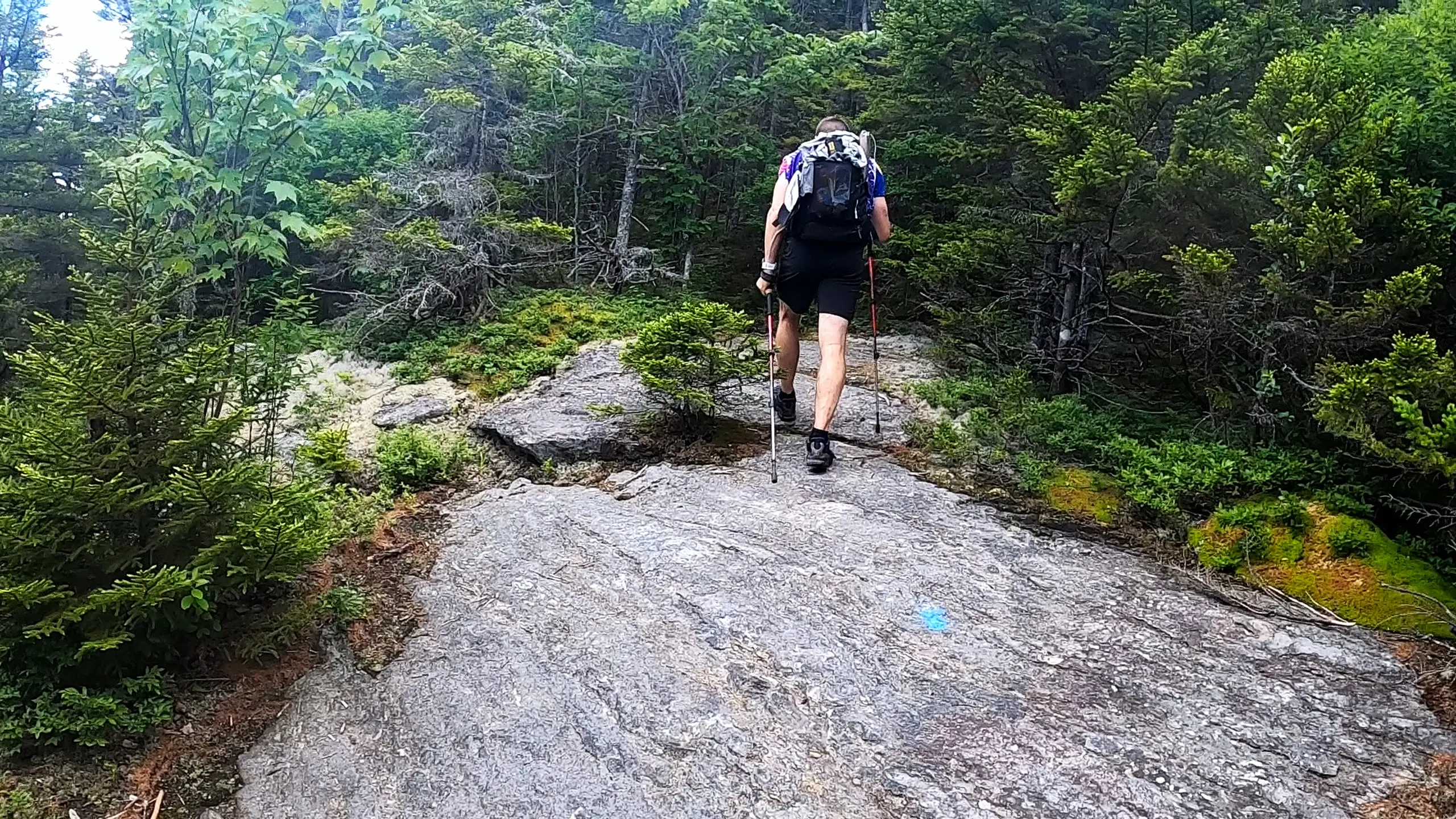
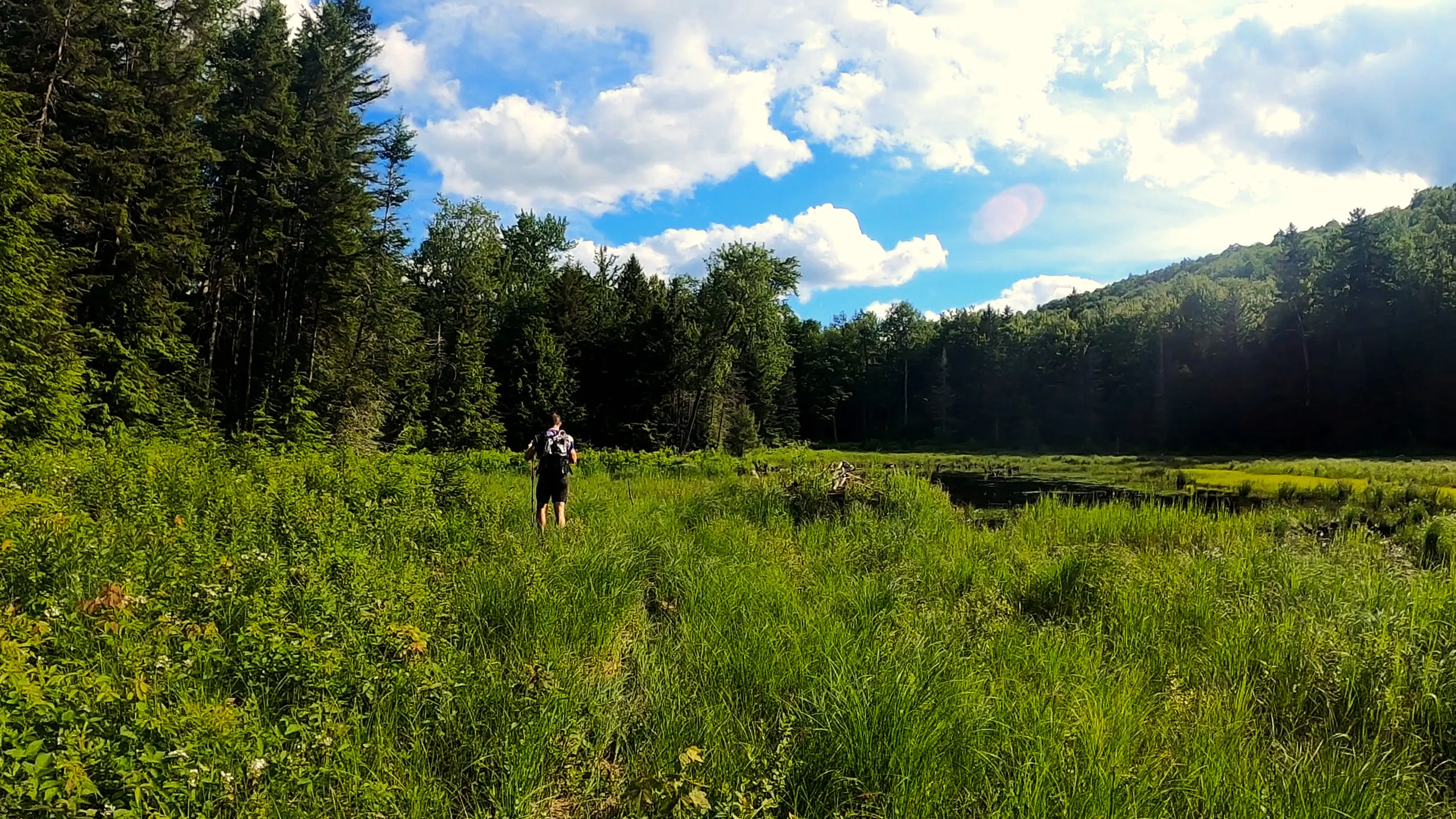
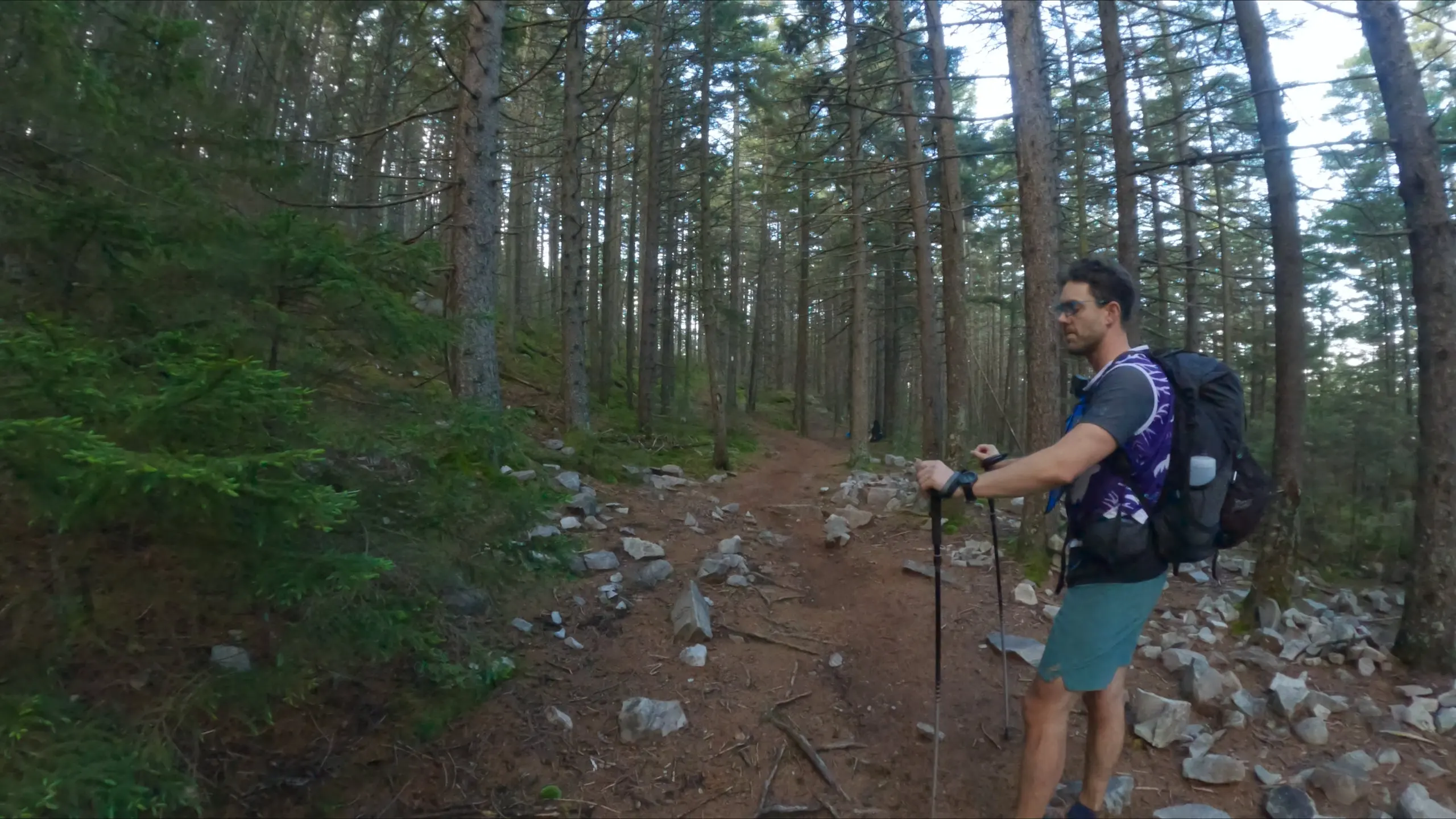
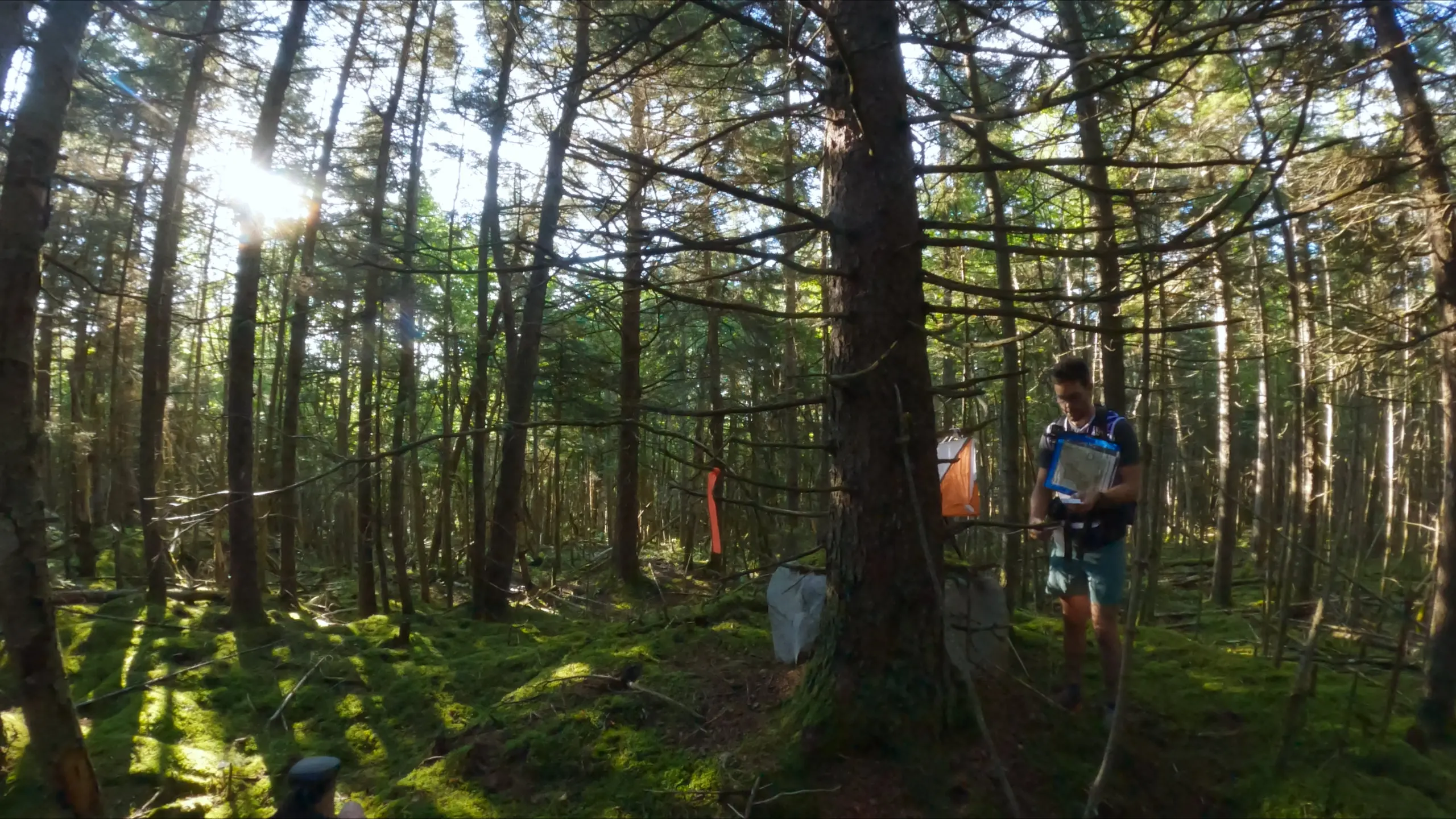
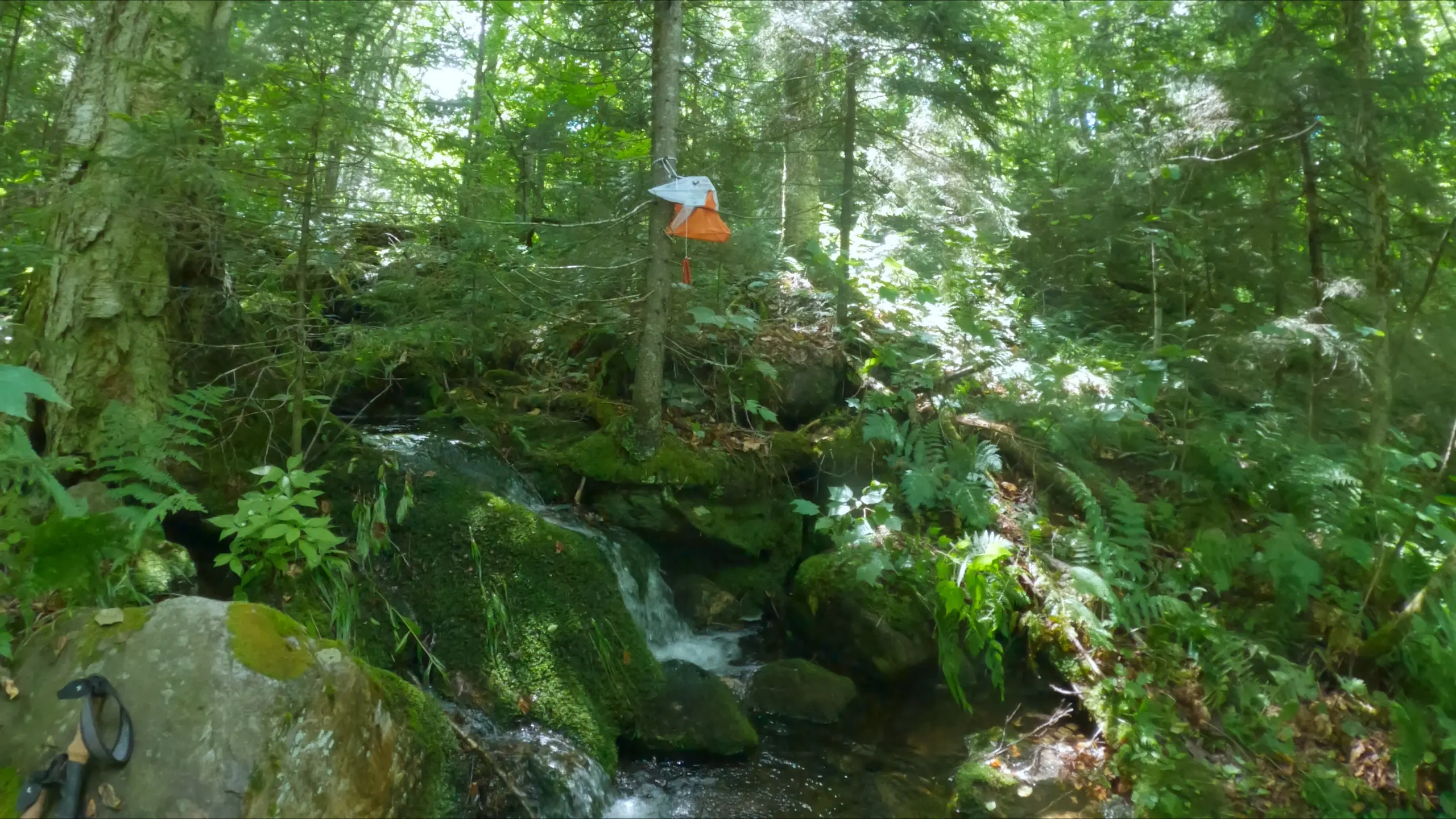
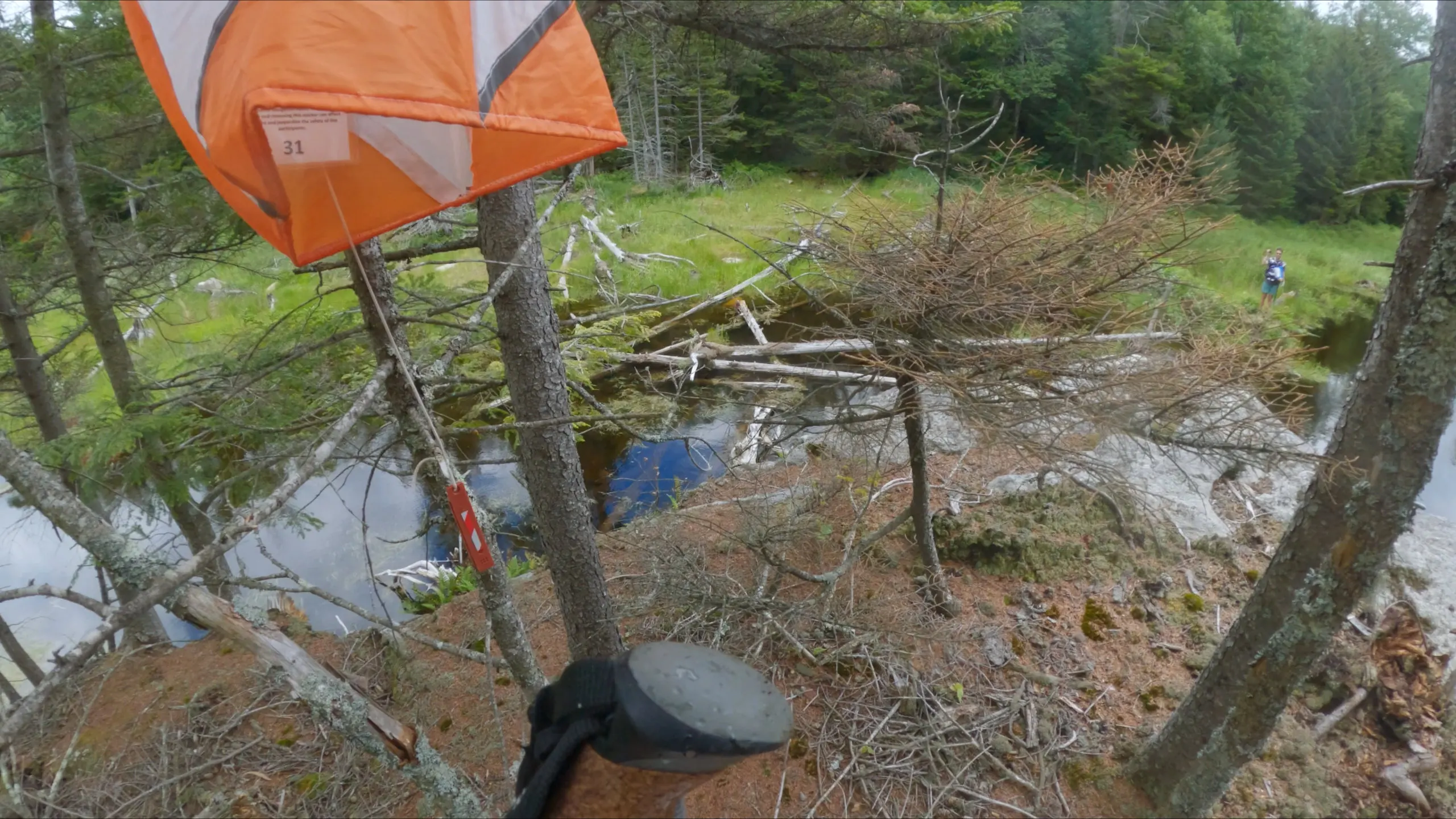
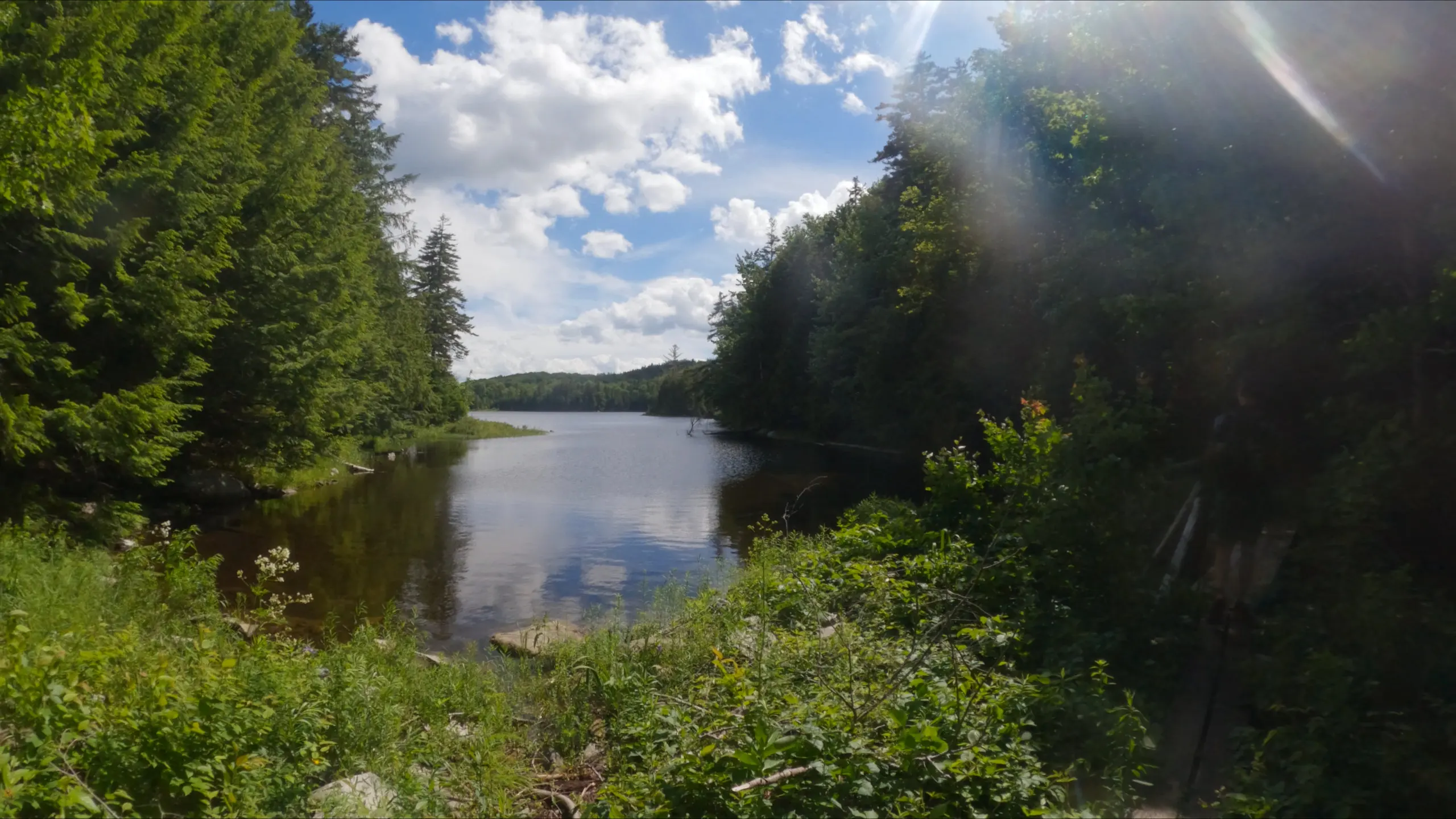
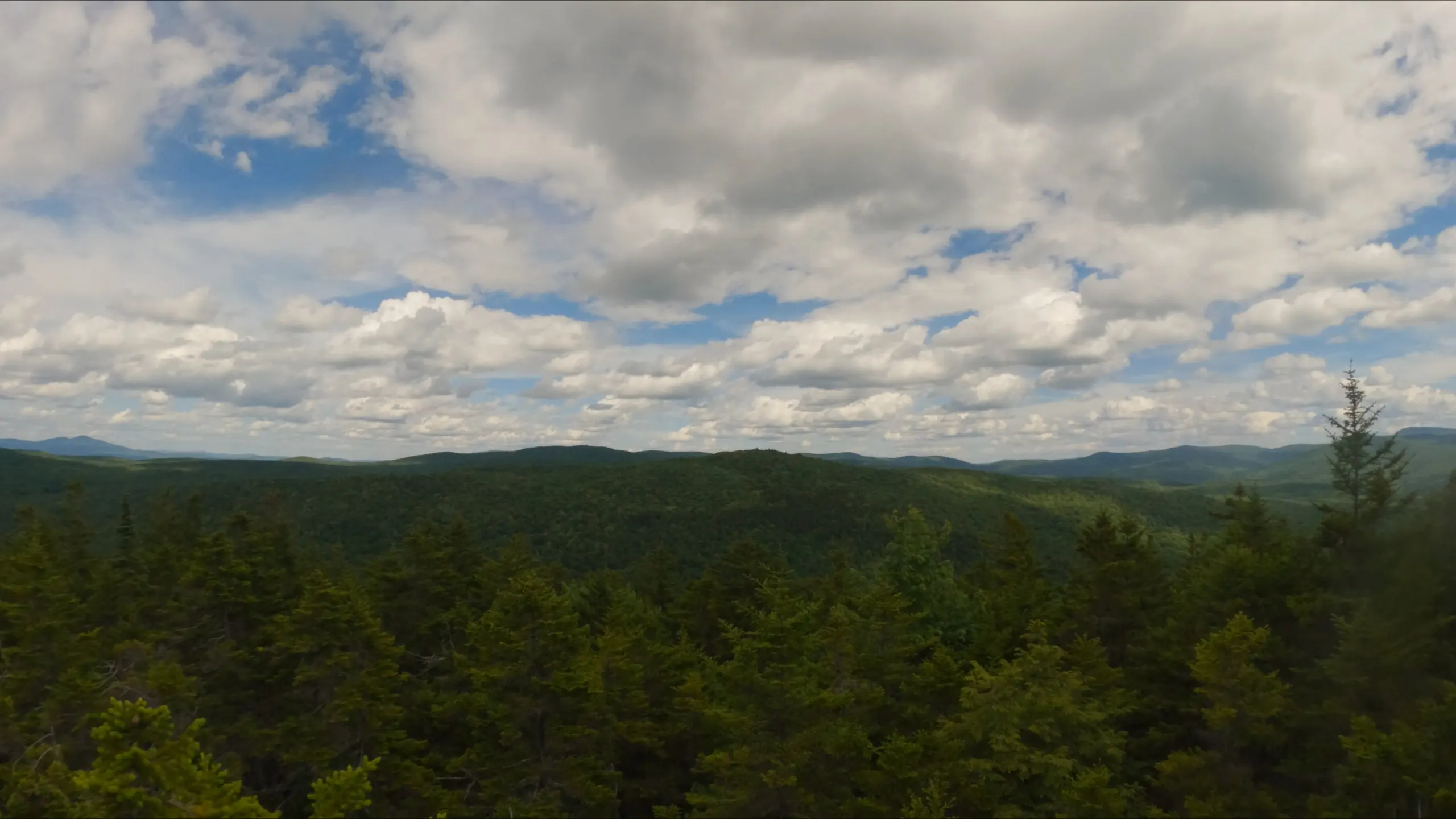
We worked our way to CP28 and optional C2 next, linking up with a couple of teams who were hunting for CP28 in the wrong spot (it was tucked right in the middle of a creek) and pointed them the right way before bushwhacking straight up a mountainside to a beautiful little rock pond, then climbing again to CP30. From there we pulled another audible, cutting hard right toward CP33 and then straight down the mountain to CP12 in a steep, careful descent. We’d left TA2 as one of the last teams out that morning, and rolled into TA3 right in the middle of the pack by early evening, having clawed back a ton of time purely on navigation. Just the two of us, moving fast and clean the whole way. It was a genuinely fun day of racing.
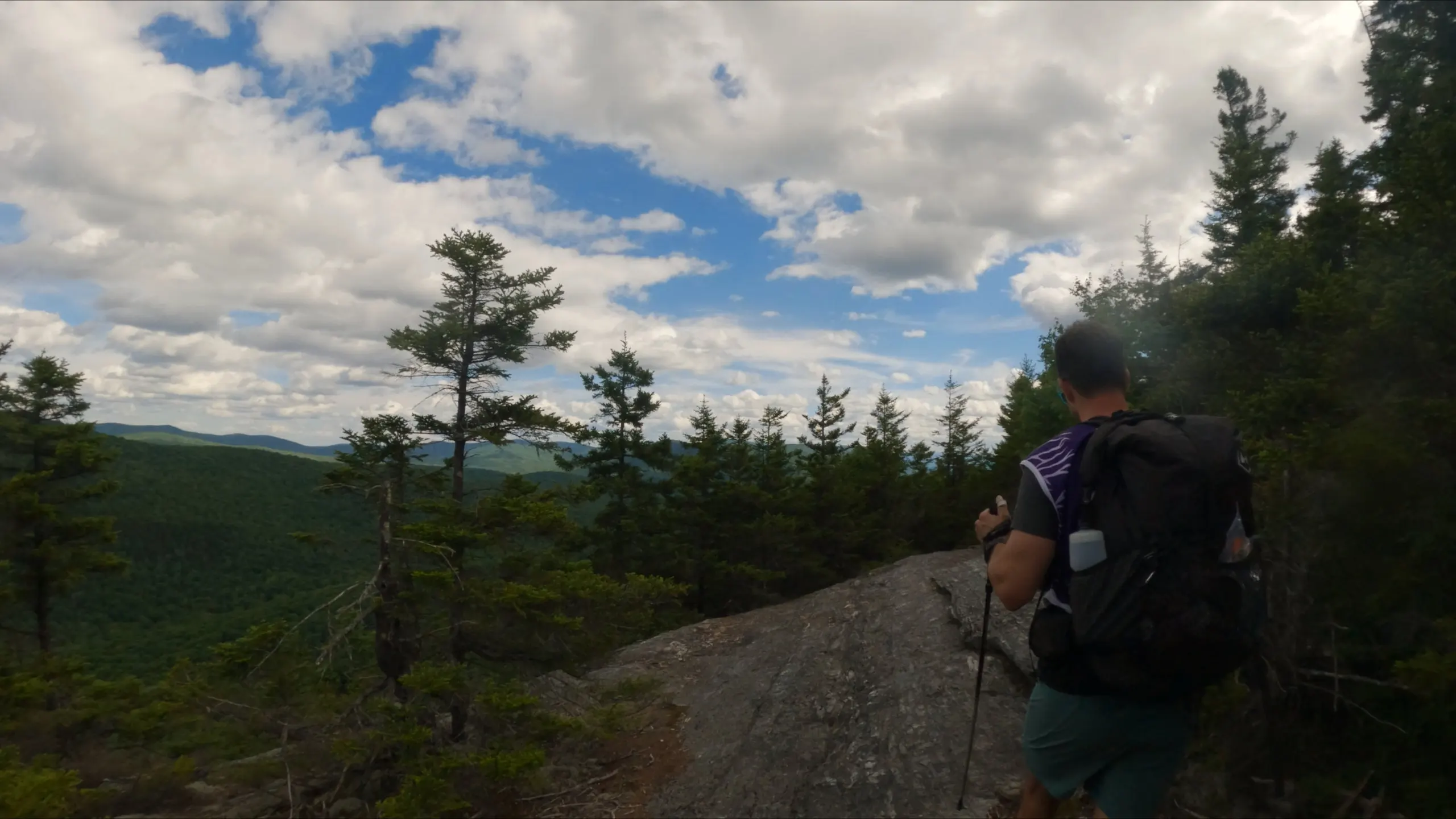
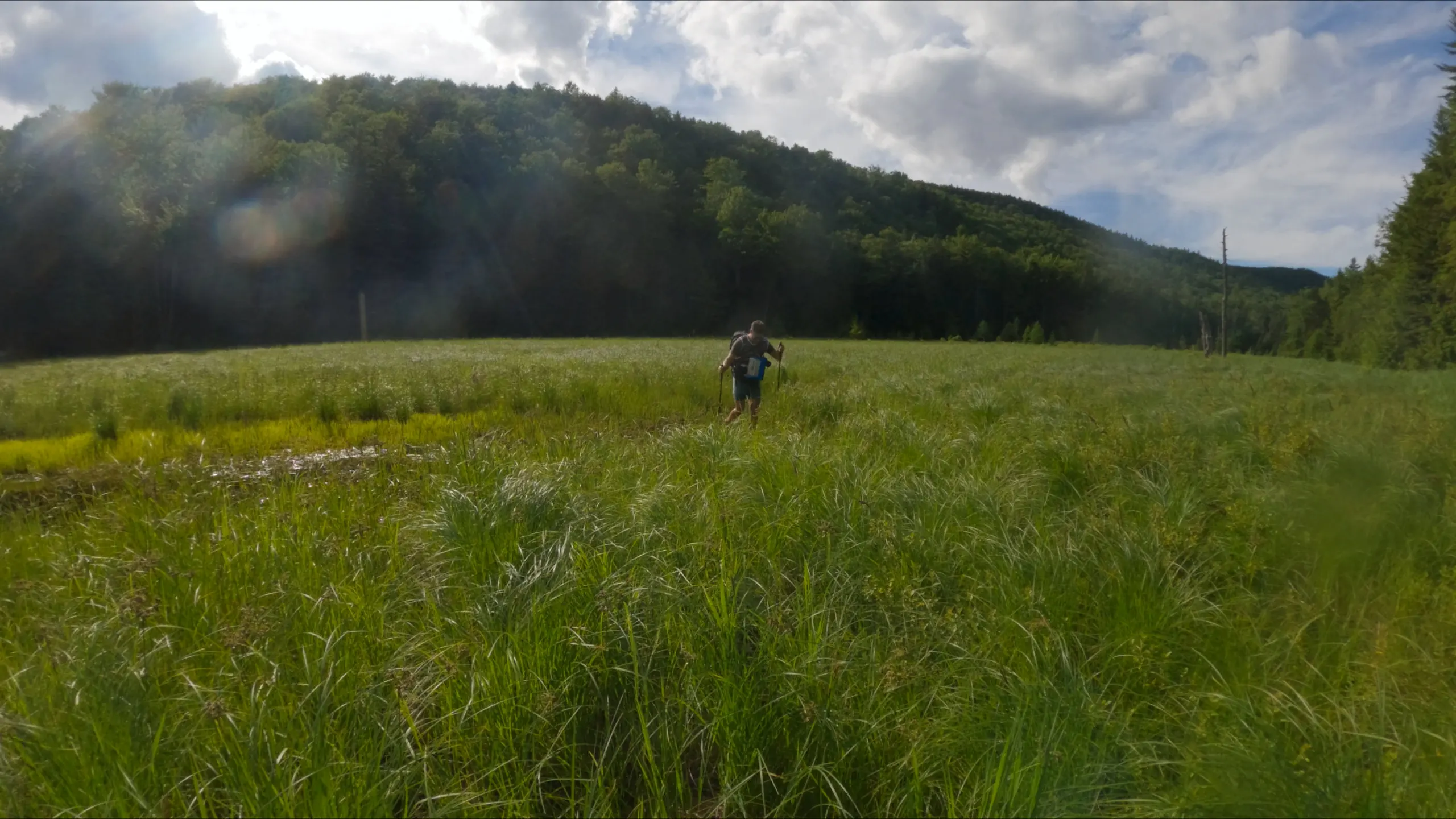
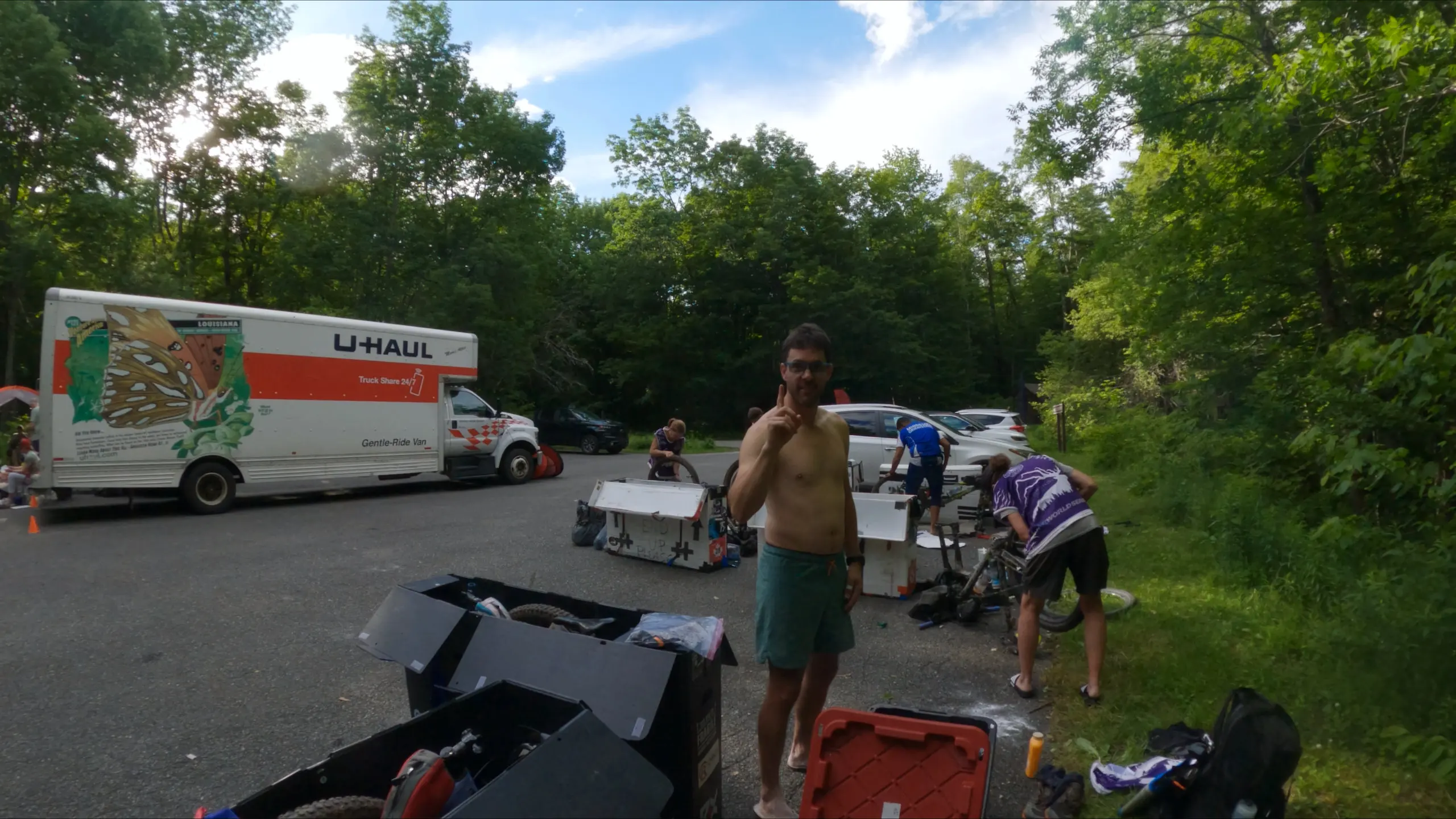
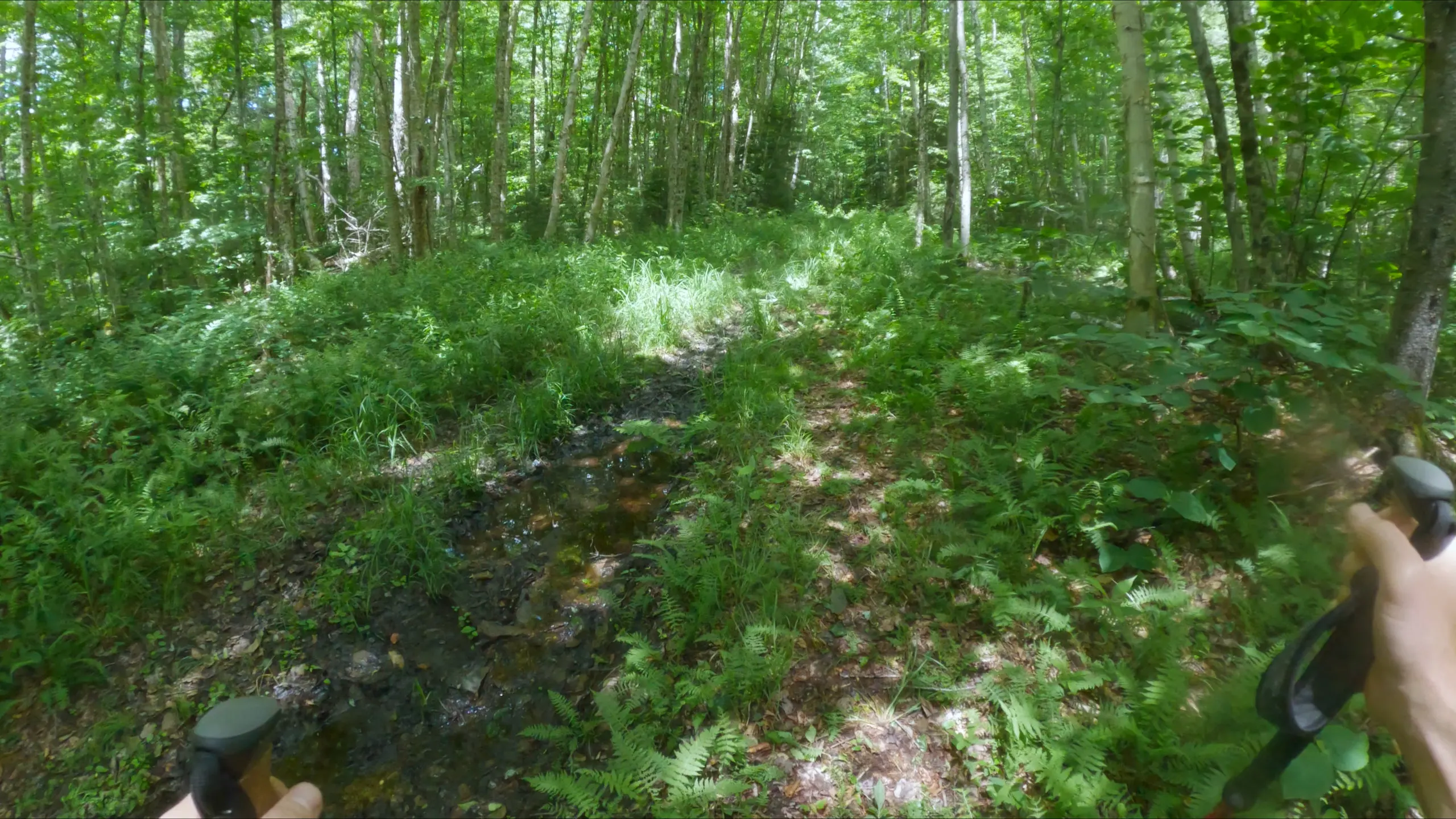
TA3 had oatmeal, ramen, and hot chocolate waiting, exactly what we needed heading into a big overnight bike leg. This was also the first TA we hit without Jason, and we kept half-expecting to see him show up at each one after this, cheering us through. When he never did, we figured he probably just didn’t trust himself not to jump back in if he got too close to the course. We found out at the finish that we actually had it backwards: he’d been chasing us down at TA after TA the whole time, we’d just been moving too fast for him to catch up.
Stage D: Over Hill and Under Hill
Freedley Quarry, Dorset Marble Quarry: Day 2, Hour 7
64.9 miles bike, 4.7 miles trek
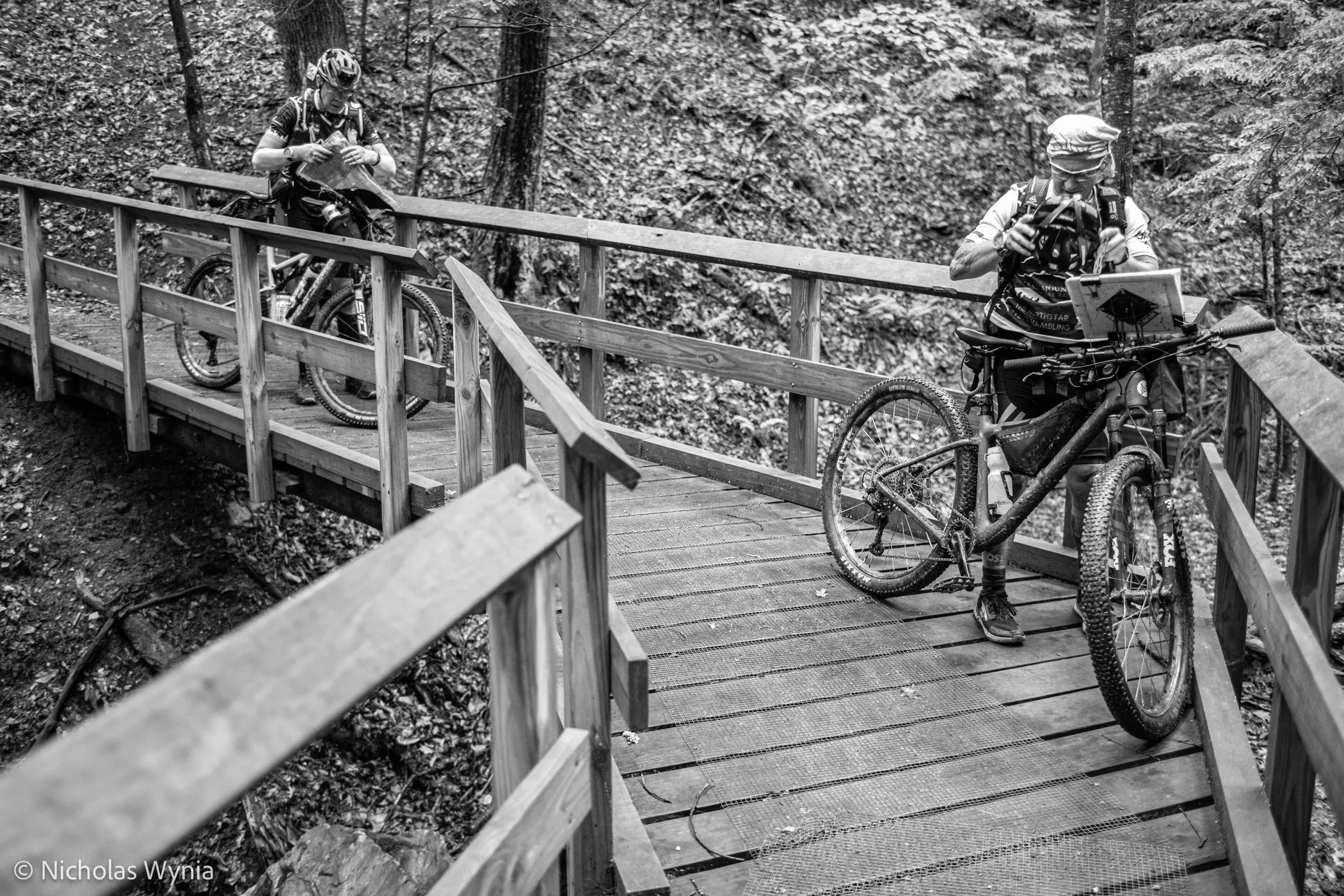
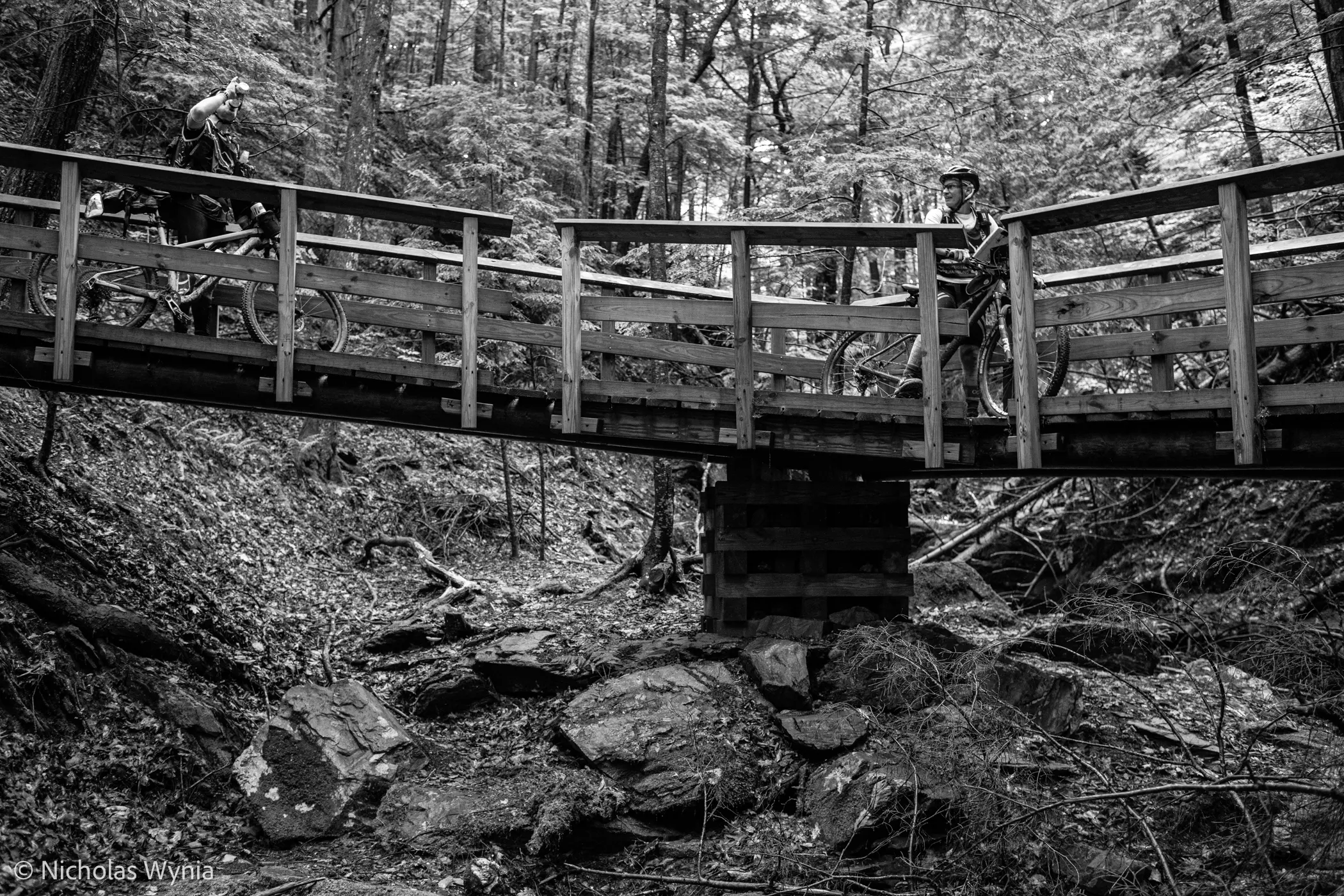
This stage started with a long climb up the side of a mountain to CP34 and CP35, the Freedley Quarry, an old underground marble cavern where we needed to punch a whole string of mini-orienteering flags (Q1 through Q8) inside the dark. This was where the short-form orienteering instincts I lean on really clicked, and JP and I moved through it fast, leapfrogging a bunch of teams who were clearly struggling with the tight, echoey navigation. On the climb up, a local in a pickup truck flagged us down, genuinely curious what a couple dozen cyclists were doing on his back road. When we explained it was a five-day adventure race, he thought that was pretty cool, if a little baffling.
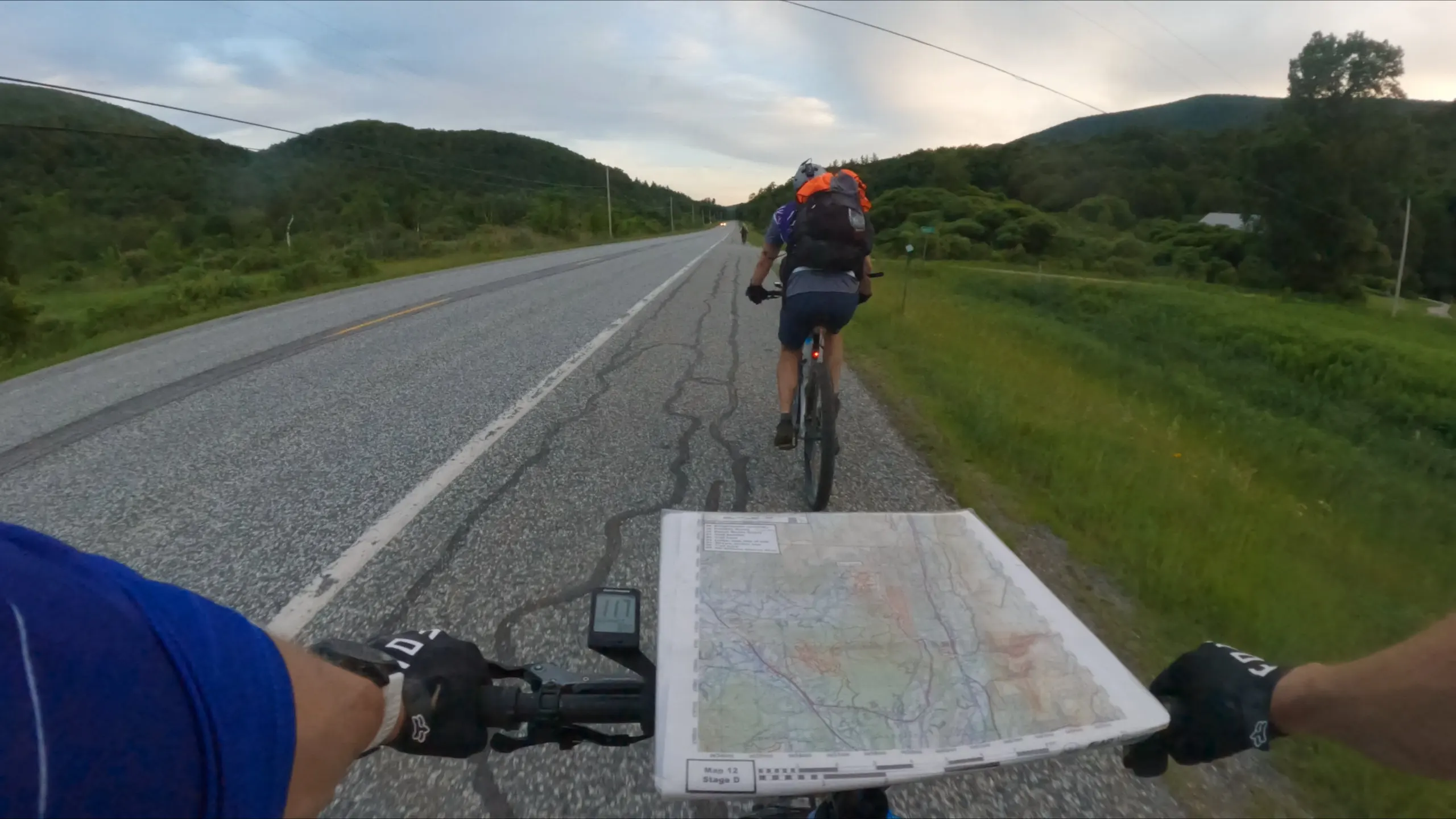
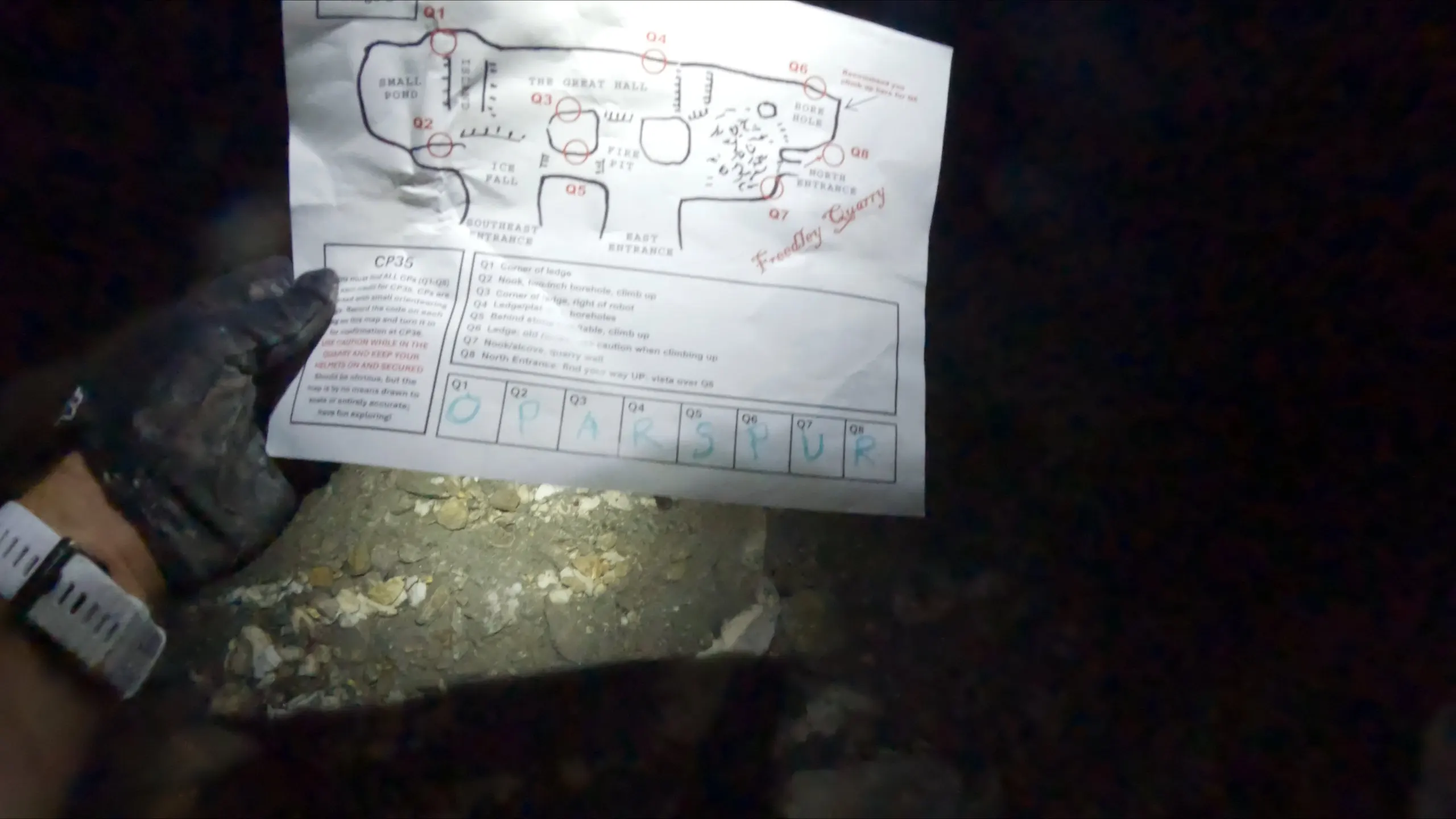
We came back down through CP36 and grabbed optional D6, a quick out-and-back to the H.N. Williams general store, before facing the real decision point of the stage: an embedded trek and mountain bike loop through the Dorset quarries, sold to us as short. It was not short. We dropped bikes and went in on foot first, weaving around quarry edges that felt genuinely dangerous in the dark, the kind of terrain where running the wrong direction at night could put you straight off a ledge. We bushwhacked a couple of smart cuts through the woods and cleared checkpoints 37 through 43 in what felt like an optimal order. The embedded bike loop that followed, checkpoints 44 through 46, was tricky to read without a close eye on the altimeter and the contour lines relative to the trail bends. We passed a few teams who were clearly lost in there, but we came through clean and were rewarded with one of the best downhill single-track descents of the whole race.
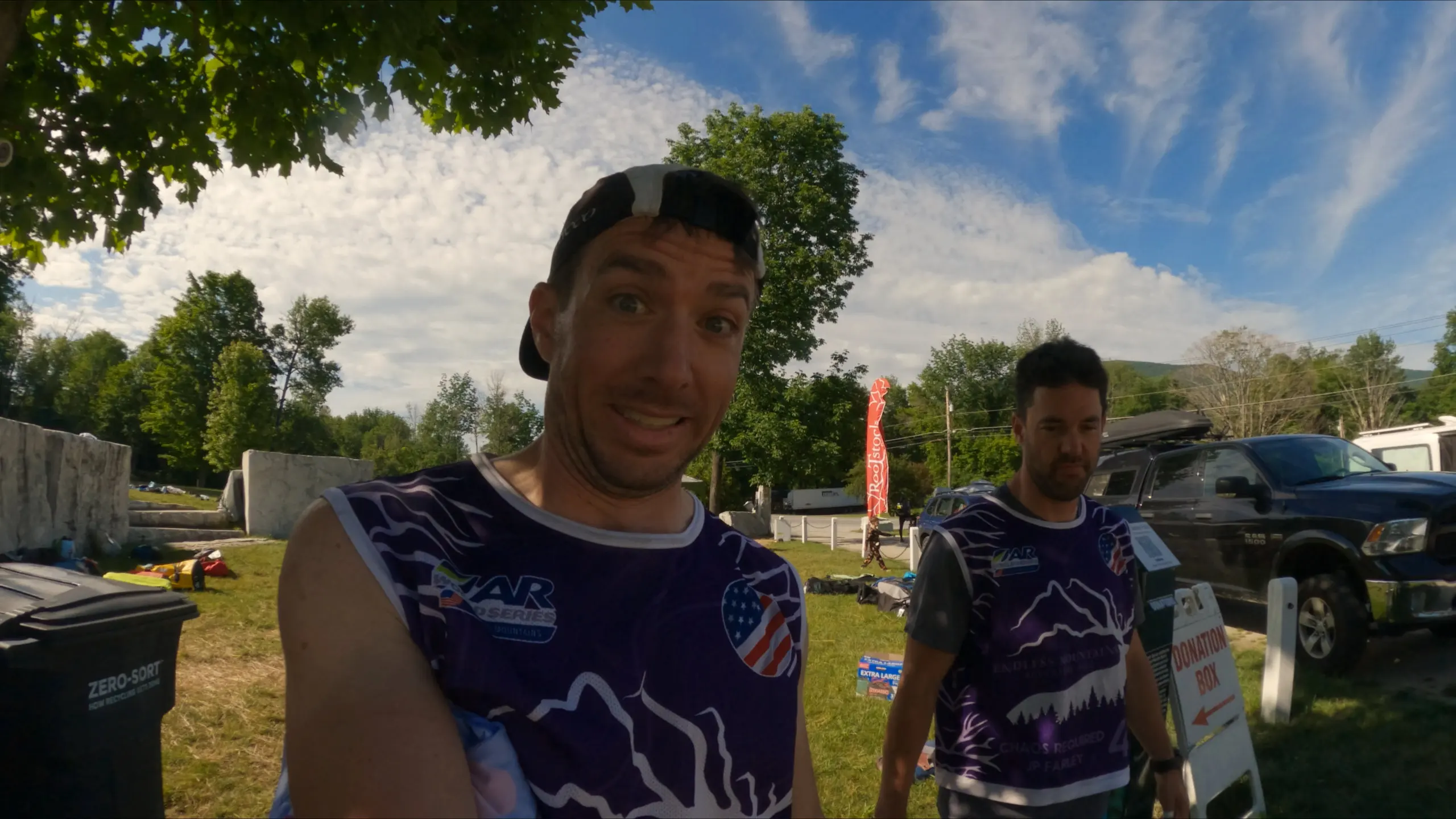
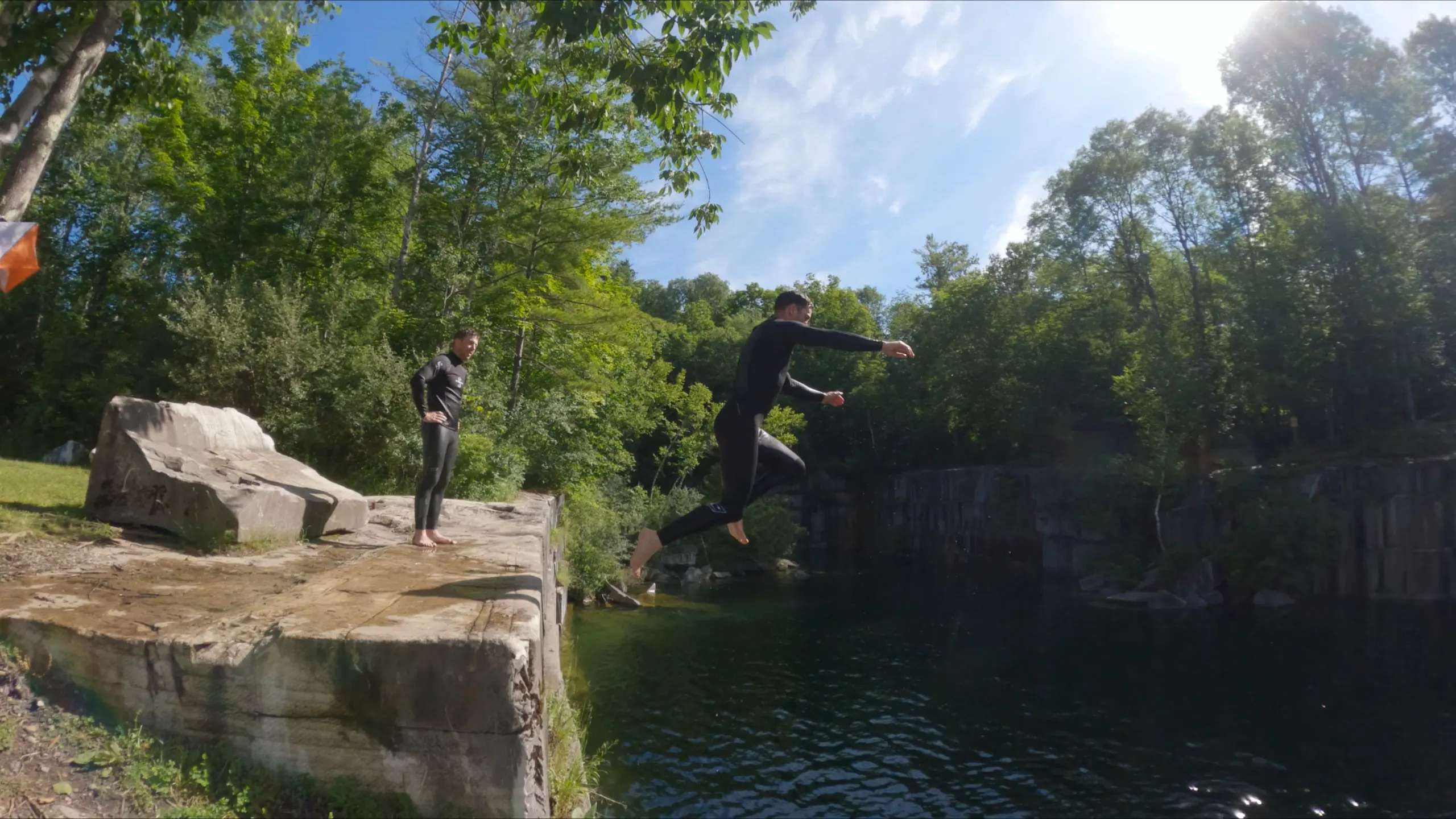
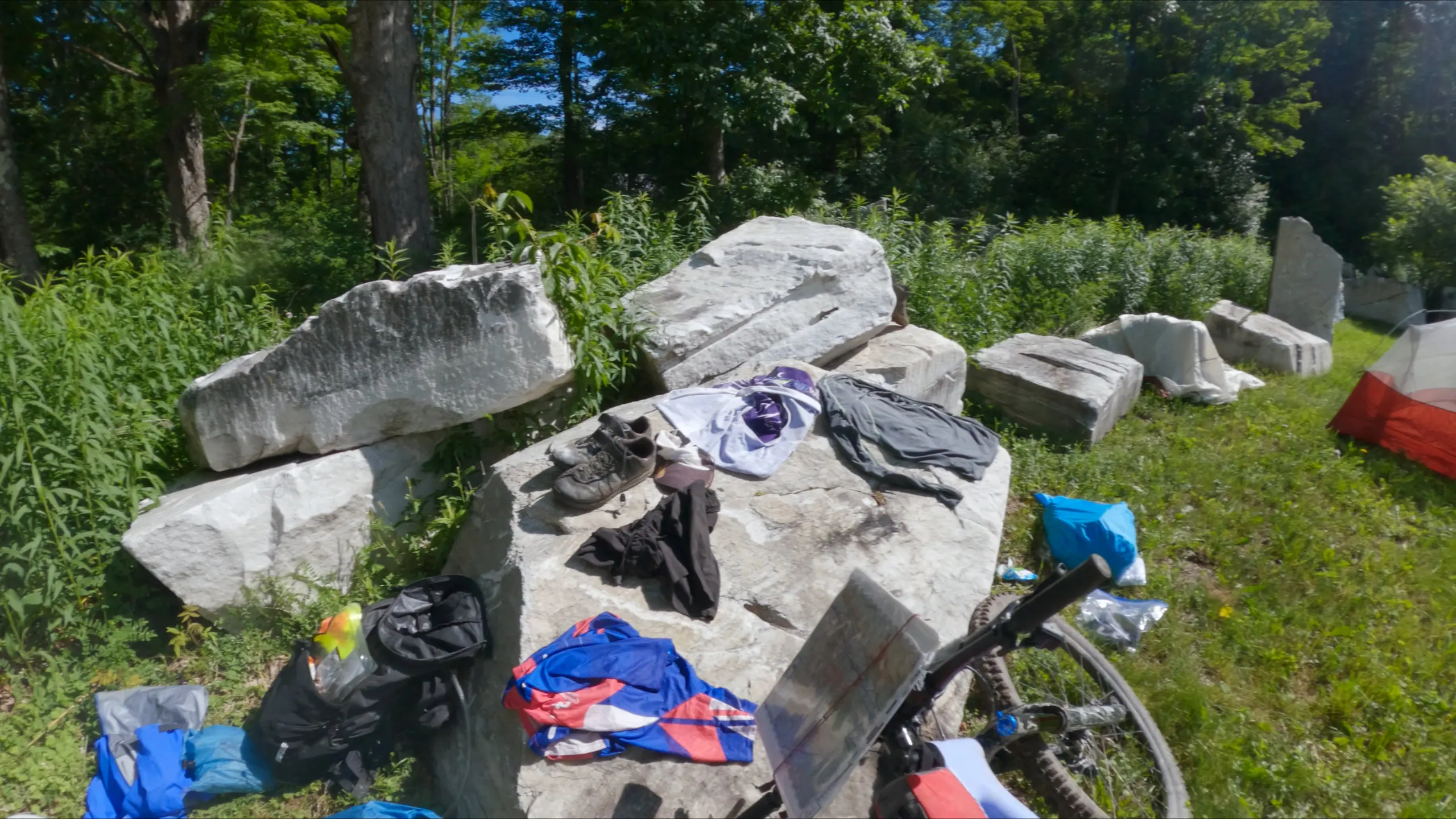
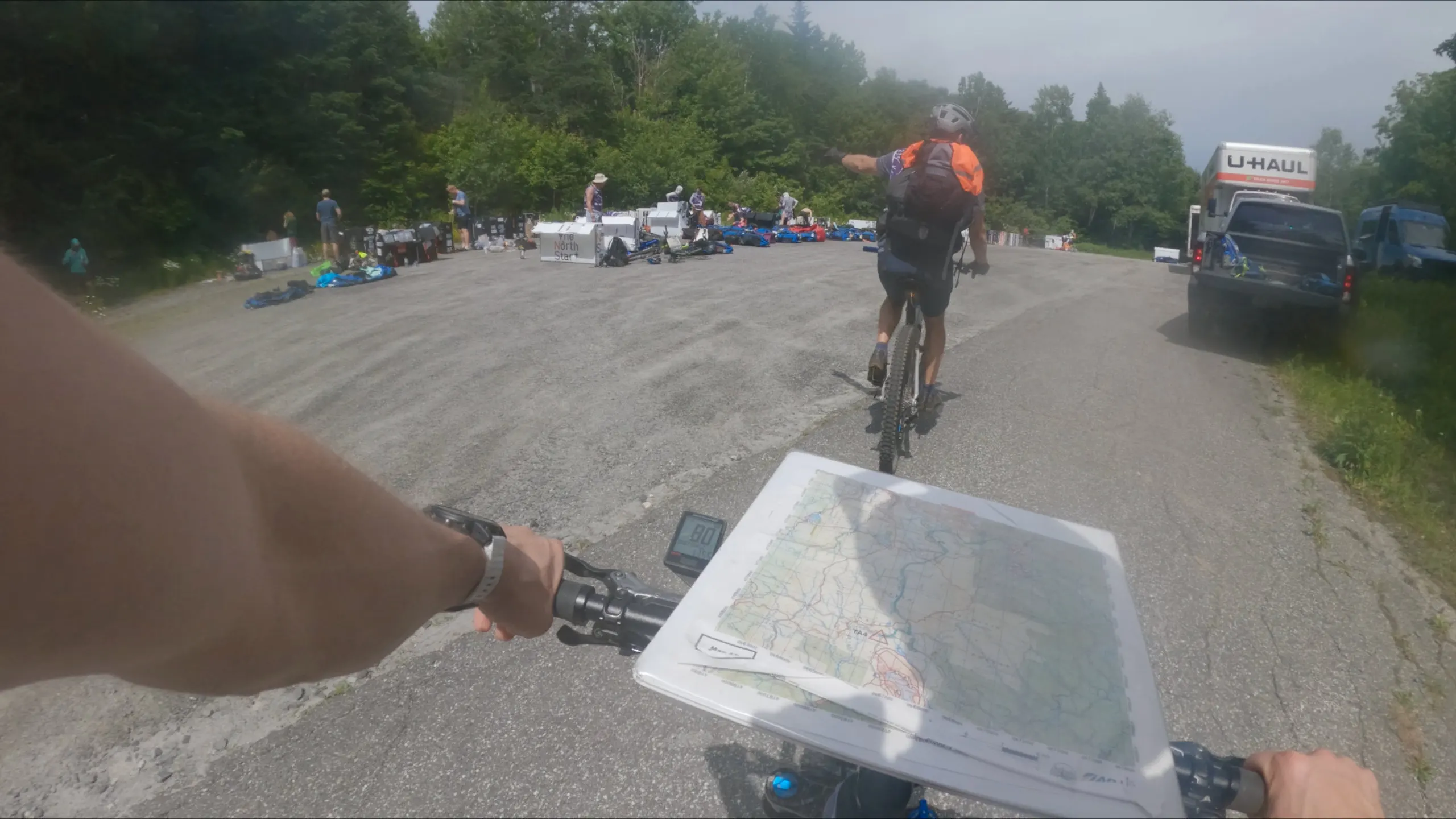
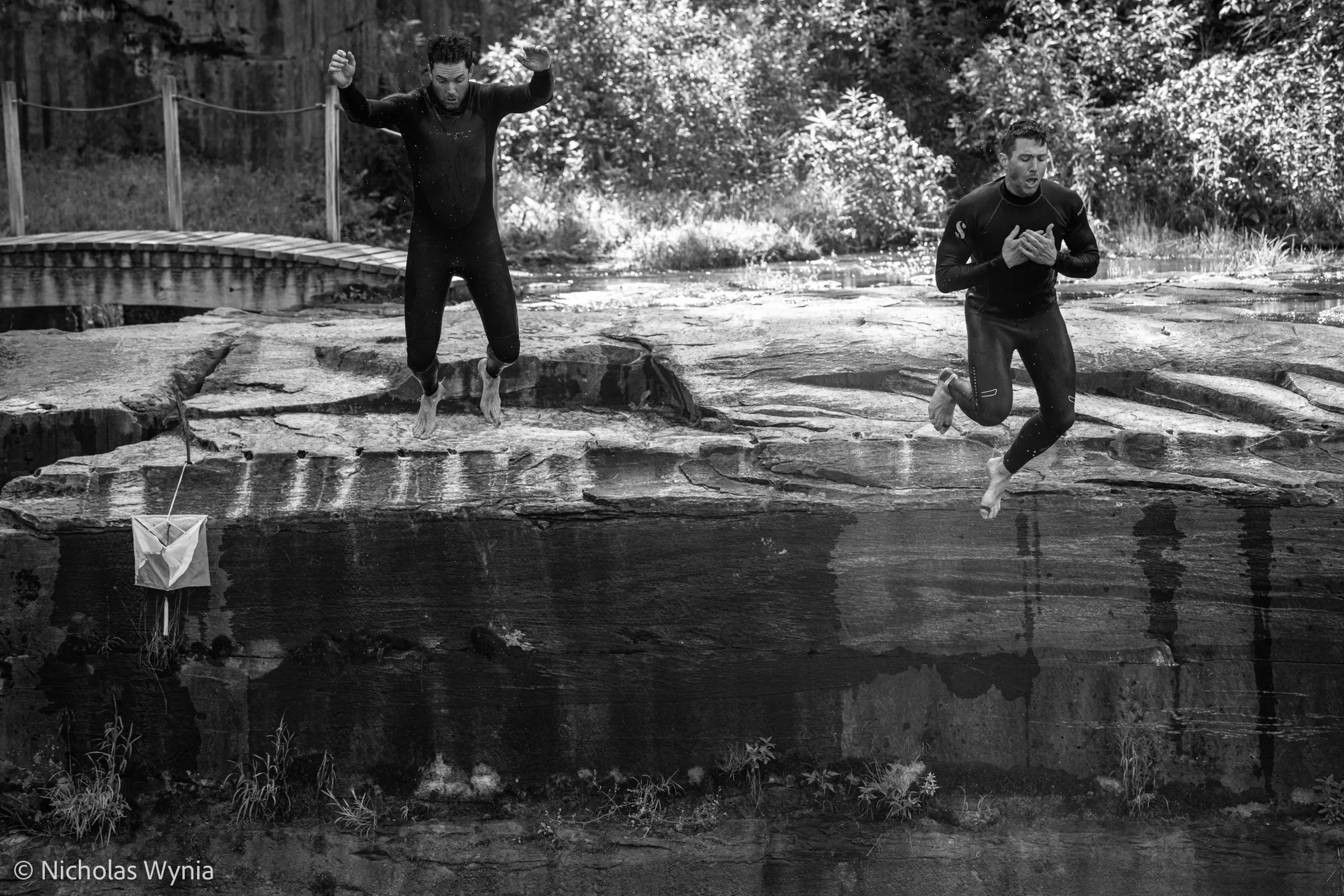
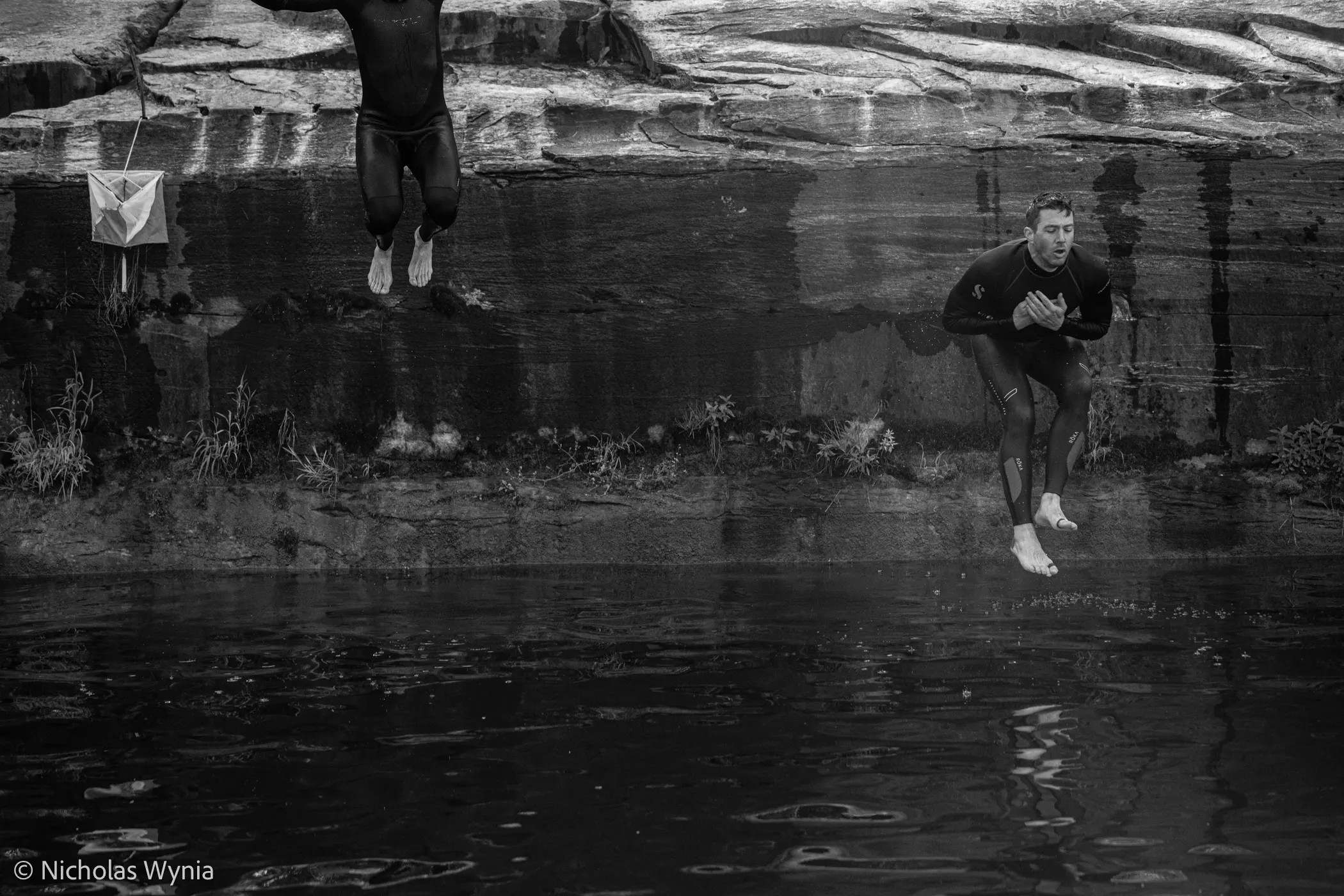
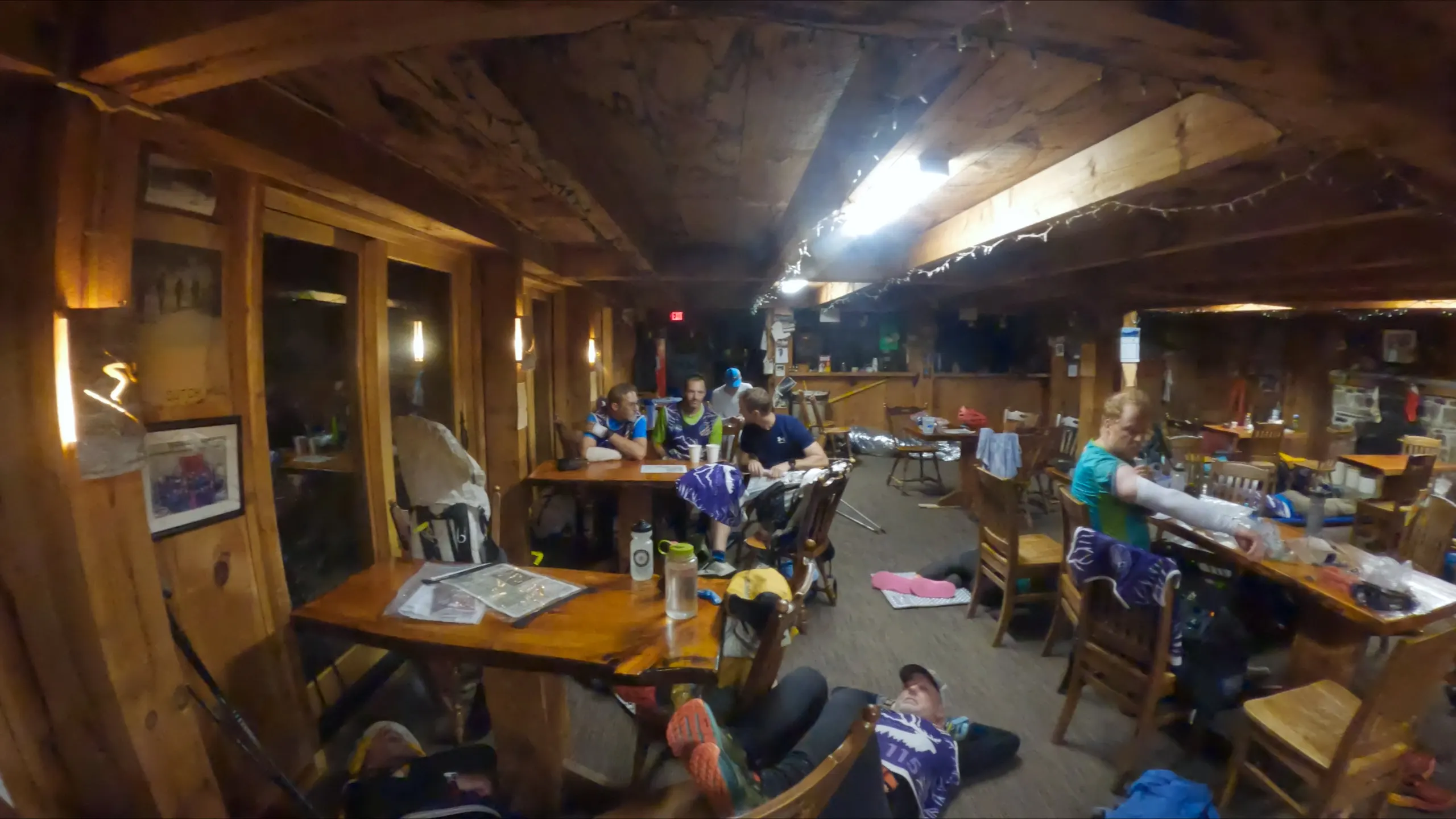
By the time we got back to the Dorset Marble Quarry, Brent had discouraged everyone from jumping. The water was cold enough it was rattling people. I could barely keep my eyes open, so I told JP we should just sleep before deciding. That turned into three of the best hours of sleep I got all week.
Funny side story: the night before, at TA2 waiting on word about Jason, I’d somehow put a hole clean through the bottom of my bivy sack, and JP’s thermal liner had gotten soaked during one of our paddle sections because he hadn’t dry-bagged it. We realized we could raid Jason’s gear bin since he wasn’t coming back for it, and between his spare bivy and his liner, we both slept warm the rest of the week. Thank you, Jason. I still owe you money for that.
We woke up and jumped all four of the Dorset cliffs. Skipping any of them costs a 40-minute penalty, but honestly it felt like the best possible way to wake up, like a cold shower with better views. It was also just so much fun to actually do, cliff jumping into a quarry first thing in the morning never gets old.
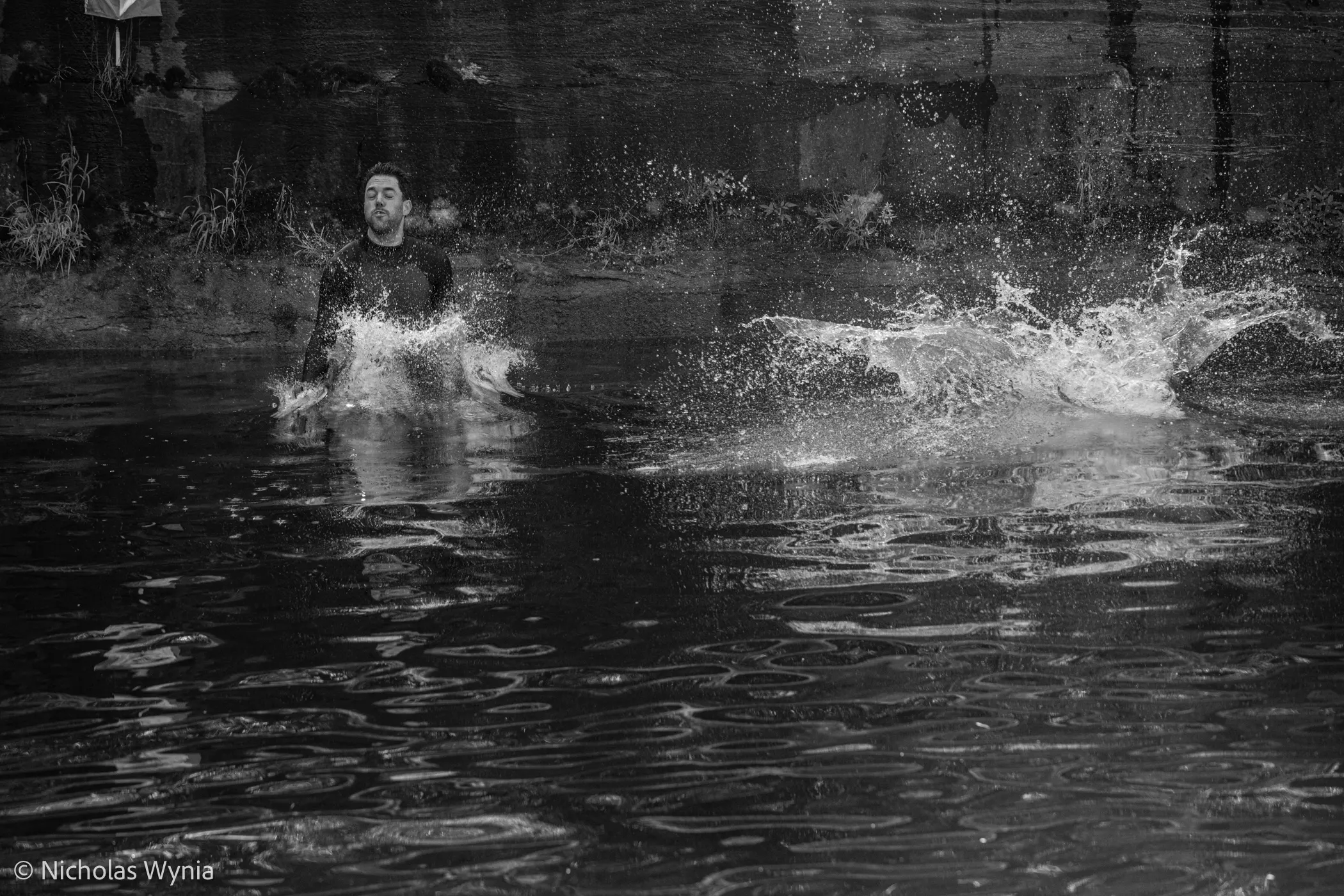
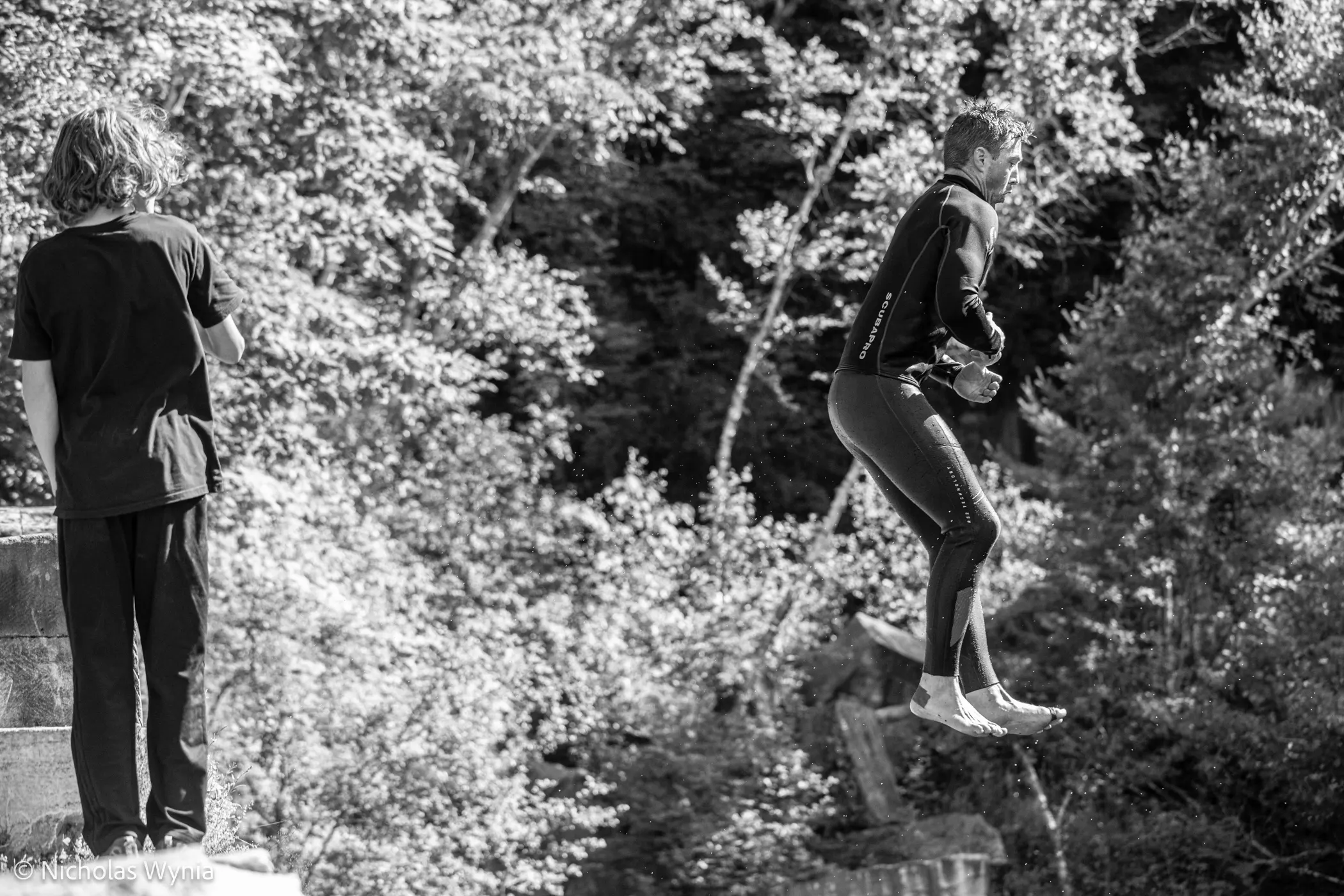
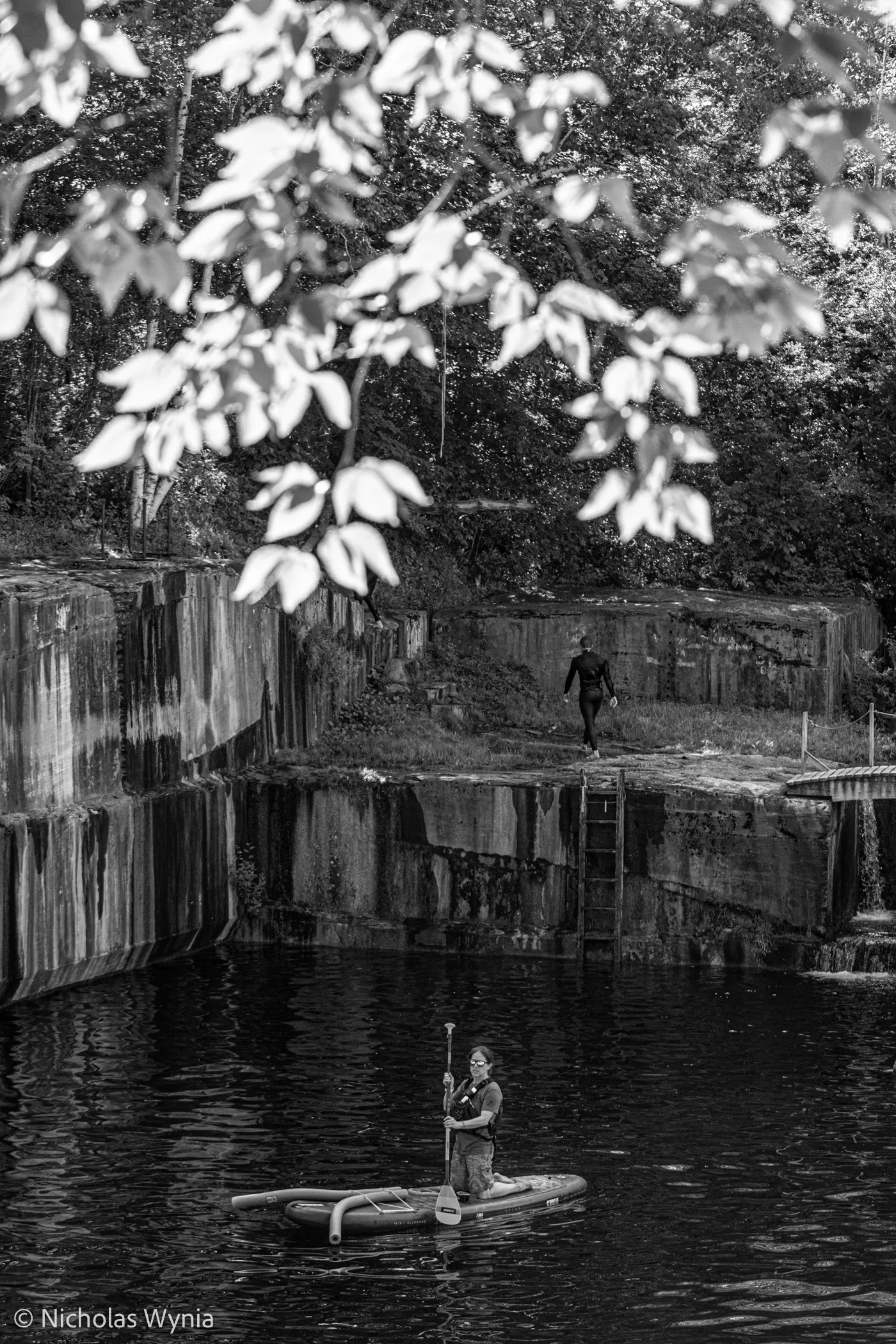
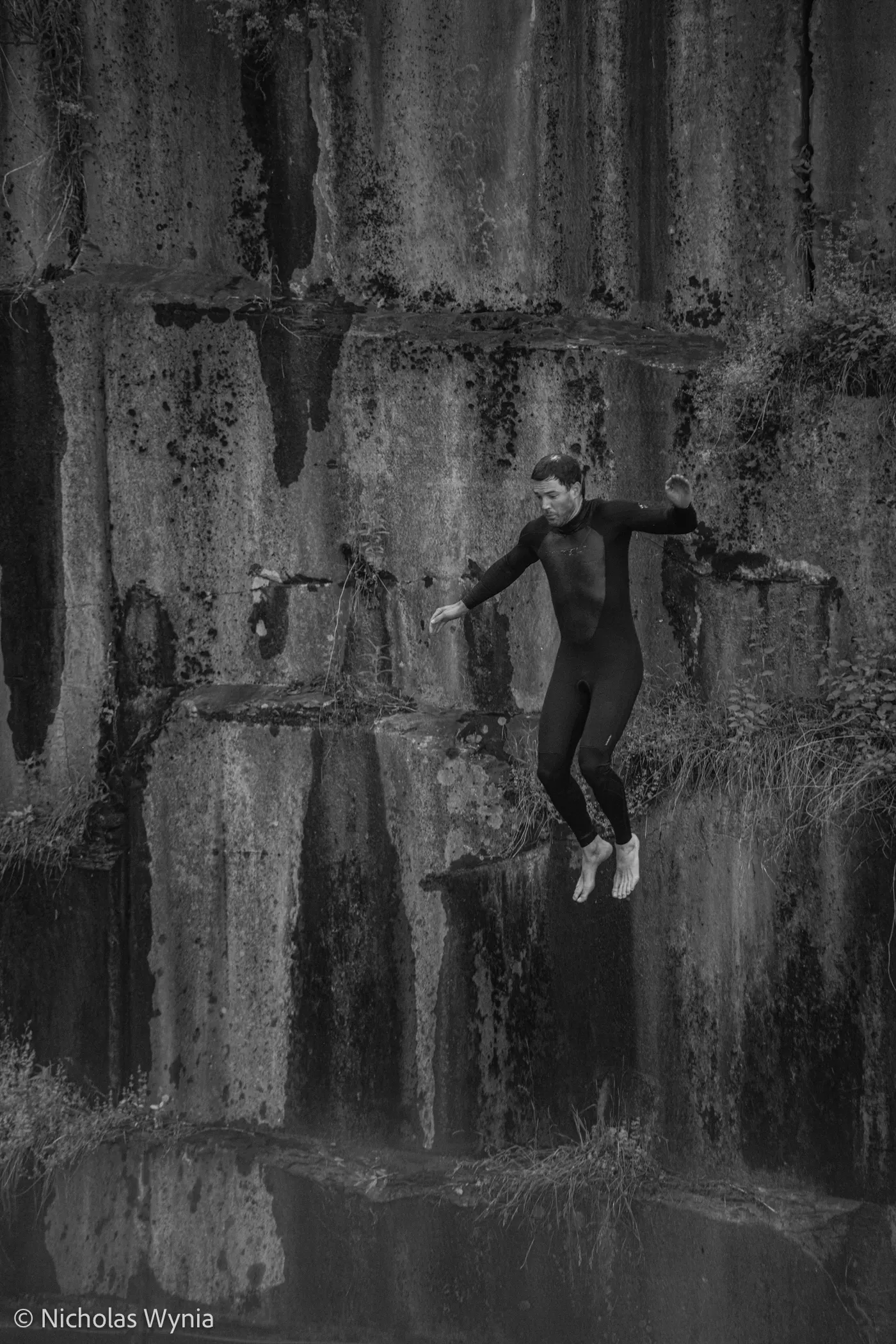
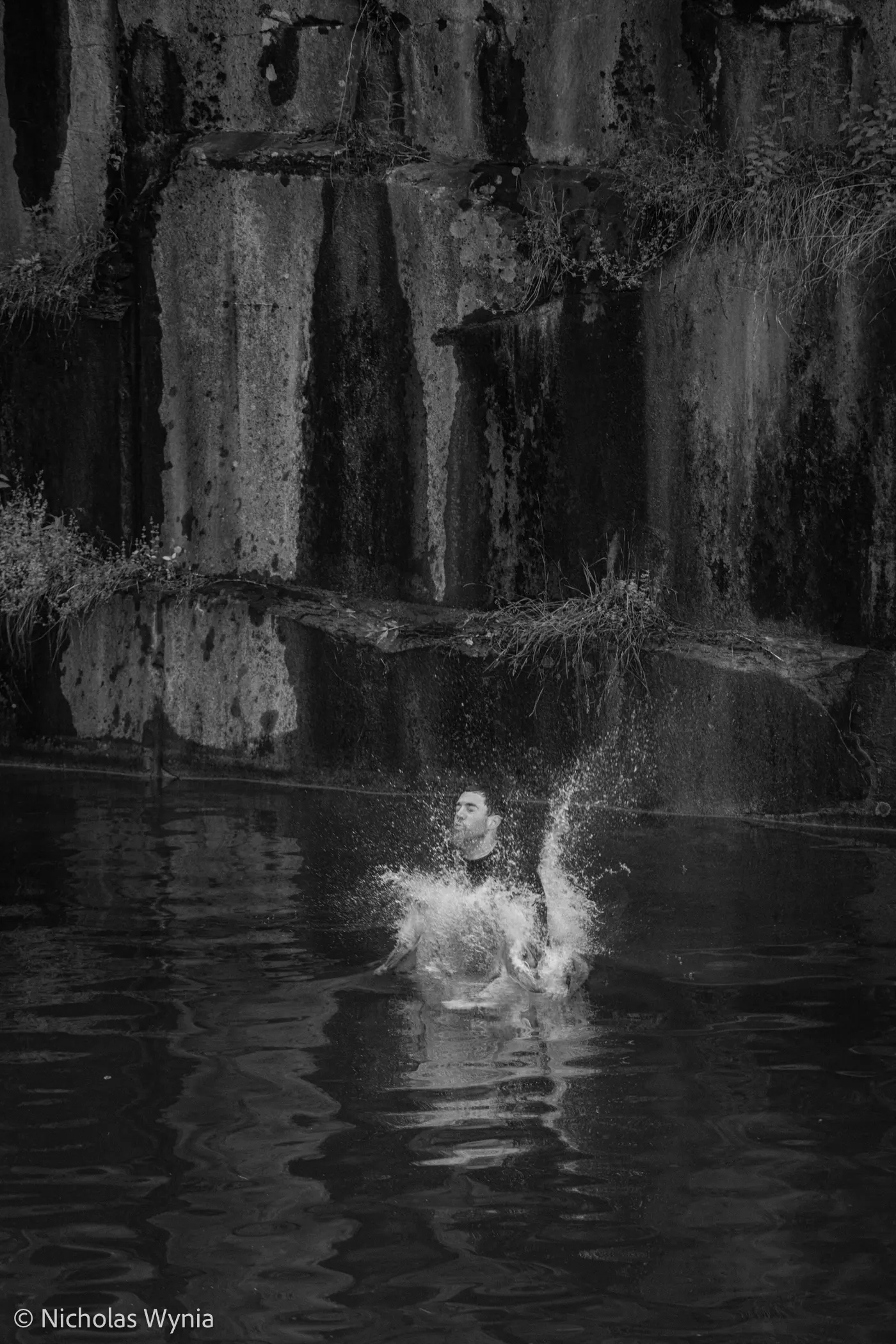
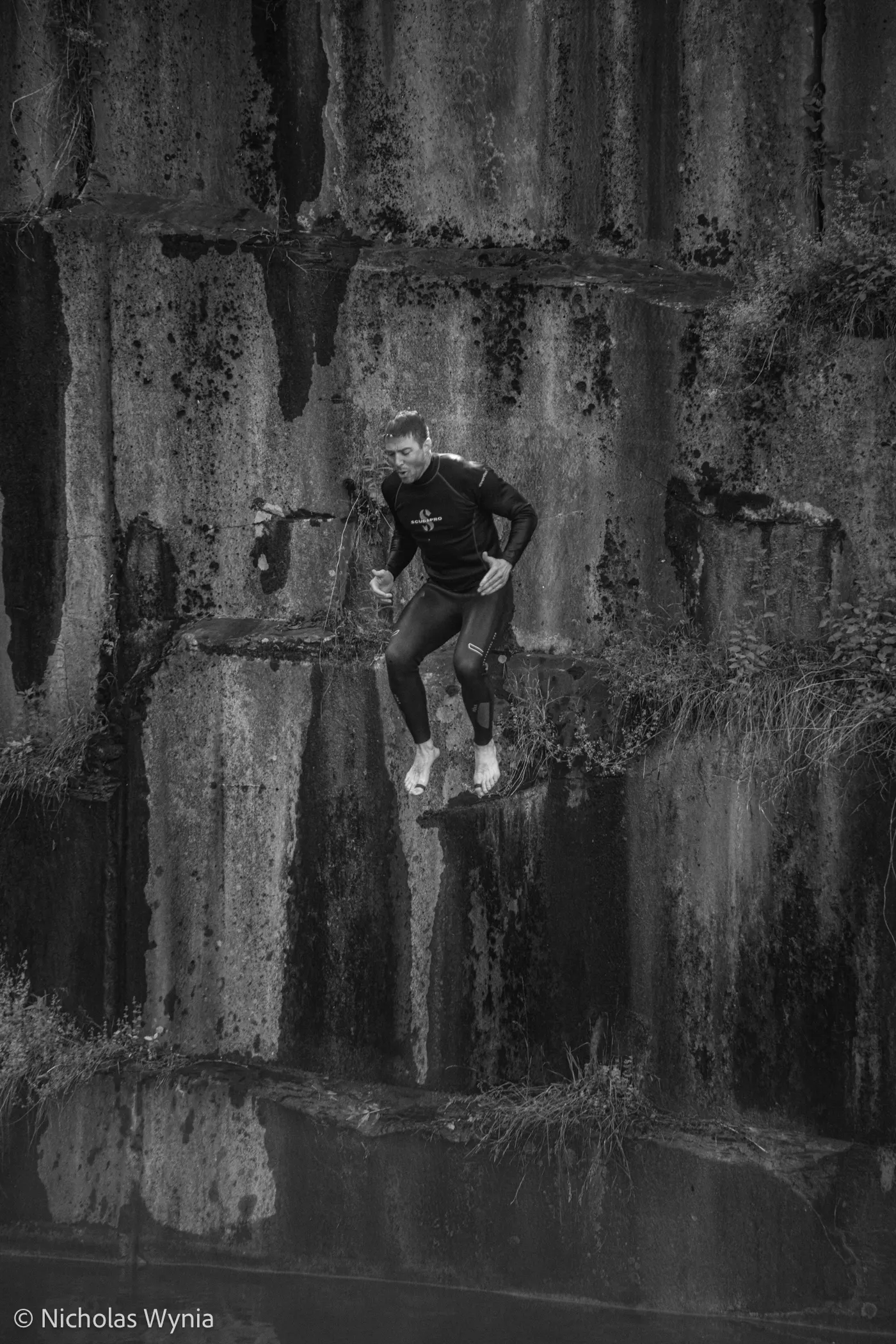
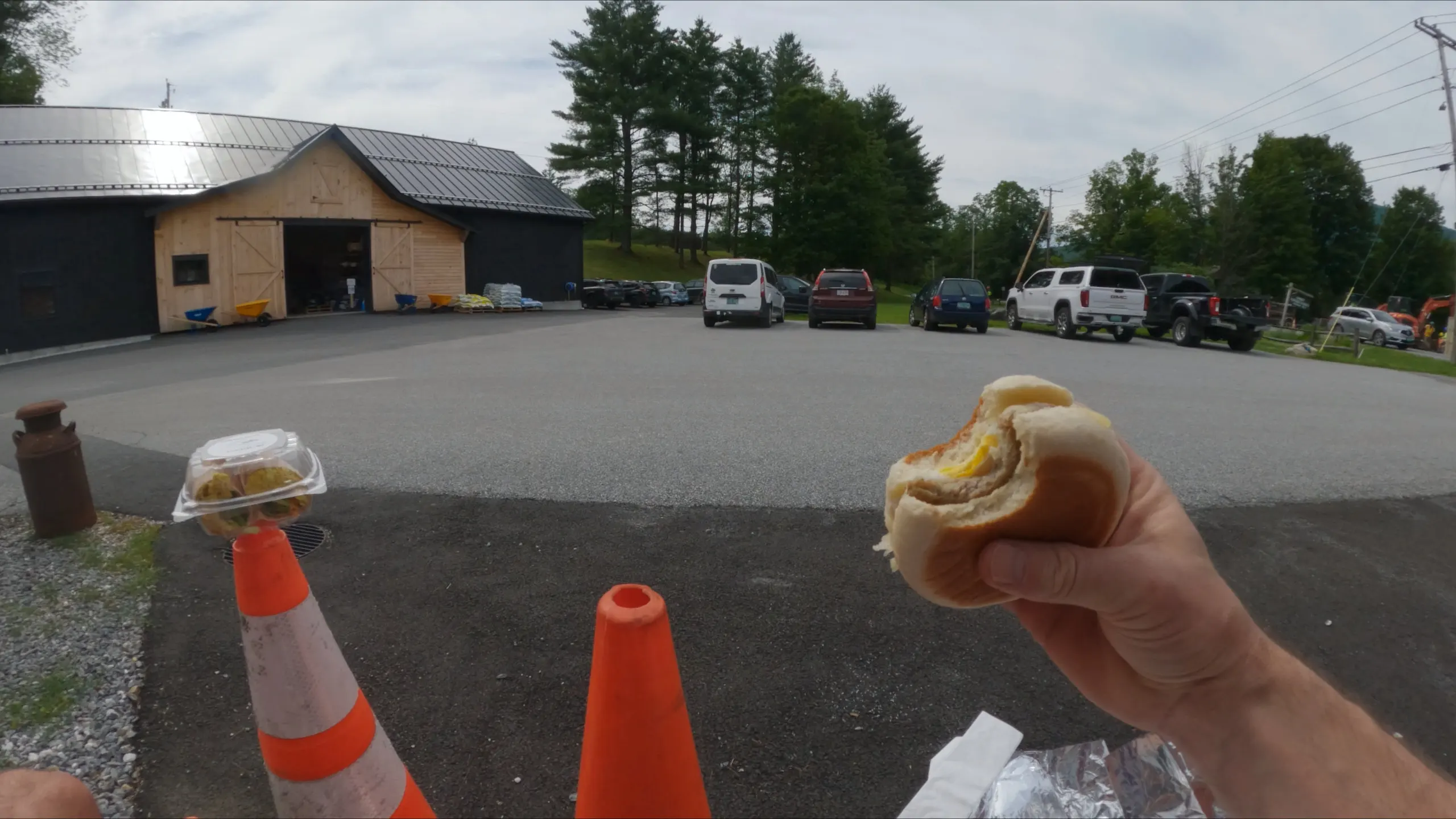
After the jumps we swung back by the general store and loaded up on food again, breakfast sandwiches, chicken curry salad sandwiches, the works, before starting a long, hot climb up toward Stratton Mountain. Looking at the map, the most sensible route to CP49 seemed to be sticking to the paved roads all the way up into the ski village rather than trusting the marked woods routes we’d already learned not to trust. We found out later we were the only team who made that call, which surprised Brent, but it saved us a ton of energy and let us pick off a string of teams on the way up. From CP49 it was a rolling, pleasant ride into TA4.
Stage E: Flotsam and Jetsam
Somerset Reservoir: Day 3, Hour 5
18.4 miles packraft
This was our only real packraft stretch of the race, the one time all week we’d be doing this particular discipline. We carried our packrafts through a couple miles of woods to reach the water. I just slung mine over my shoulder with the paddle rather than trying to strap everything down neatly, and it worked out great. We also spotted one more optional on the map on the way in and audibled over to grab it, landing right on top of it without missing a step. Somewhere in here the maps flipped from feet to meters for elevation, which threw a lot of teams, us included for about thirty seconds before we caught it and adjusted our watches.
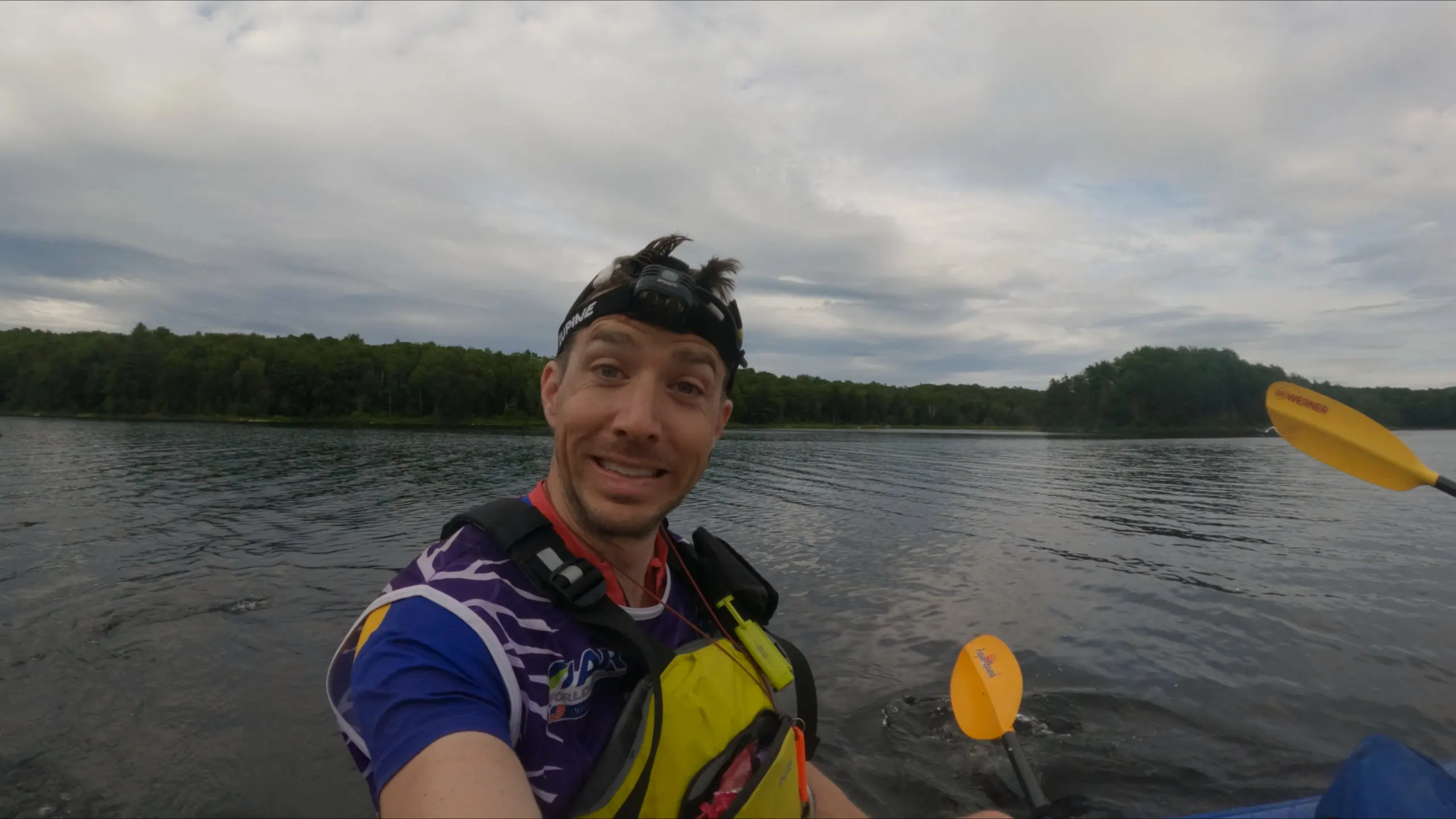
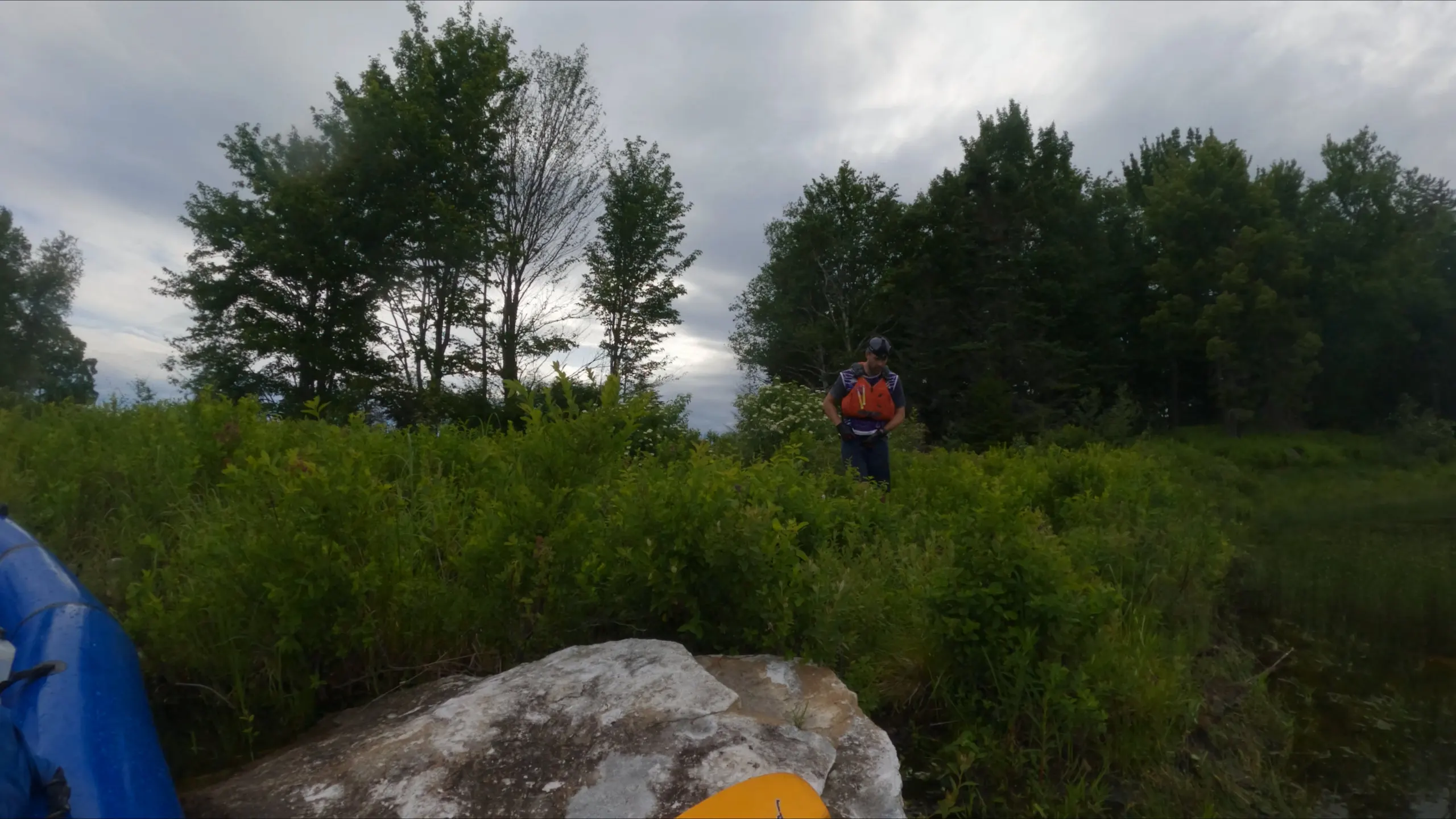
Once we were on the water, it turned into an easy, satisfying rhythm: boom, boom, boom through checkpoints 51 through 56, island hopping across Somerset Reservoir with no need for music, just enjoying being out there. We rolled into TA5 just before nightfall feeling like a million bucks, amped to push hard into the night on bikes.
Stage F: Journey to the Crossroads - Northern Chaos is Born
Mt. Snow, Deerfield Ridge, Wilmington: Day 3, Hour 10
45.2 miles bike, 5.7 miles trek
We’d barely gotten off the water and started packing at TA5, amped and ready to push hard into the night, when the drizzle turned into a real downpour. JP asked if we were seriously about to drink a Red Bull and commit to riding through it, and I said yes. Five minutes later we were scrambling to get the tent up before we got soaked. We climbed in wet, tried a 30-minute nap, then another, and another, and it never let up. We made the call to just sleep through it and reassess in the morning. It was easily the worst sleep of the week, cold, damp, gear packed in around us. I also discovered that a row of wet bike shorts laid out flat makes a surprisingly reasonable makeshift sleeping pad. We found out afterward that the storm had tabled nearly the entire field that night, top teams included, so at least we weren’t alone in getting stopped cold.
I woke up miserable. Still drizzling, gear soaked through, and I was about as low mentally as I got all week climbing out of that tent. That’s when a volunteer pointed a guy in our direction. His teammate had just dropped, he explained, and he’d heard we’d already absorbed a teammate loss ourselves. Could he join us? Normal, energetic Rick would have been thrilled, practically bouncing at the idea of picking up a new teammate mid-race. This was not that Rick.
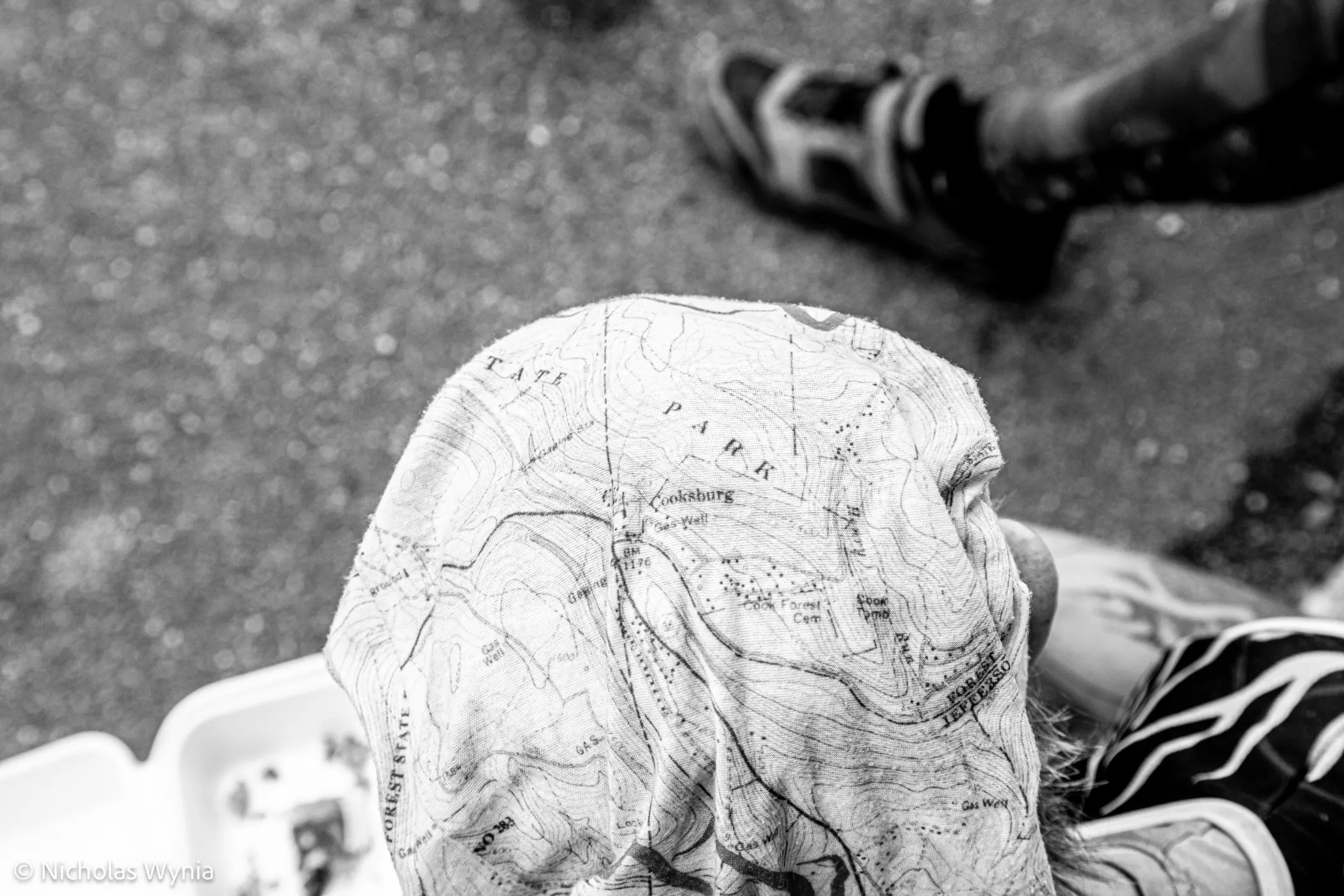
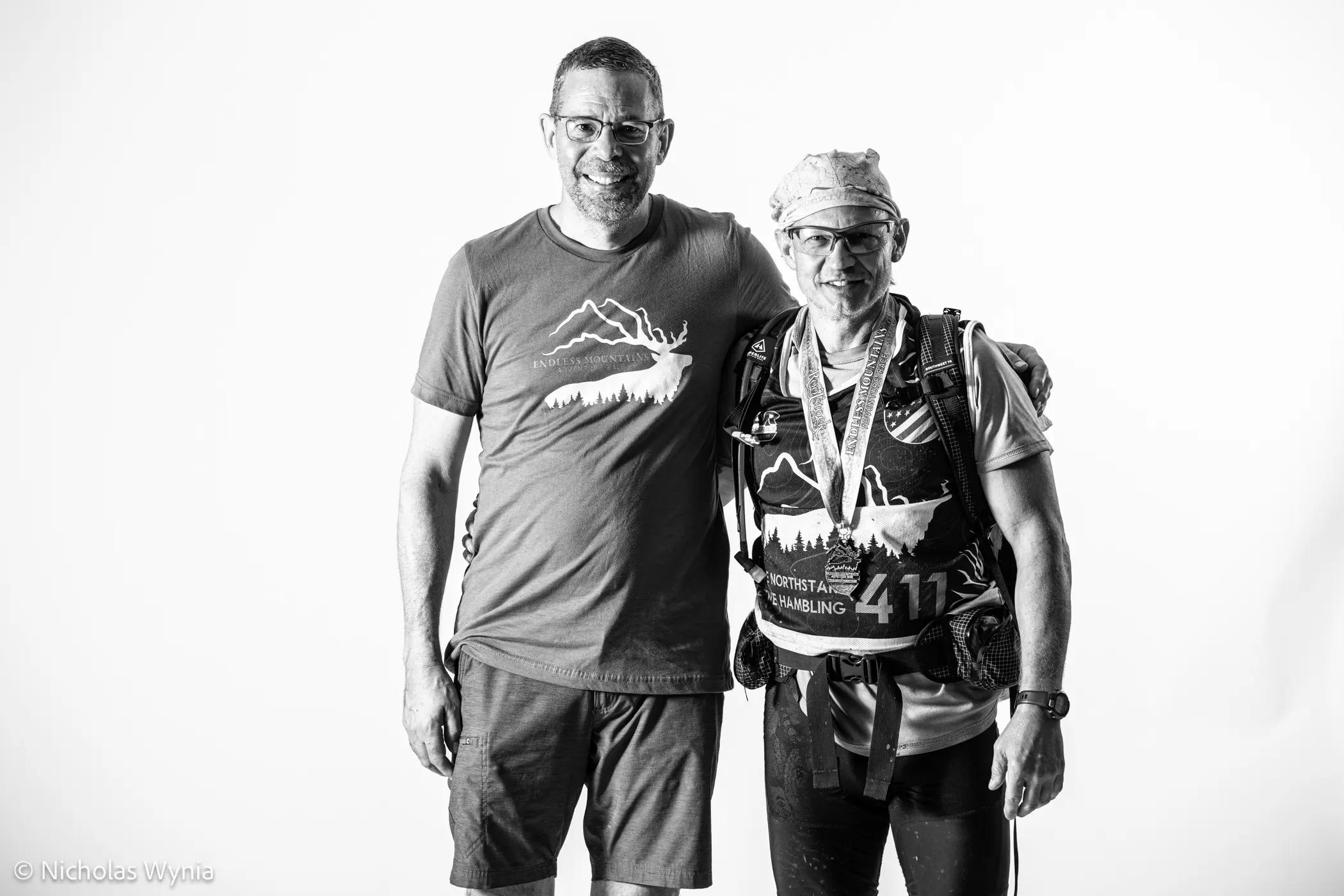
I was cold, damp, and miserable, and I told him flatly: sure, but this is what you’re getting, no promises on pace or mood. Somehow that was still enough. He said he was in. JP was thrilled to have a third back. That’s how Steve, from Team NorthStar, became our third for the rest of the race, and the volunteers immediately started placing bets on what our combined team name should be. We settled on Northern Chaos.
Steve’s own teammate, Paul, had gotten hurt being towed with the line looped on just one handlebar, which had wrecked his wrist and hand badly enough he was still in a splint weeks later. It’s always a bummer to hear, but it’s also exactly the kind of thing that reshuffles a race in ways nobody plans for.
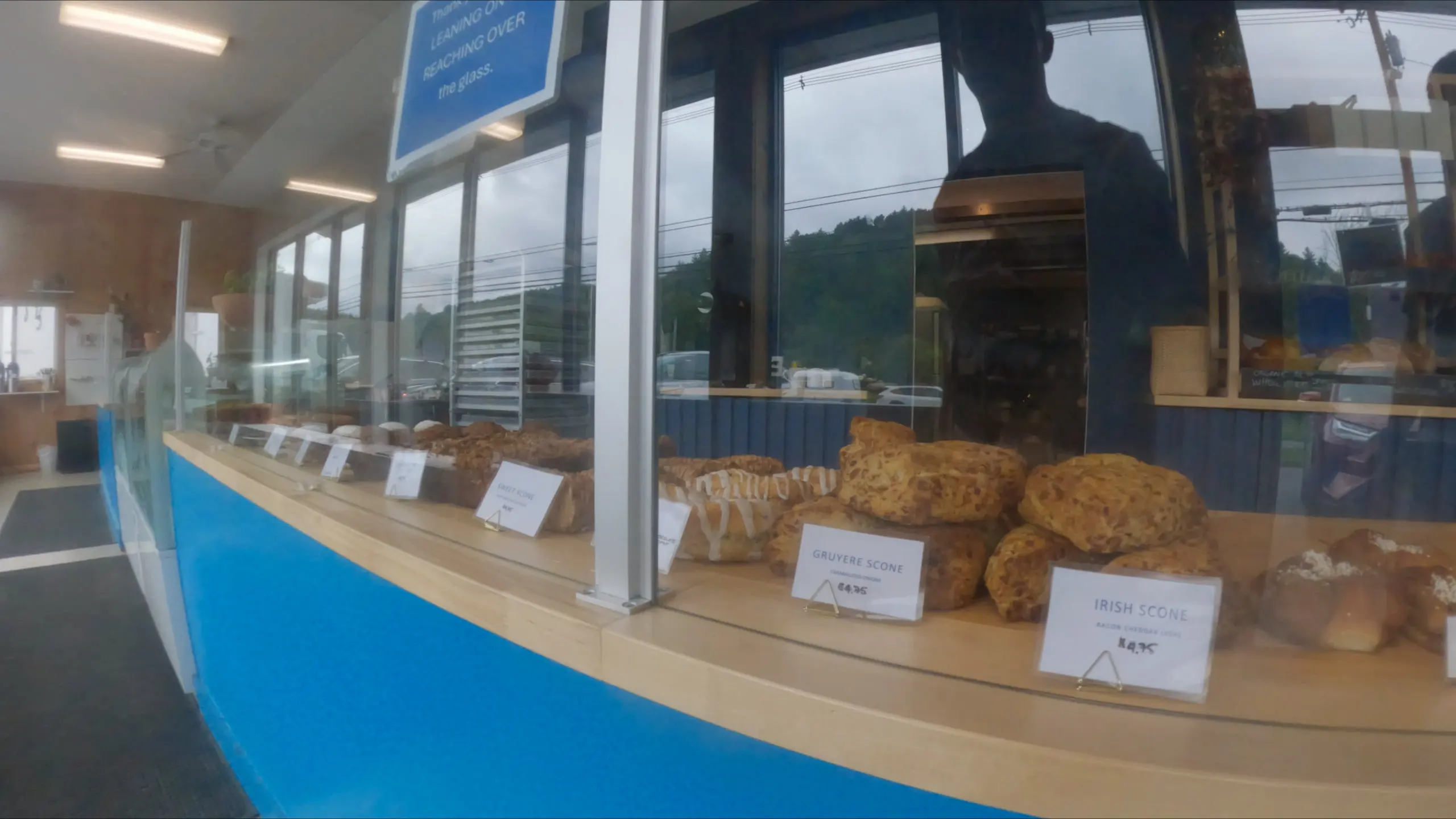
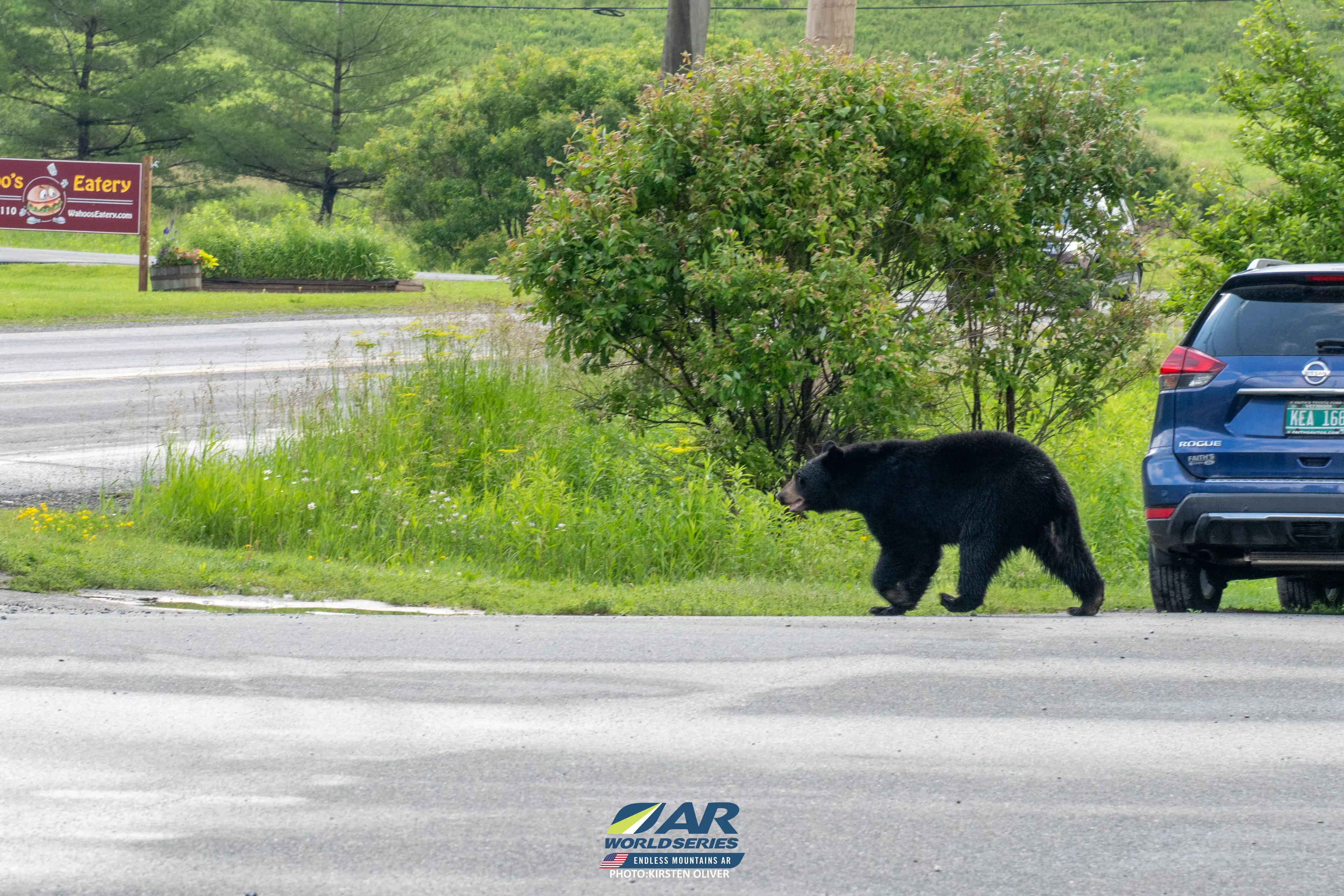
We skipped the ridgeline route through F1-F3, opting for the mandatory alternate through the Wilmington trails instead. After the rain we’d just been through, the ridgeline felt like a huge gamble that didn’t feel like the right move, so we kept it sane and stuck to the alternate. Along the way we spotted two enormous porcupines and, more excitingly, three bears. JP rounded a blind corner and came face to face with a mama bear about twenty feet out, and we backed off politely until she and her cubs cleared the trail. In Wilmington we stopped at a bakery and somehow put down over a hundred dollars of baked goods and coffee between the three of us, to the visible alarm of the woman behind the counter.
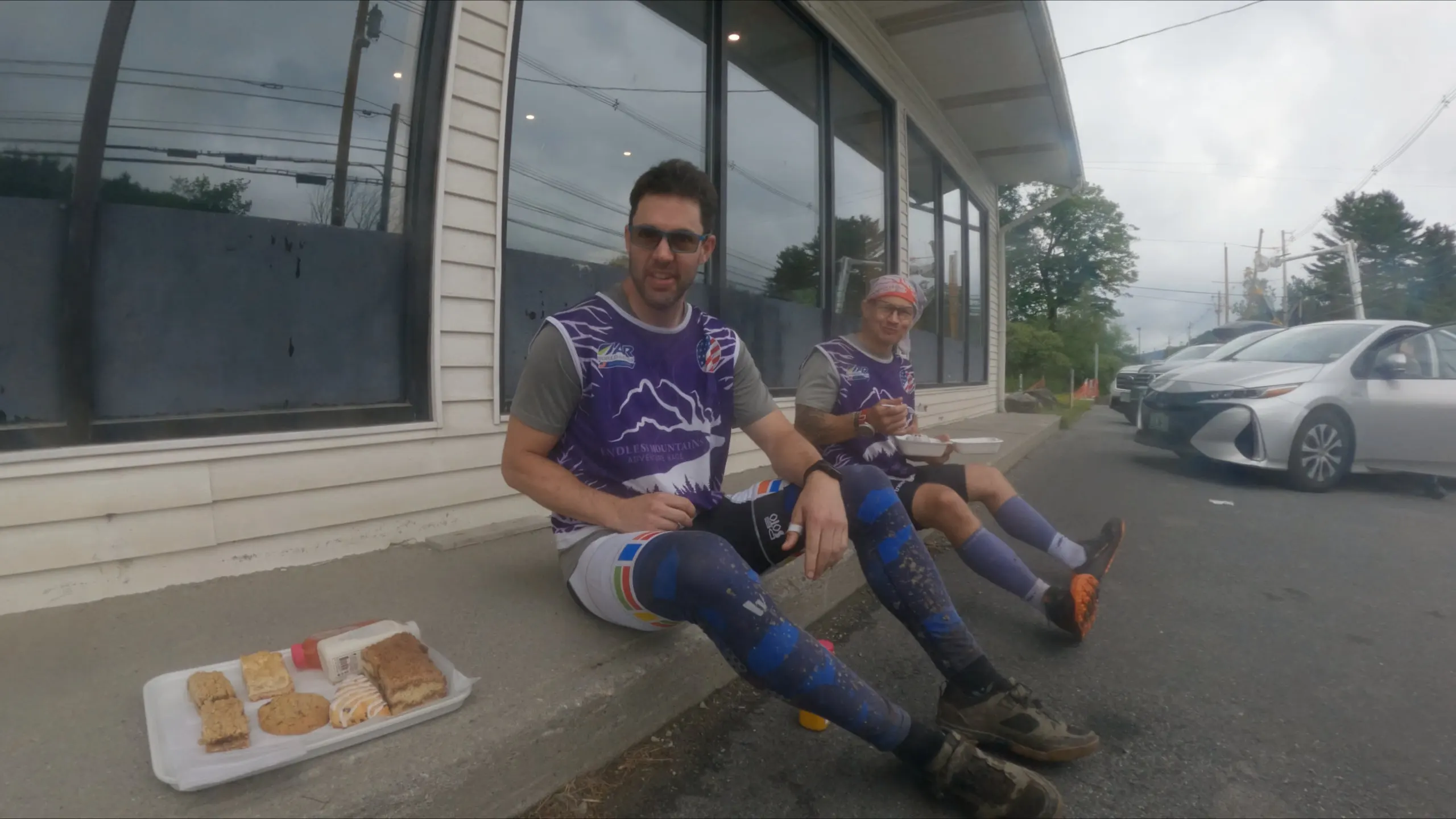
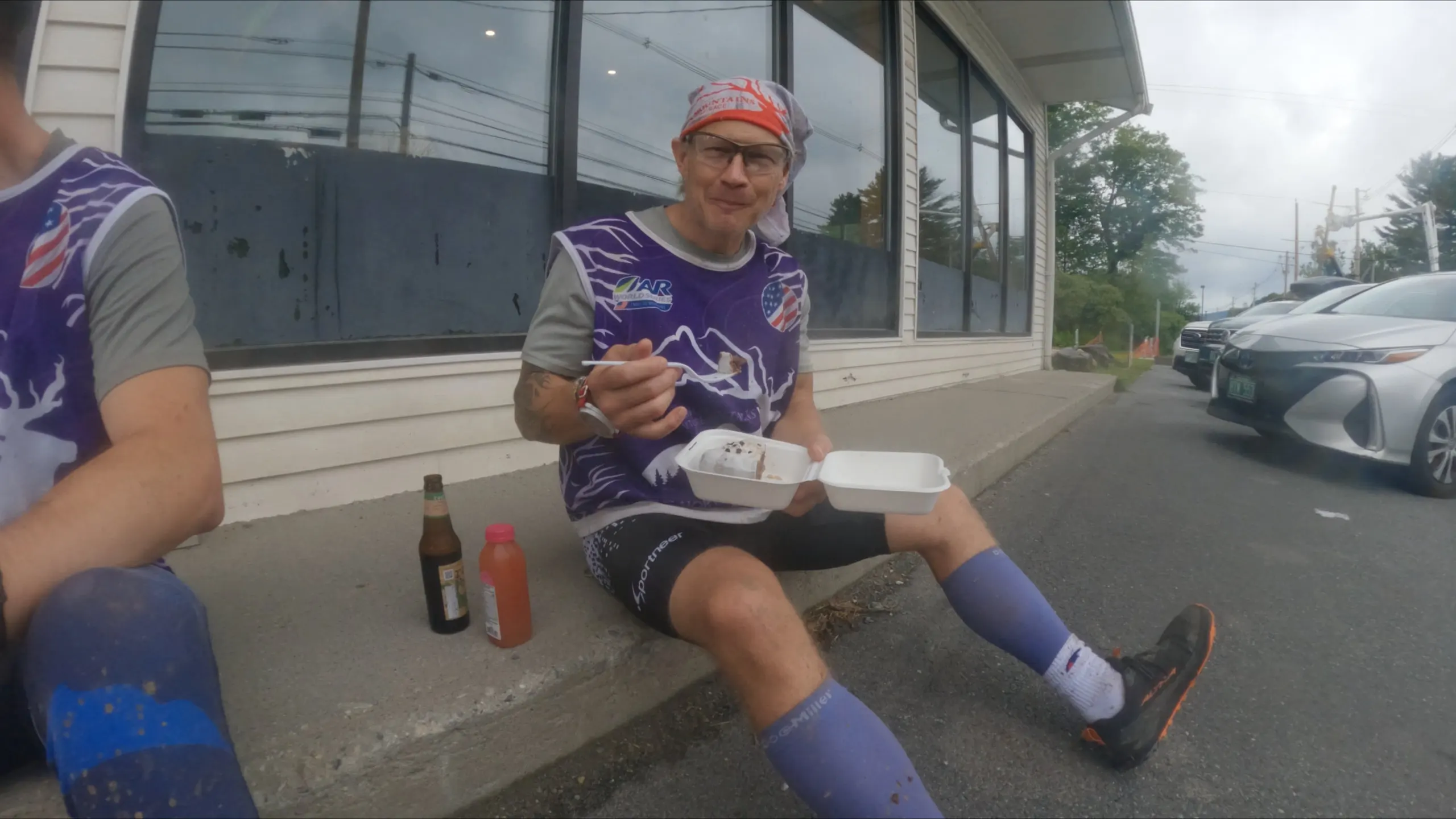
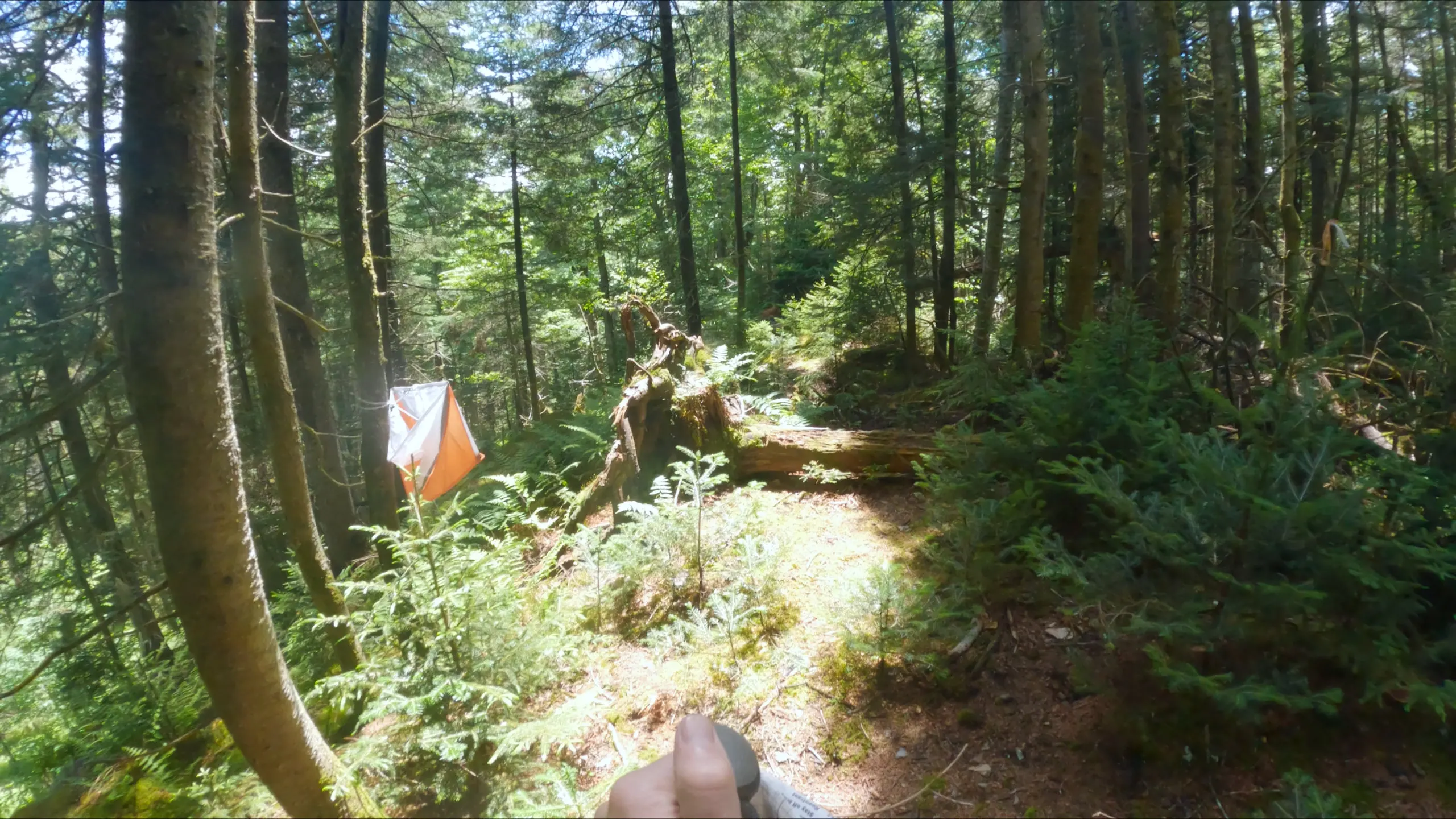
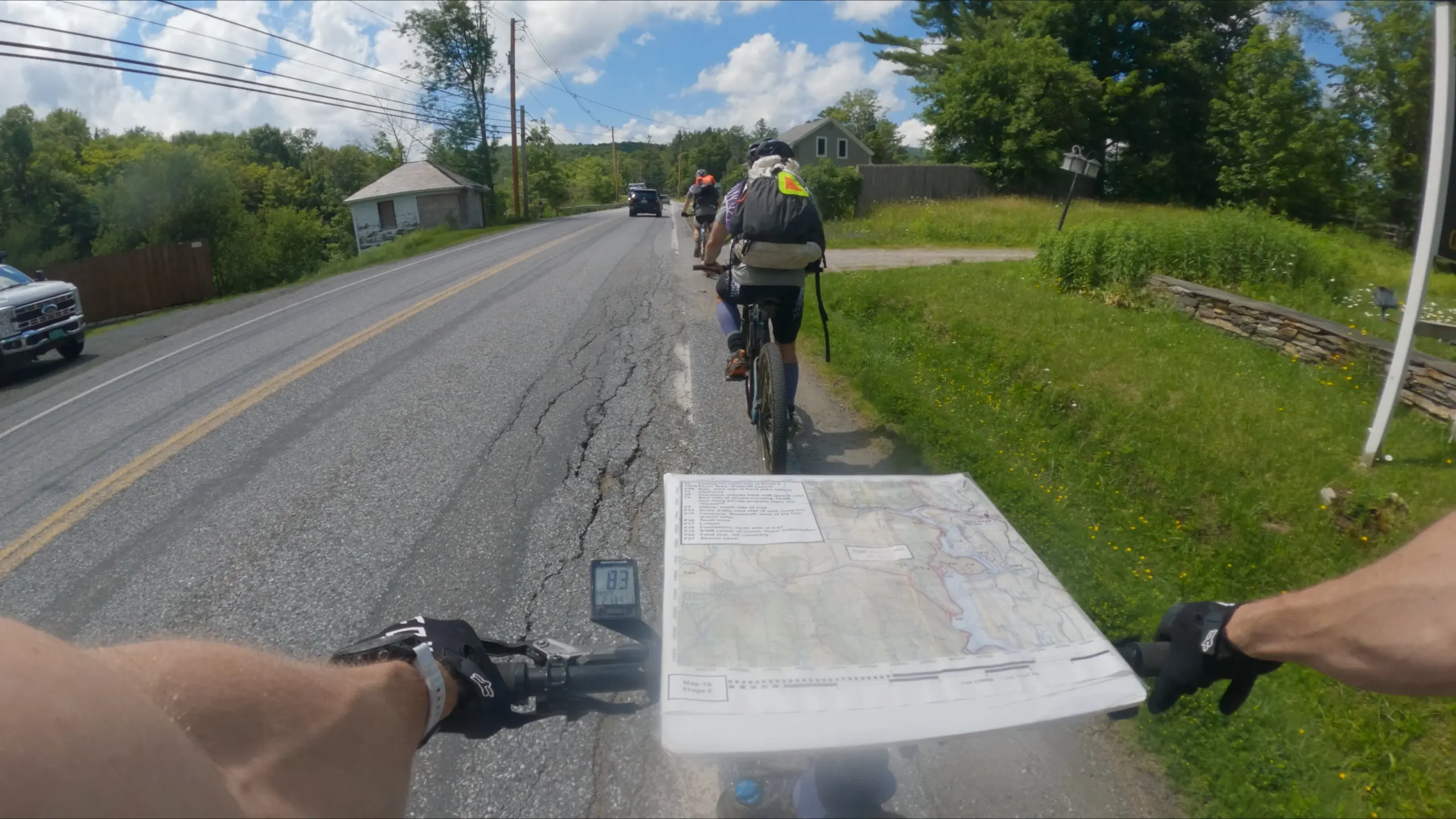
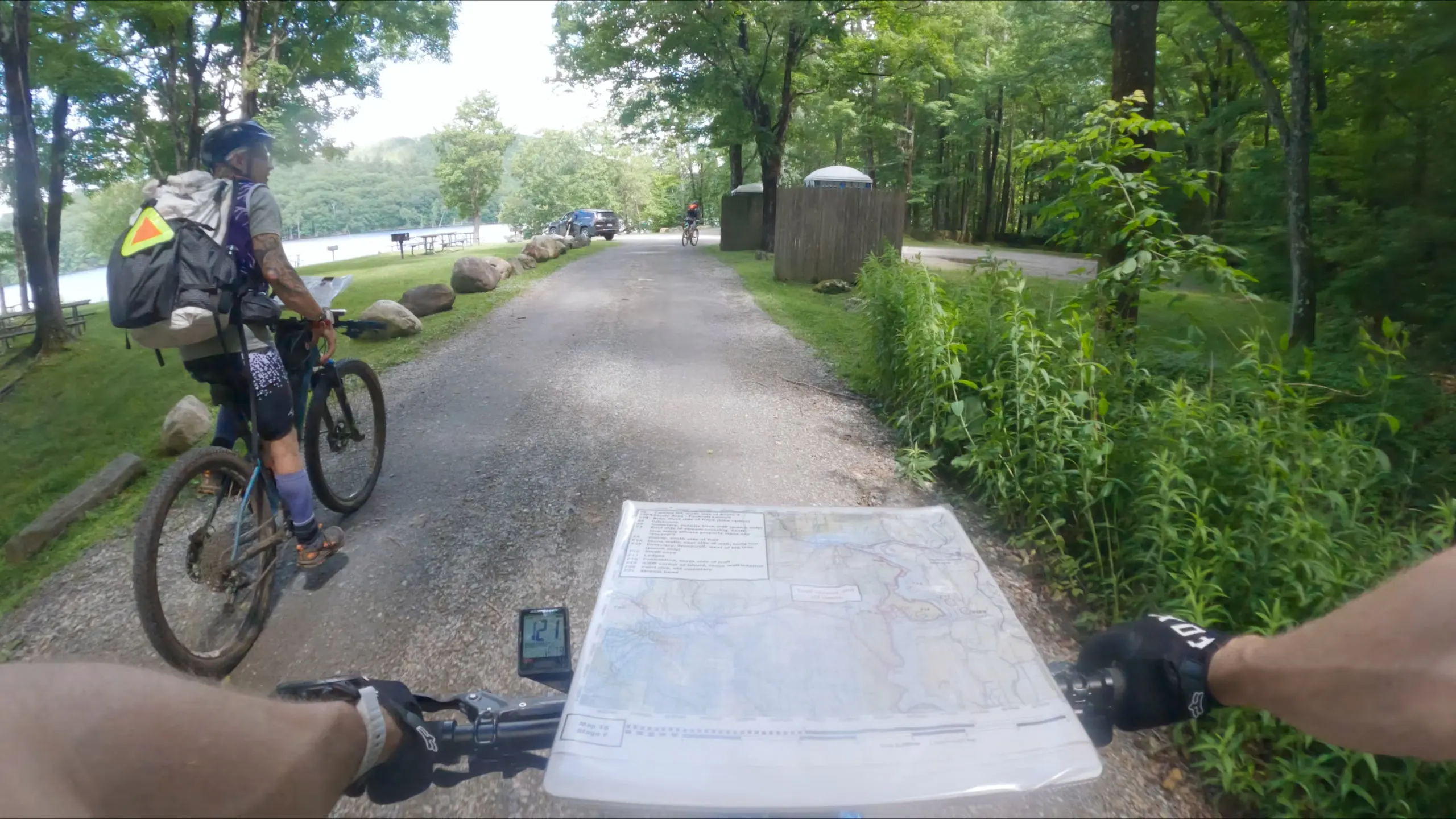
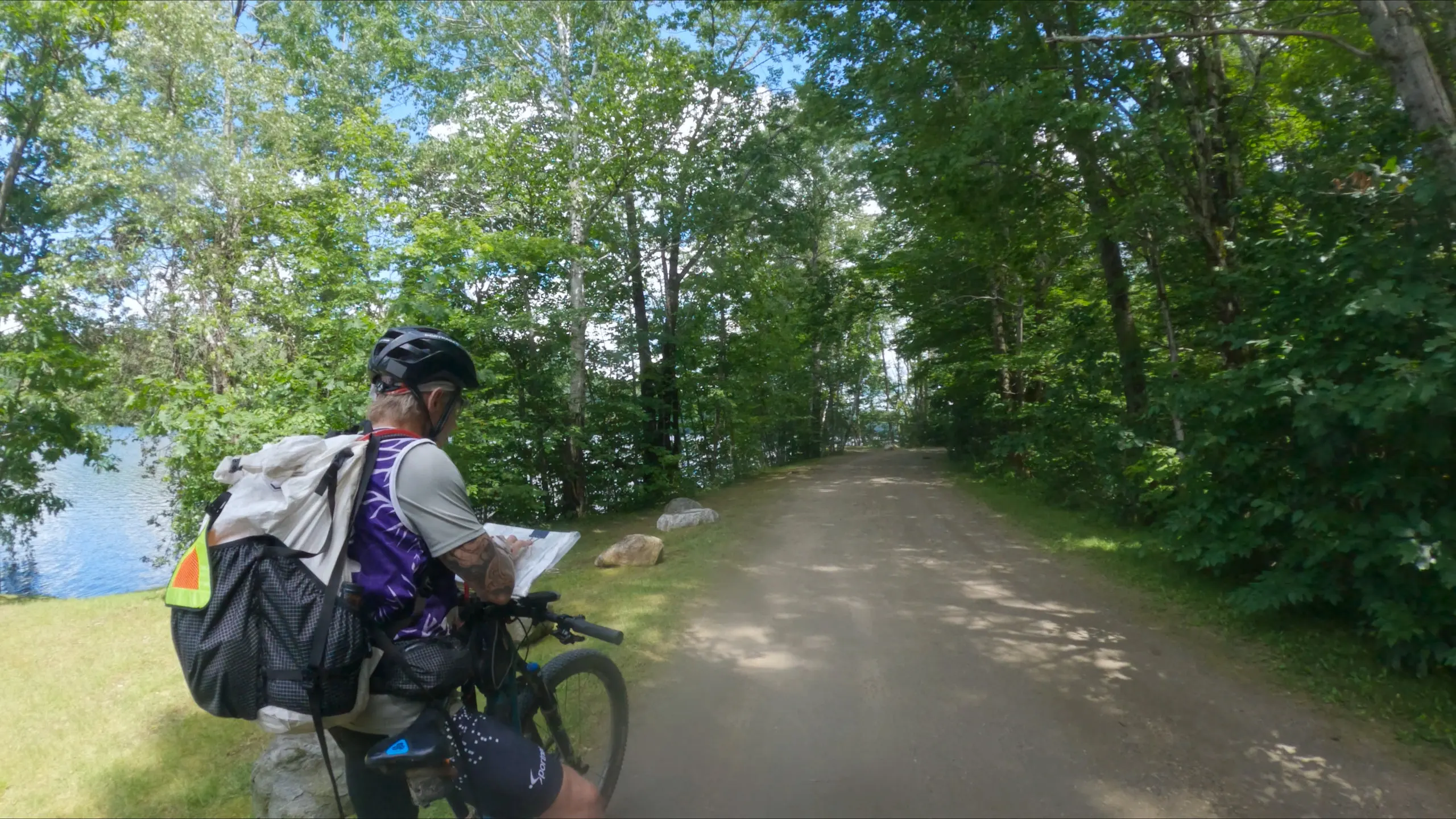
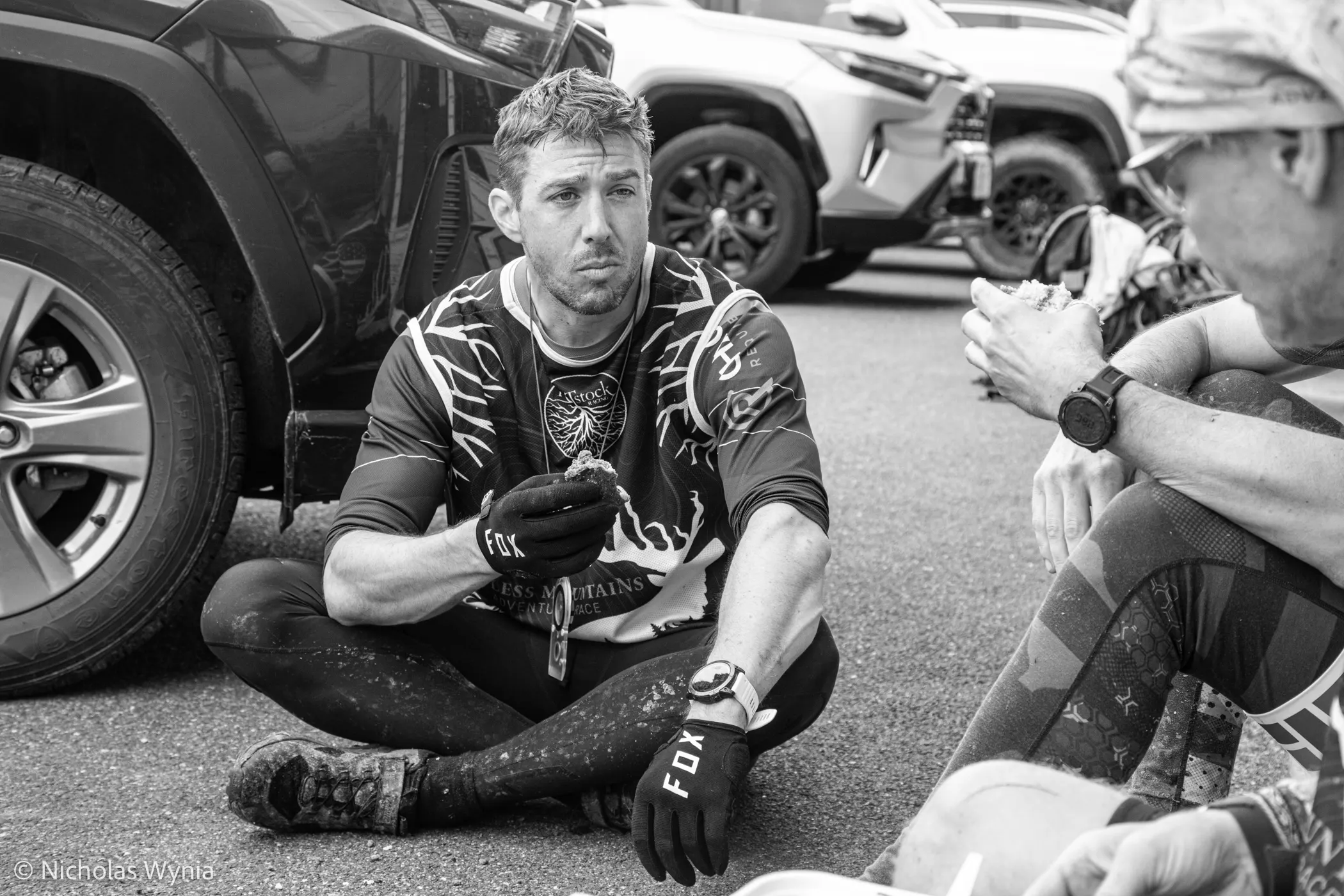
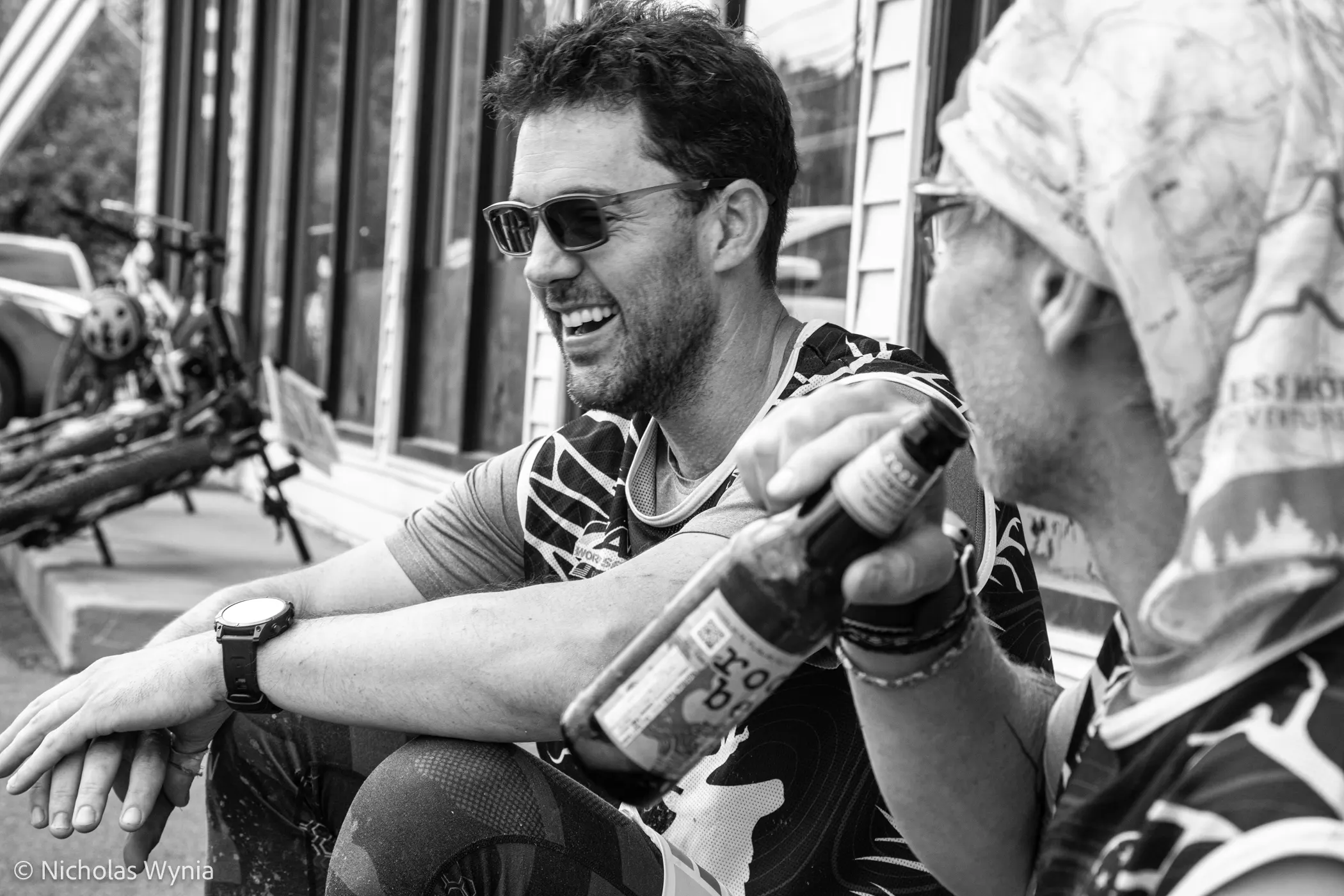
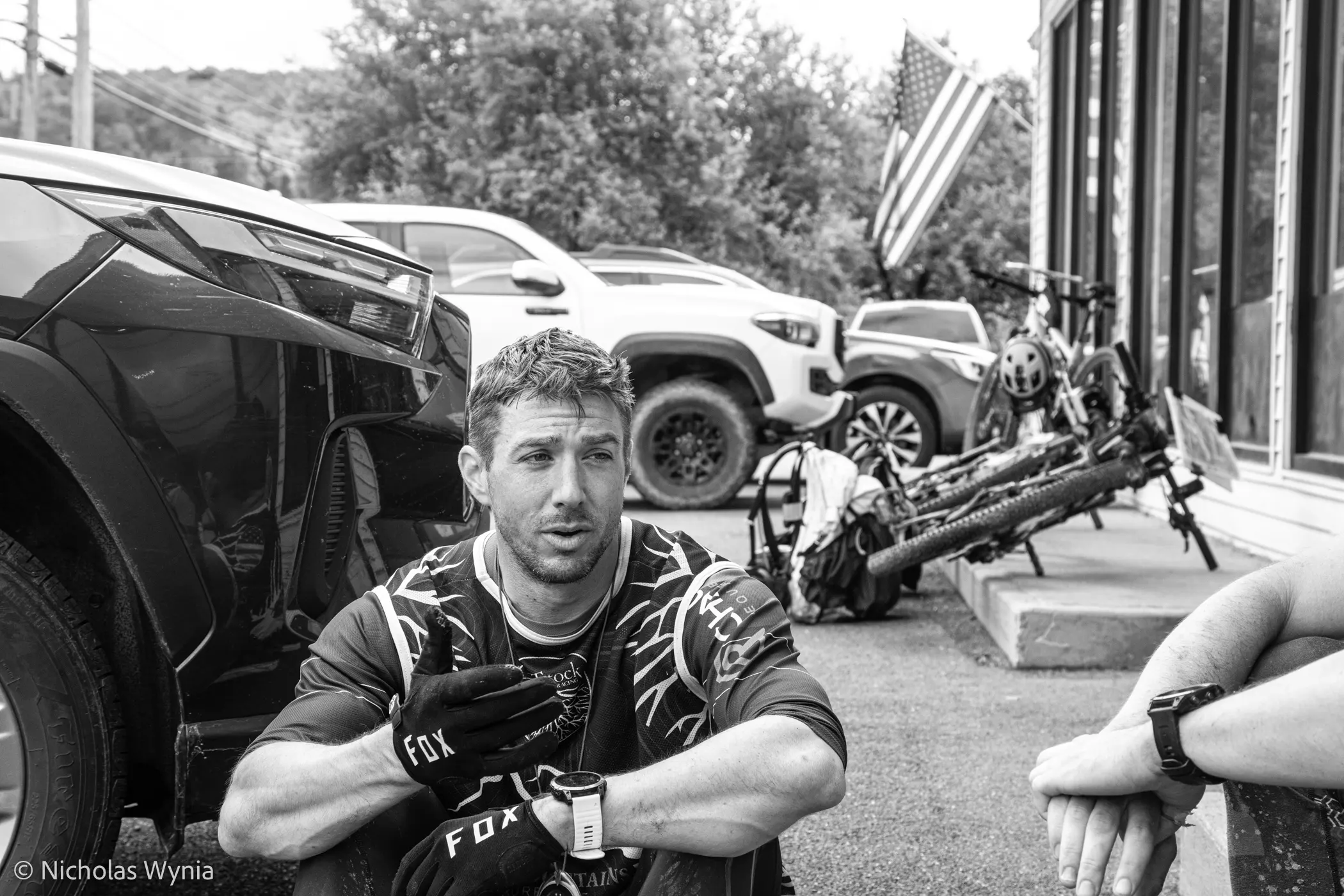
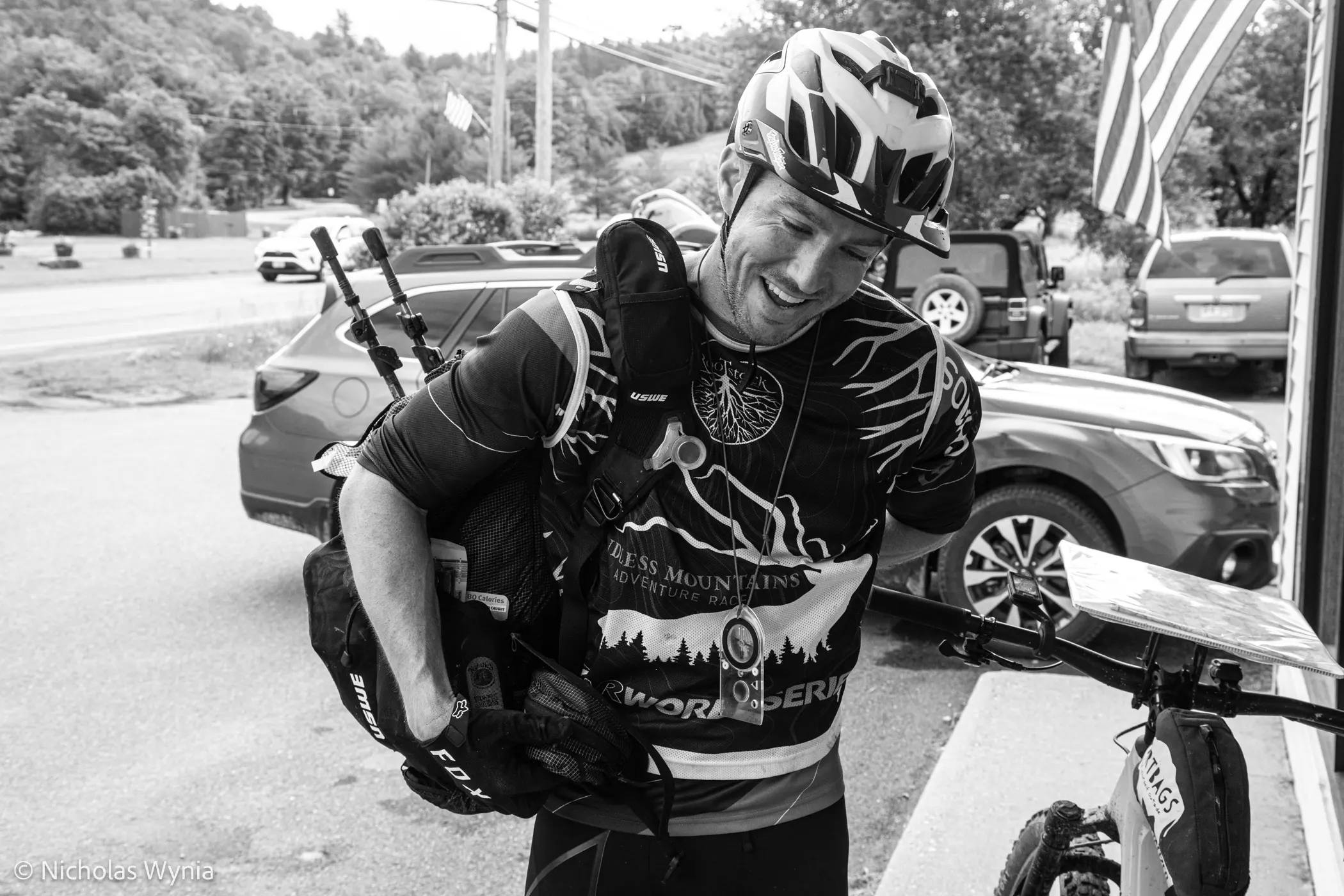
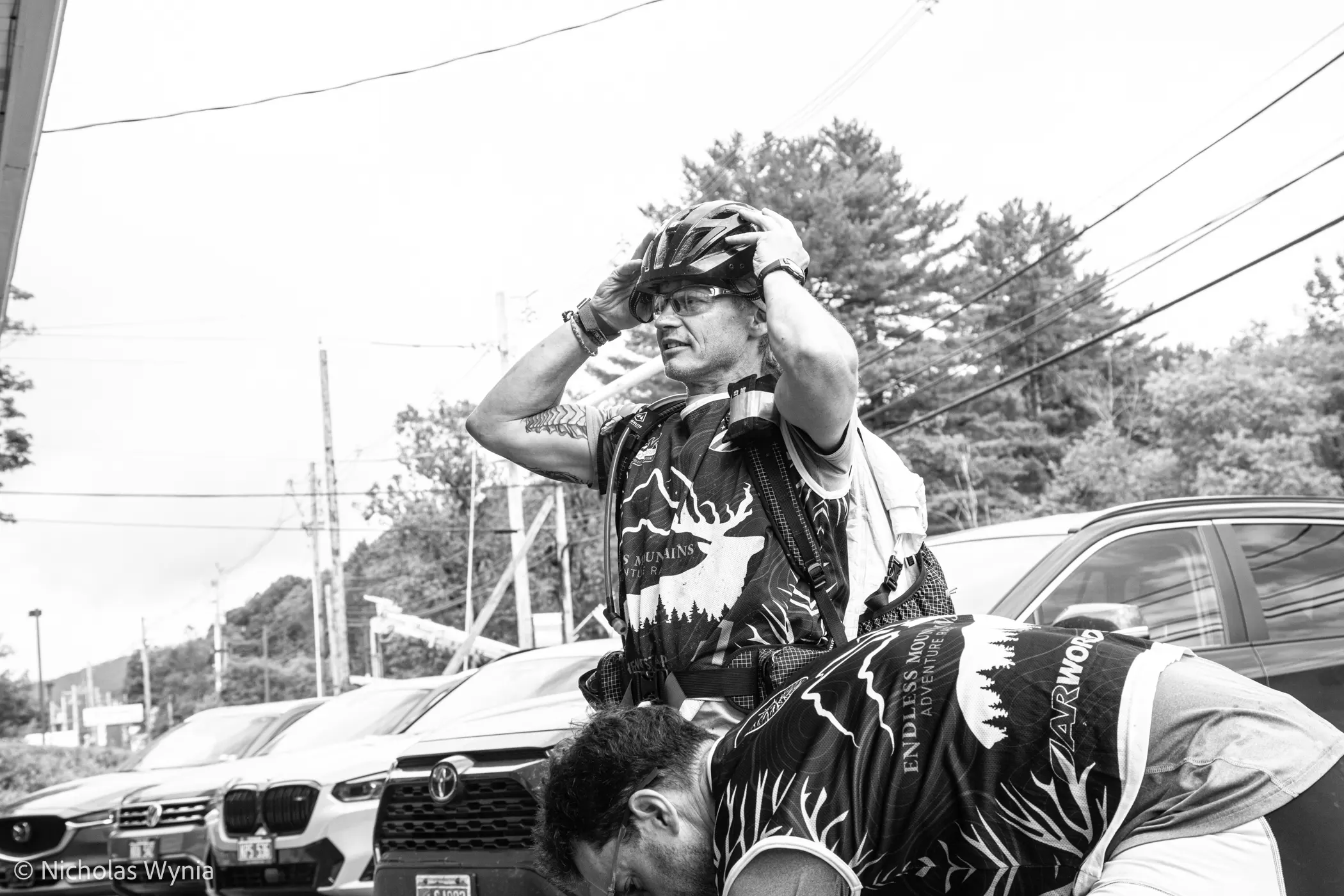
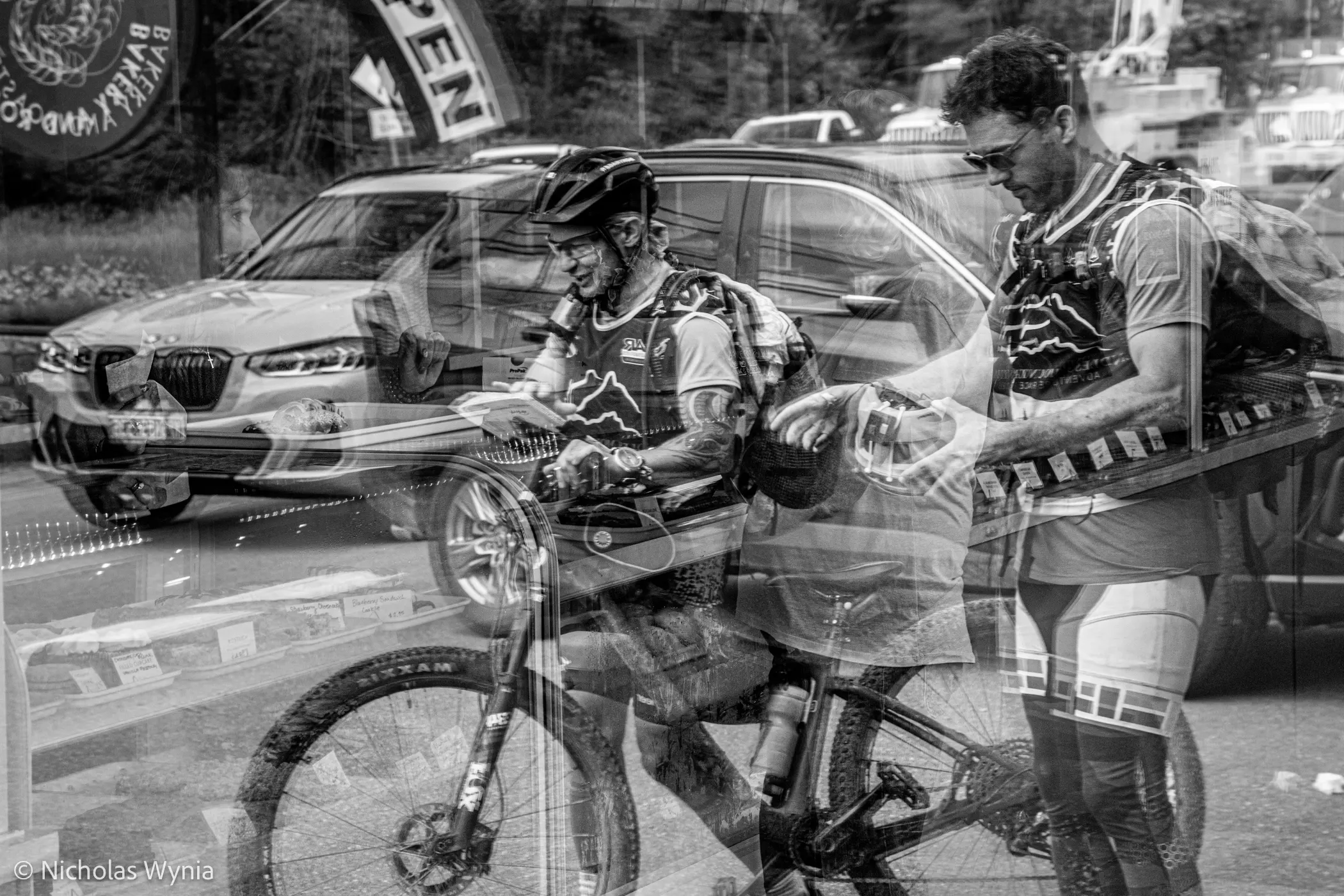
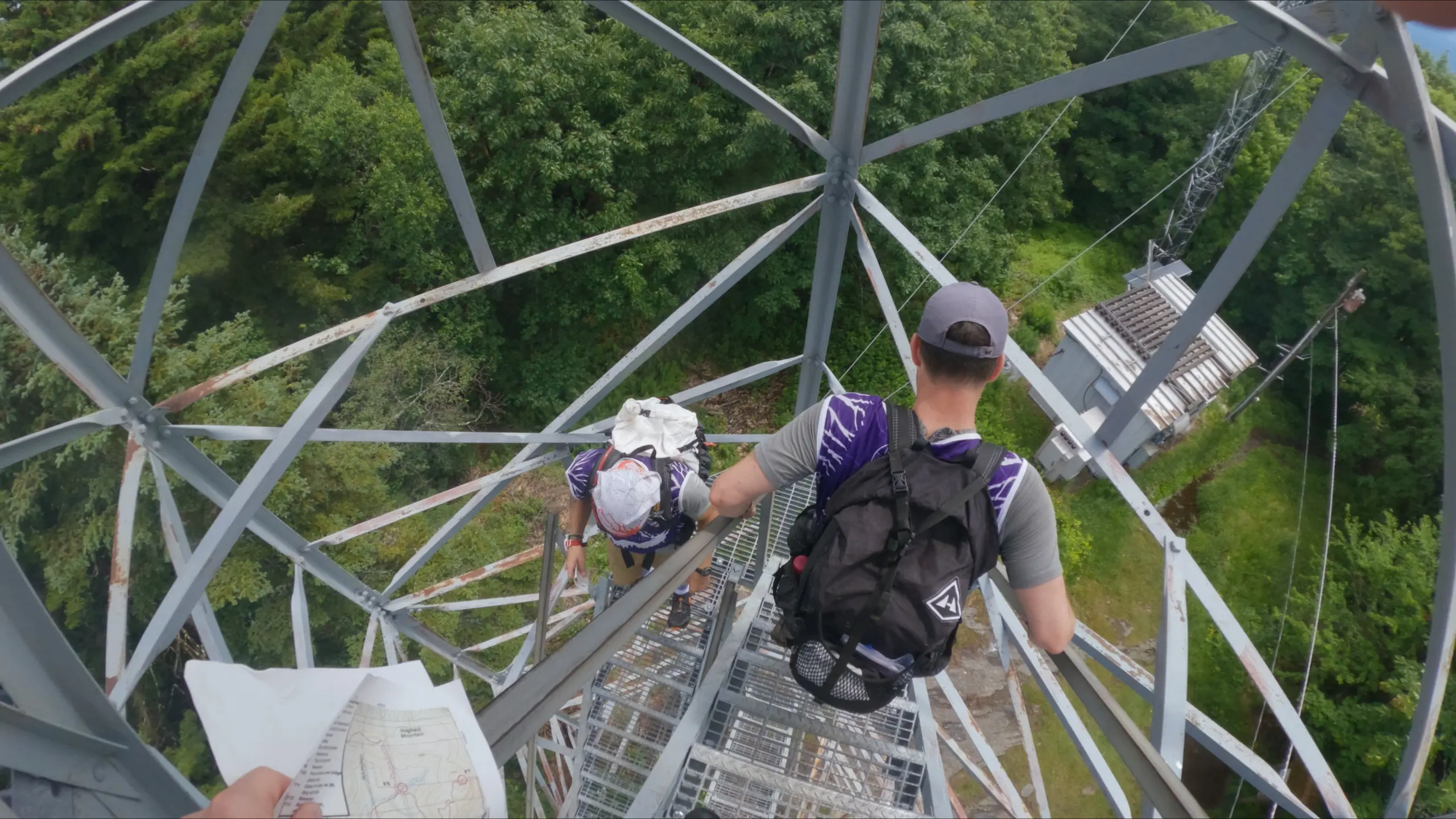
At Hogback Mountain we dropped our bikes for the embedded trek, and got so caught up chatting and getting to know Steve that we made it a good chunk into the southern loop before realizing we’d left our passport back at the bike drop. Rather than burn time running back for it, I decided we’d just punch our own maps as we went and transfer everything onto the real passport once we looped back.
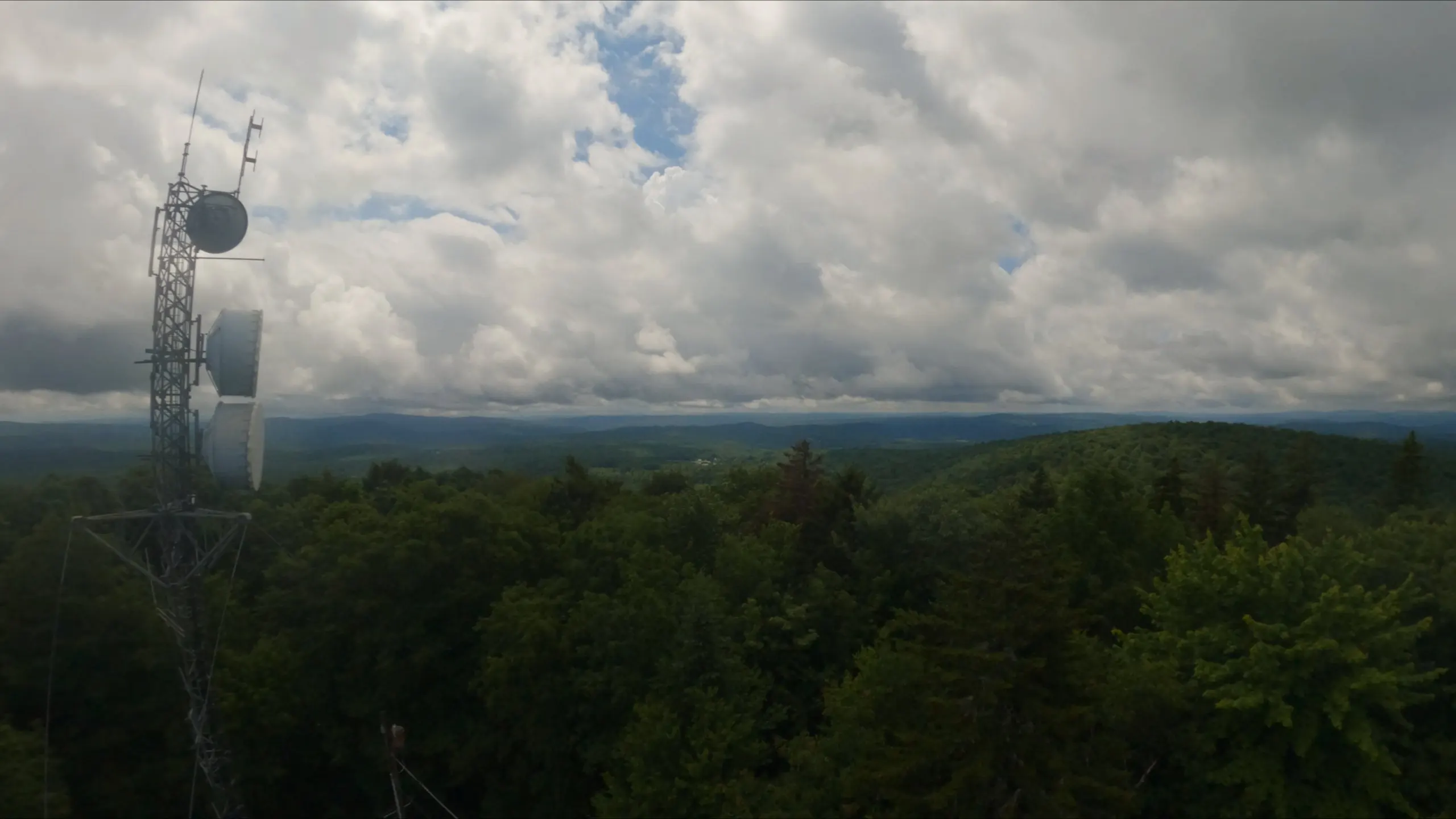
Apologies to Brent and Abby if you’re reading this and wincing. It worked fine. We climbed to the old firetower, grabbed a couple of optionals on the way through, and got back to our bikes in good spirits, all of us in decent health and getting along well.
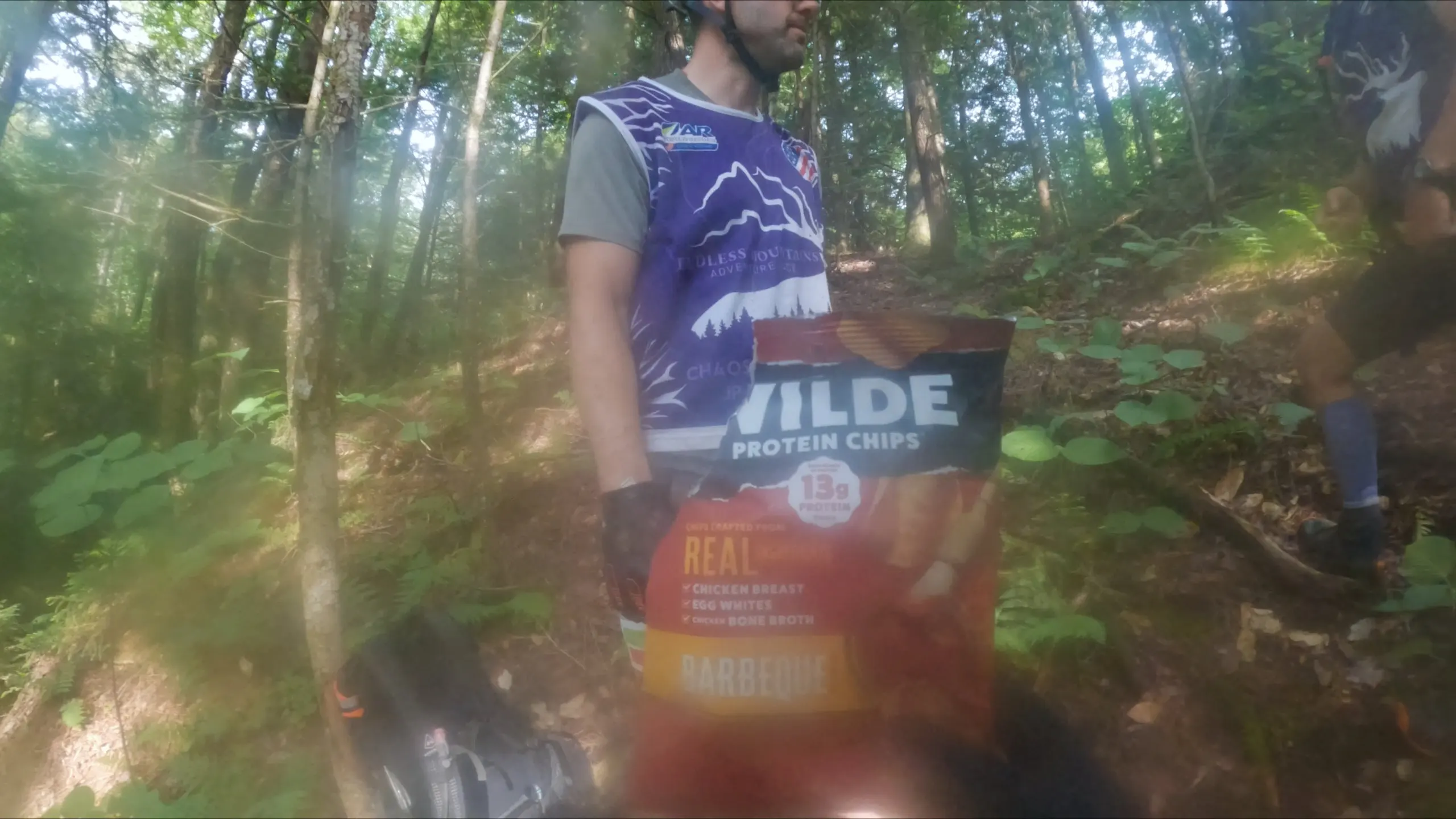
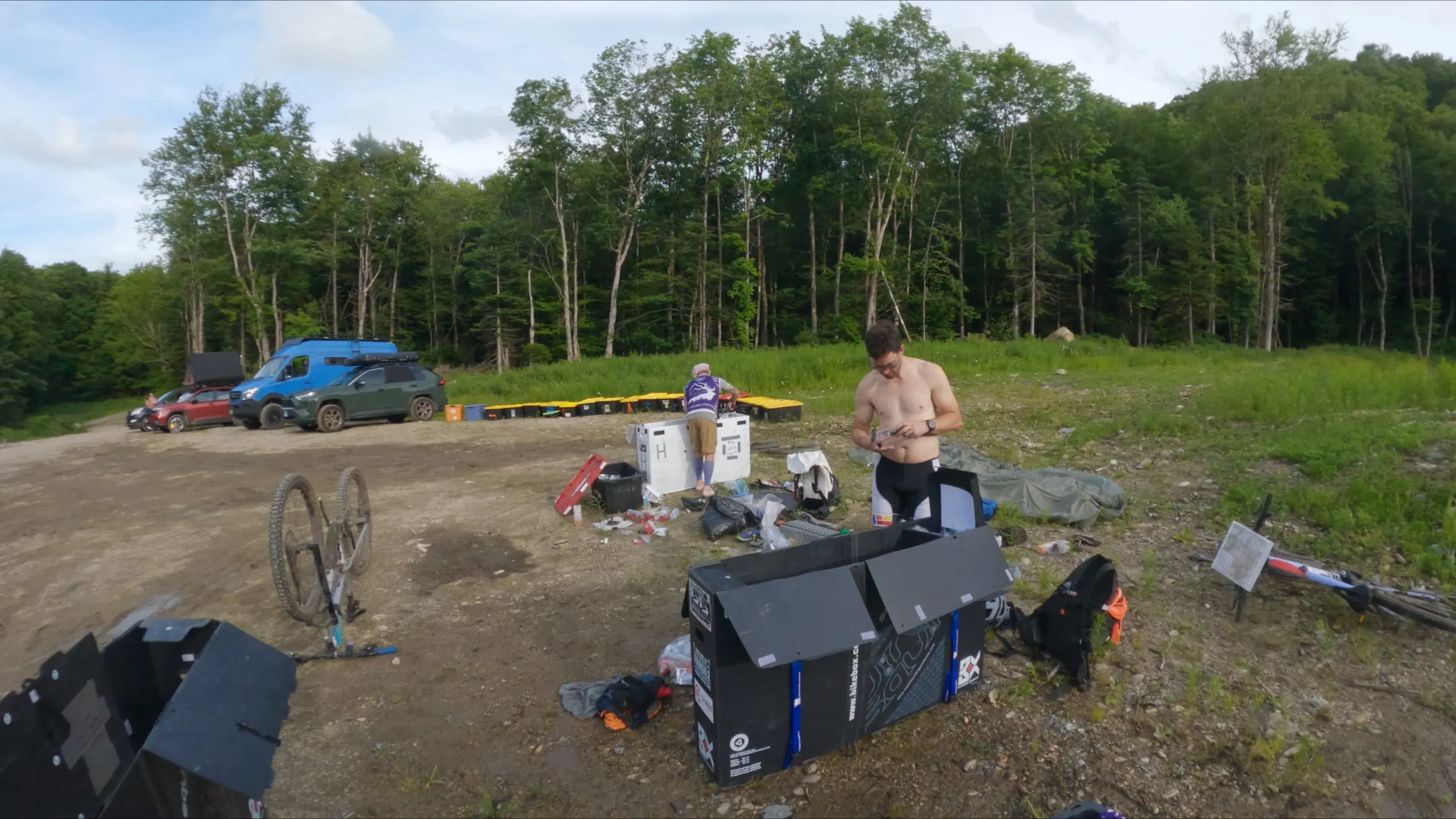
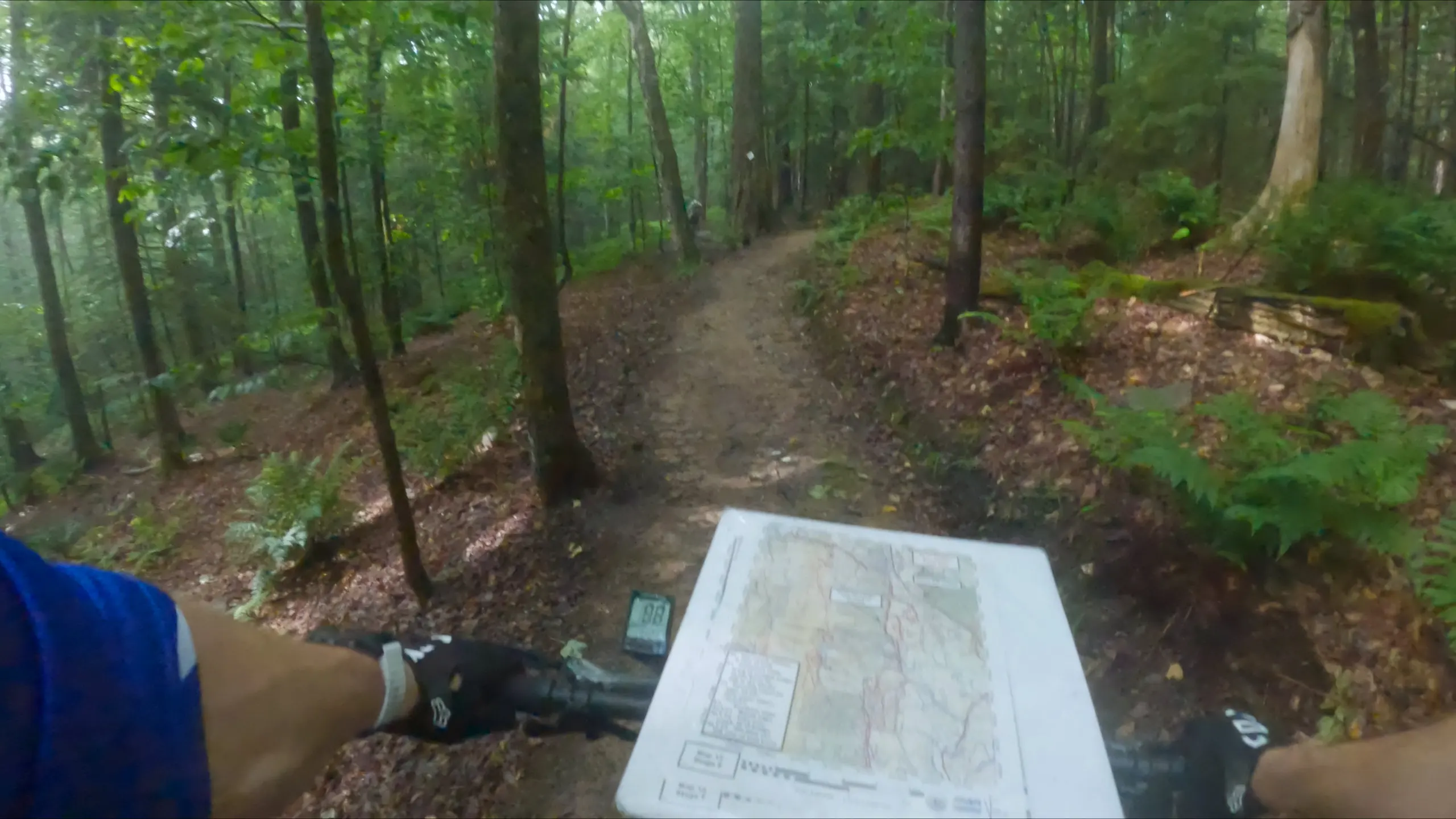
We skipped the bike-raft through Harriman Reservoir outright. We simply weren’t going to have the time for it and still make our orienteering deadline, and that was an easy call once we did the math. We rode Route 9 back and cut into the Green Mountain National Forest on a road that turned out to be a genuine delight, wide double-track gravel for the first half before narrowing into some steep but rideable 4x4 track. Steve introduced us to some chicken poultry chips that were, against all odds, fantastic, and we nearly missed two turns riding into TA6 before catching ourselves.
By the time we got there, we could feel the finish getting closer, and Brent had good news waiting: the checkpoints we’d expected to need serious bushwhacking to collect on the way to the orienteering relay were no longer required for continuing on the full course. That single piece of news bought us real breathing room heading into the final stretch.
Stage G: The Scouring of the Shire
Green Mountain National Forest: Day 4, Hour 9
9.7 miles trek
We ate a big meal at TA6 (grilled cheese sandwiches made by the volunteers, my usual coffee concoction, and freeze-dried mushroom risotto, noms), the last real one before the finish we figured, under the assumption that this was our point of no return. We needed to be through the orienteering relay with six hours of daylight in the bank to feel good about the final bike leg. The road walk out was easy, and before we even reached the relay we had to climb Prospect Mountain, the ski hill, to tag two checkpoints along the way. Spirits were high the whole way, and about the only surprise was running into Steve’s wife partway up the mountain, which felt less like a coincidence and more like the universe deciding to bring everyone together in the middle of the course. It was a really nice moment for all of us.
Stage H: The O-Relay
Prospect Mountain: Day 4, Hour 12
9.5 miles combined
I love orienteering. Short-form orienteering specifically feels like a different sport entirely to me, fast, precise, immediately rewarding, and I usually feel like it’s one of my strongest disciplines. When we got to TA7, JP could see it on my face before I even asked. “Of course, Rick,” he said. “Go do the long hard course and the short hard course back to back. We’ll get some sleep and you can give us the beta.” I ran the long hard course clockwise, hit a couple of points that were well off the ski trails using nothing but a bearing, a contour line, and my altimeter, and came back in about 55 minutes. That was right around the time I overheard other teams had been out on that same leg for over two hours already without returning. That felt good. It’s the middle of the night, deep into the race, and our navigation was still that dialed in.
I turned right back around and ran the short hard course in under 30 minutes, then woke JP up, buzzing, and briefed him on what to expect. He came back from the long easy course in about 45 minutes.
Then it was Steve’s turn, and it played out like a Looney Tunes bit, JP strapping a headlamp on him, me shoving a map in his face and talking a mile a minute while he blinked awake, having no real idea what was happening to him. He got out there, ran the short easy course in half an hour, and we were done. All four courses complete in under three hours, comfortably ahead of teams who were clearly struggling with a leg I don’t think was actually as brutal as its reputation suggested. I told Brent afterward that we’d cleared the long hard course in under an hour, and he gave me a look like he didn’t quite believe it.
Turns out the amateurs can move.
Stage I: A Warm Welcome
Green Mountain National Forest: Day 4, Hour 18
17.6 miles bike
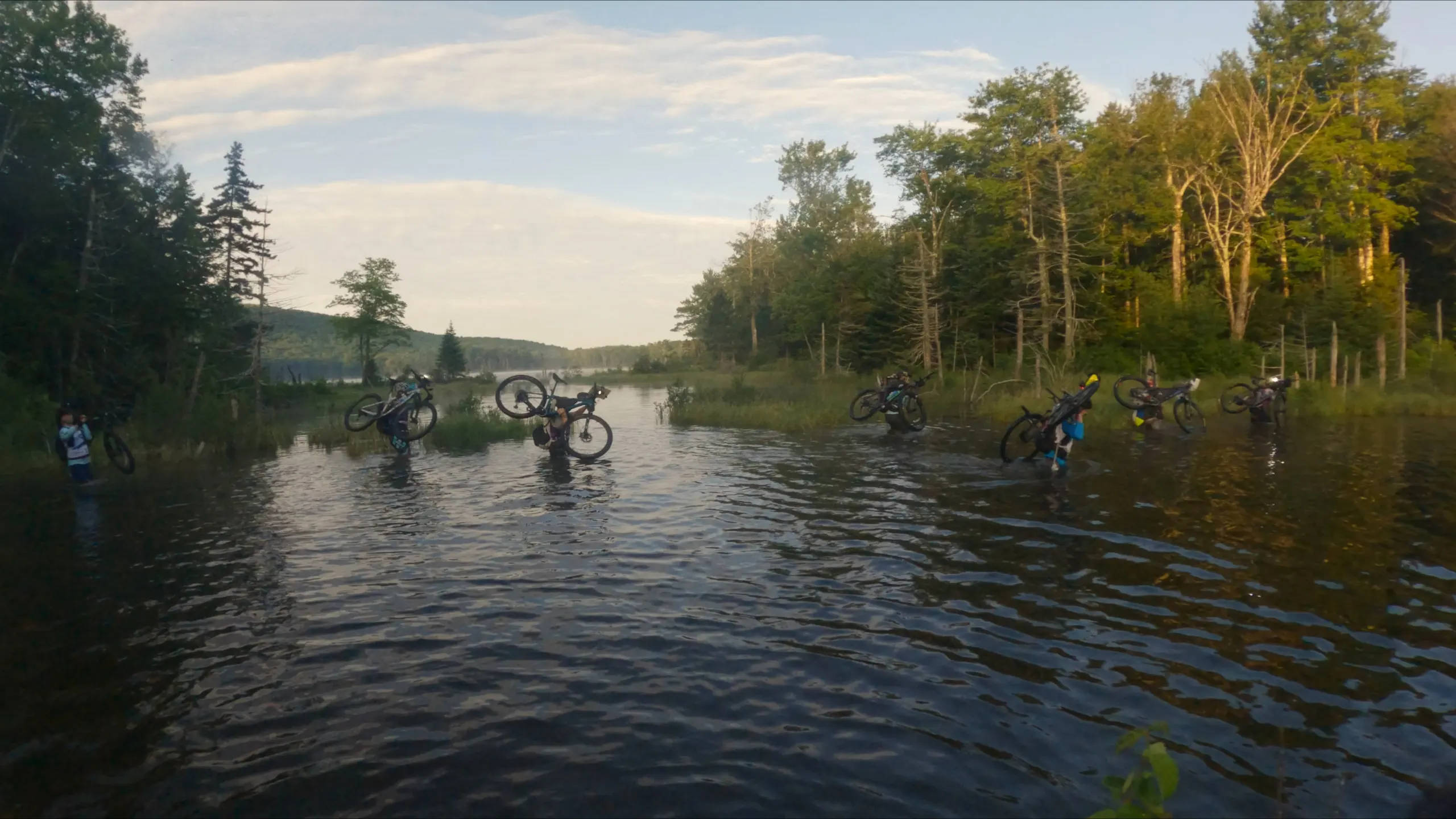
We were out of the relay by 4am with a full six-hour buffer, exactly the plan we’d set back at CP5 on day zero. There was only one map left between us and the finish, and it nearly bit us. There were two ways around a lake ahead, and we took the one that hugged the shoreline instead of going around, which turned into thirty or forty minutes of pushing through pine thickets before we admitted we needed to head west, not along the water. Once we course-corrected, we found ourselves chest-deep in a beaver pond, bikes held over our heads, which remains one of the coolest and stupidest bike carries I’ve ever done.
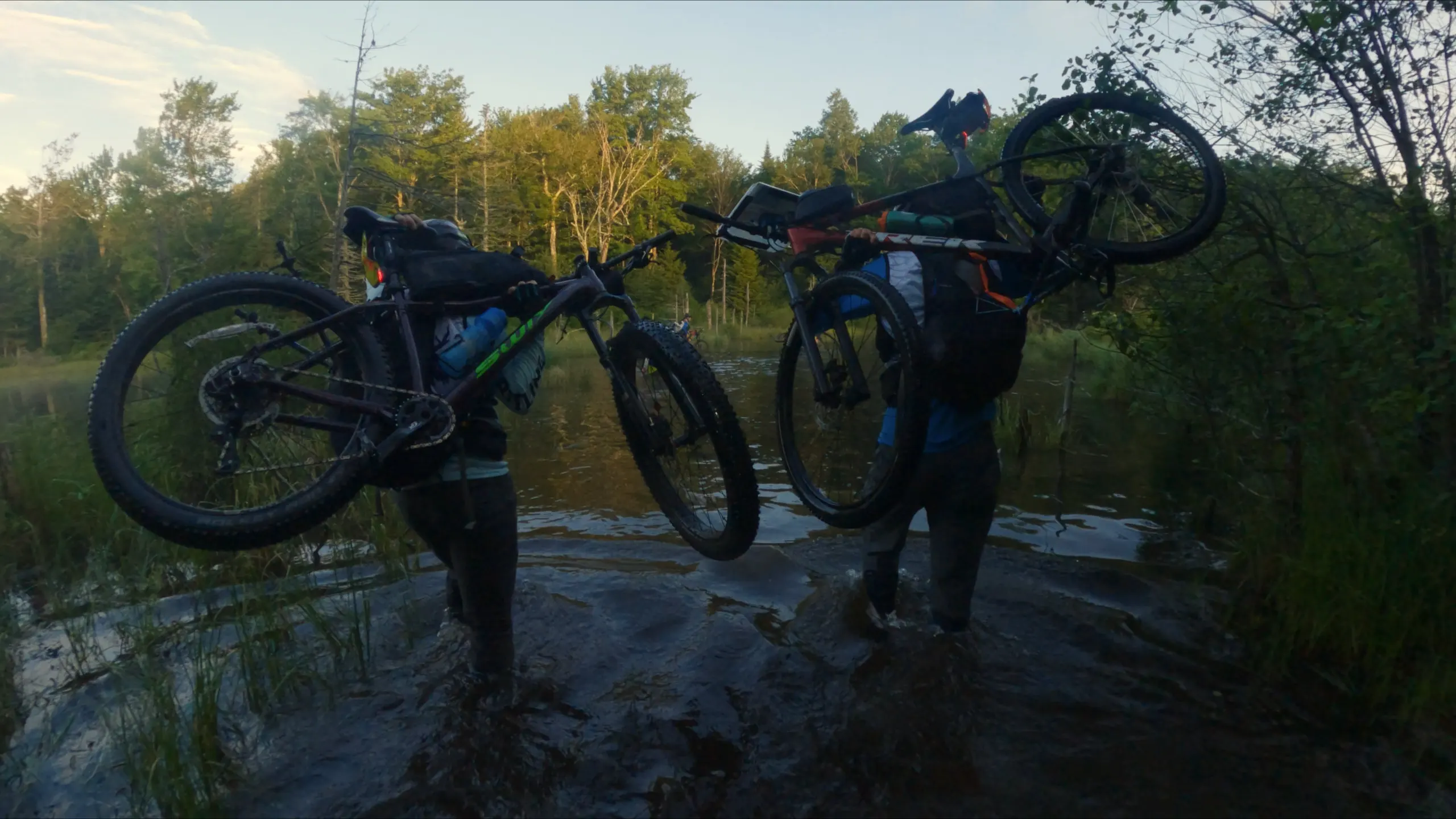
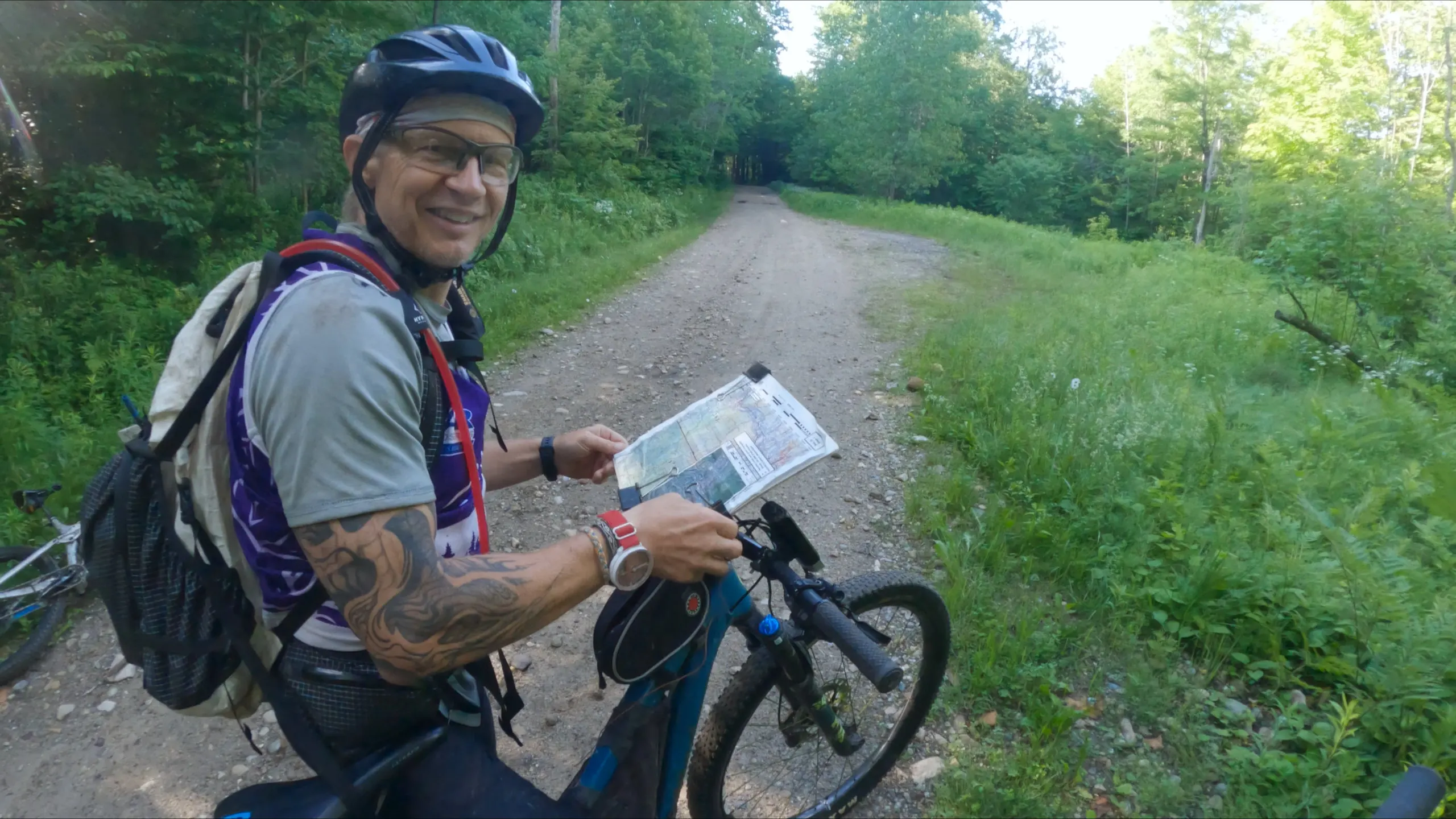
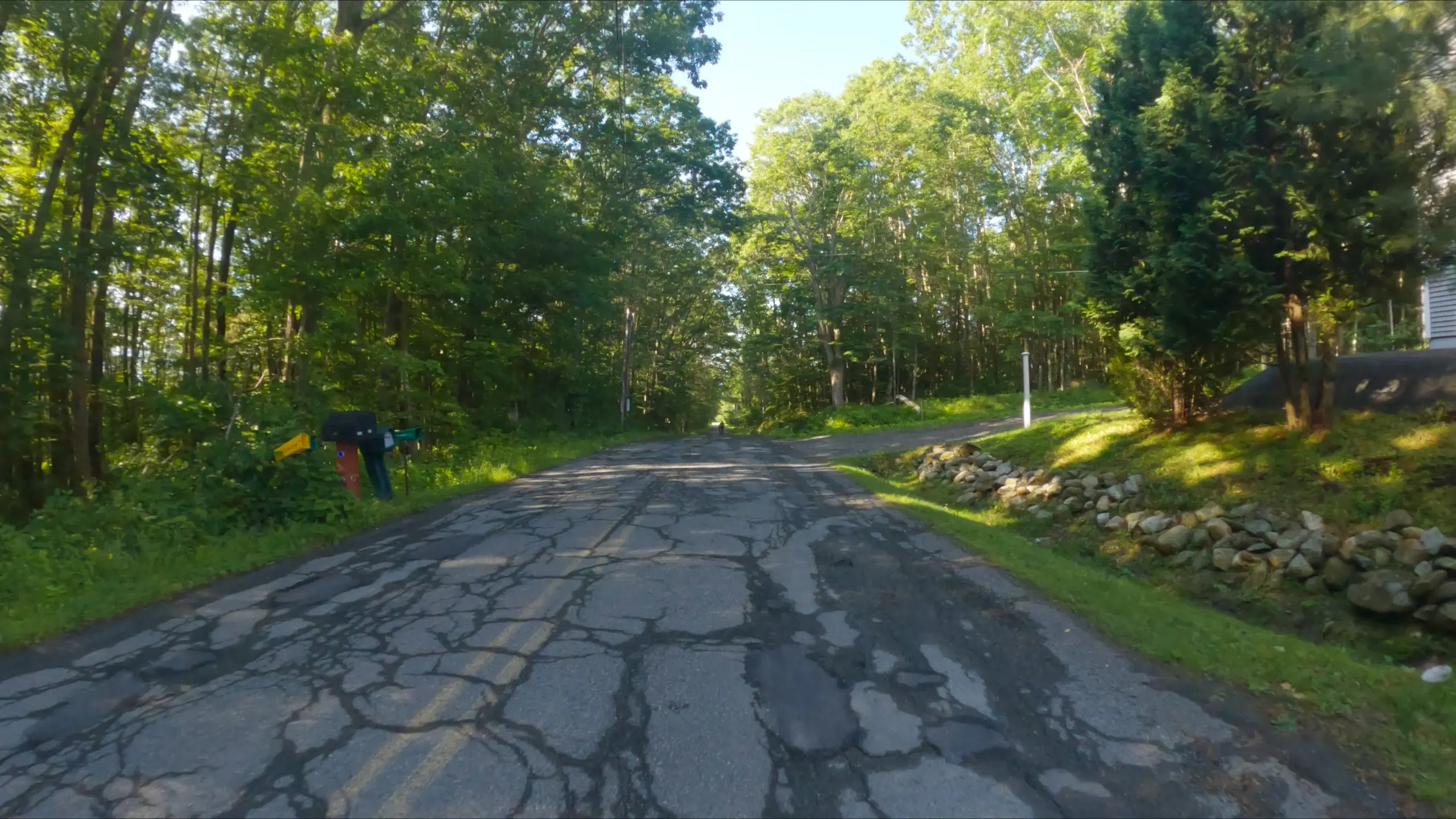
The next six miles climbing back to real roads were the definition of a hike-a-bike: mud to the hubcaps, hidden rocks, sections of standing water fifty feet long, nothing rideable about it. JP somehow snapped a pedal clean off his bike and still out-pedaled Steve and I for miles on what amounted to a peg leg. He wasn’t even the only rider on course who broke a pedal in that stretch. My own bike’s electronic derailleur, meanwhile, went through mud, water, and abuse the entire week without a single hiccup. After using it through last year’s seven-day race too, I’m fully sold, no more fussing with cable tension mid-race ever again.
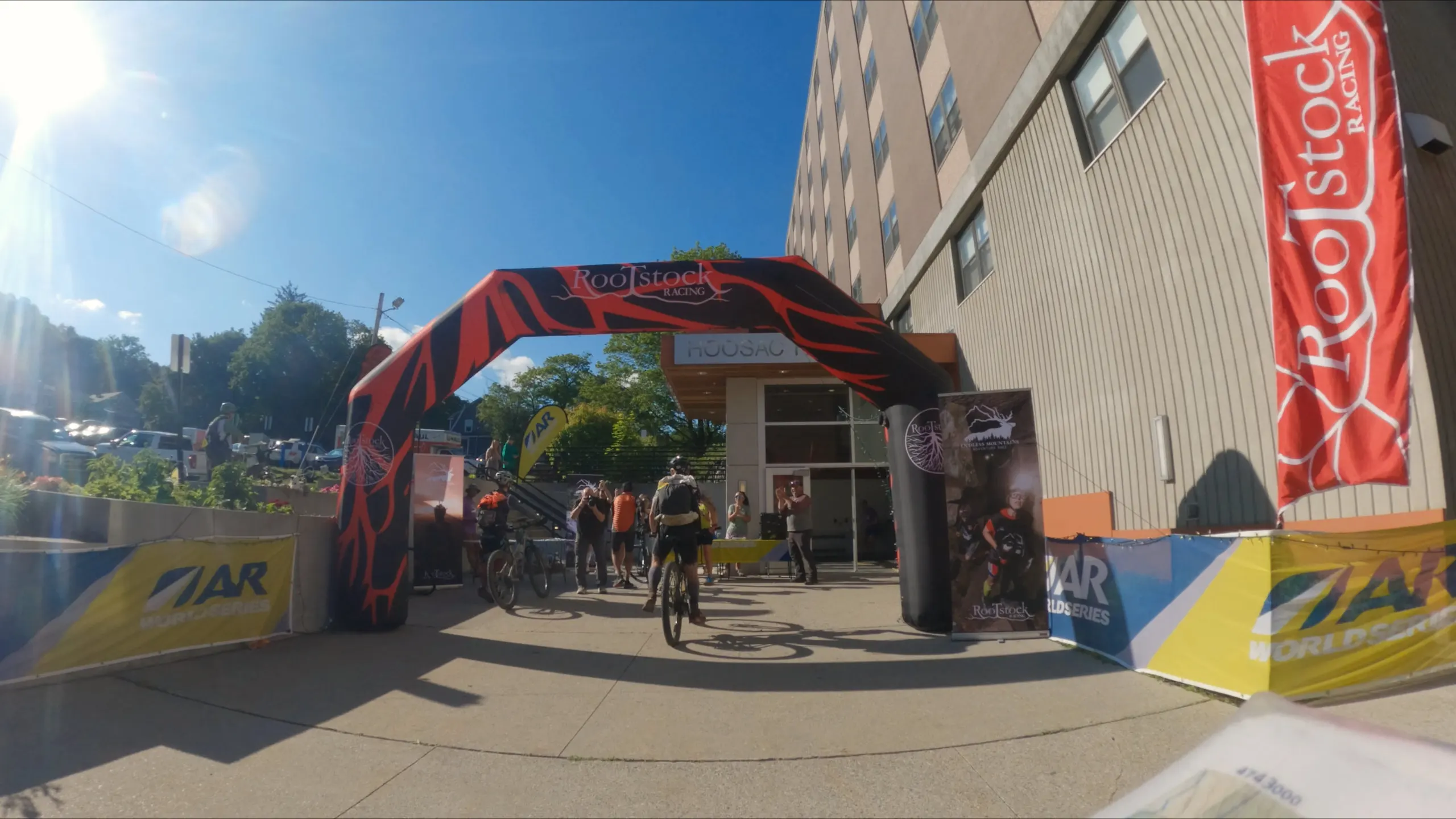
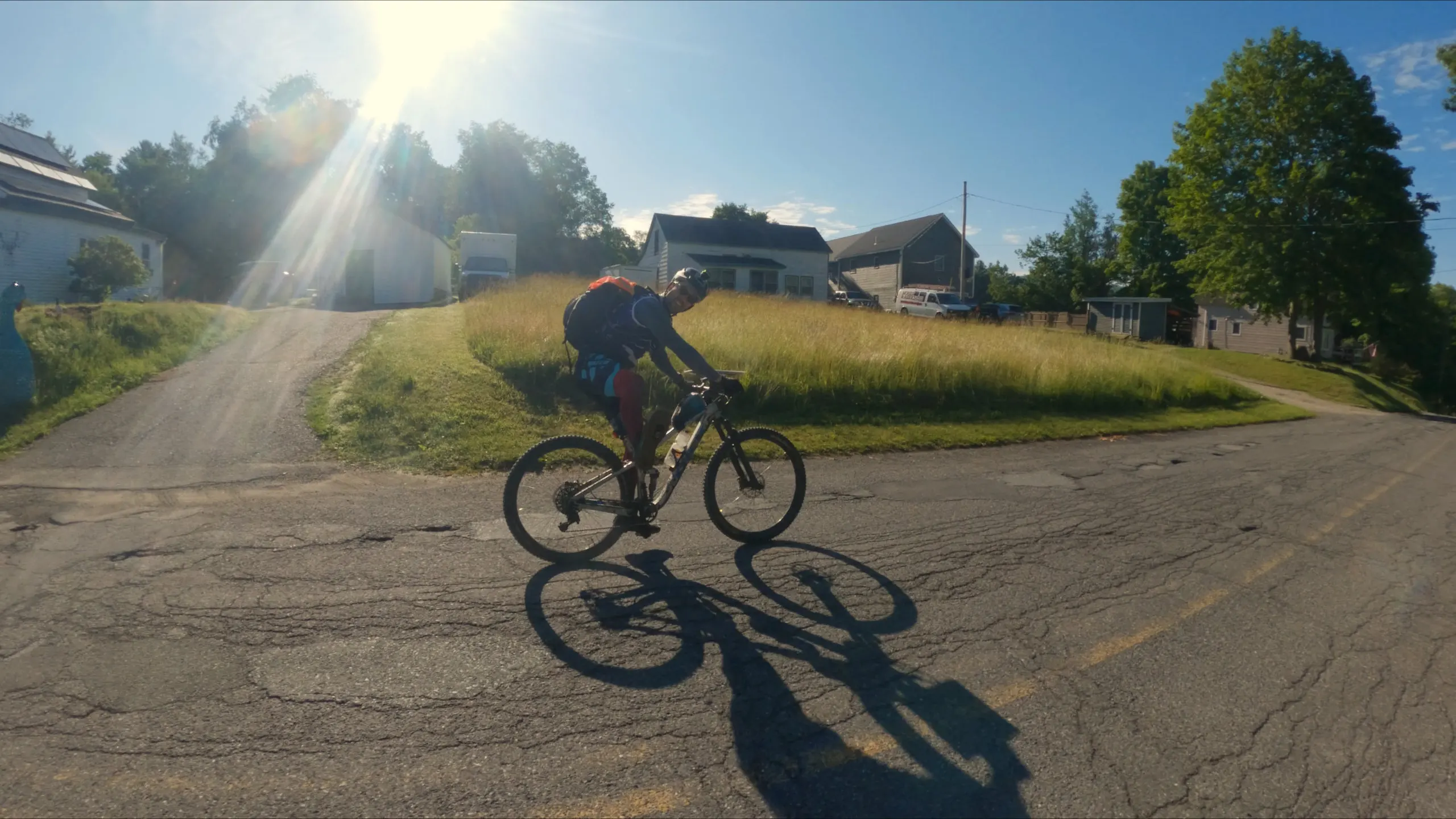
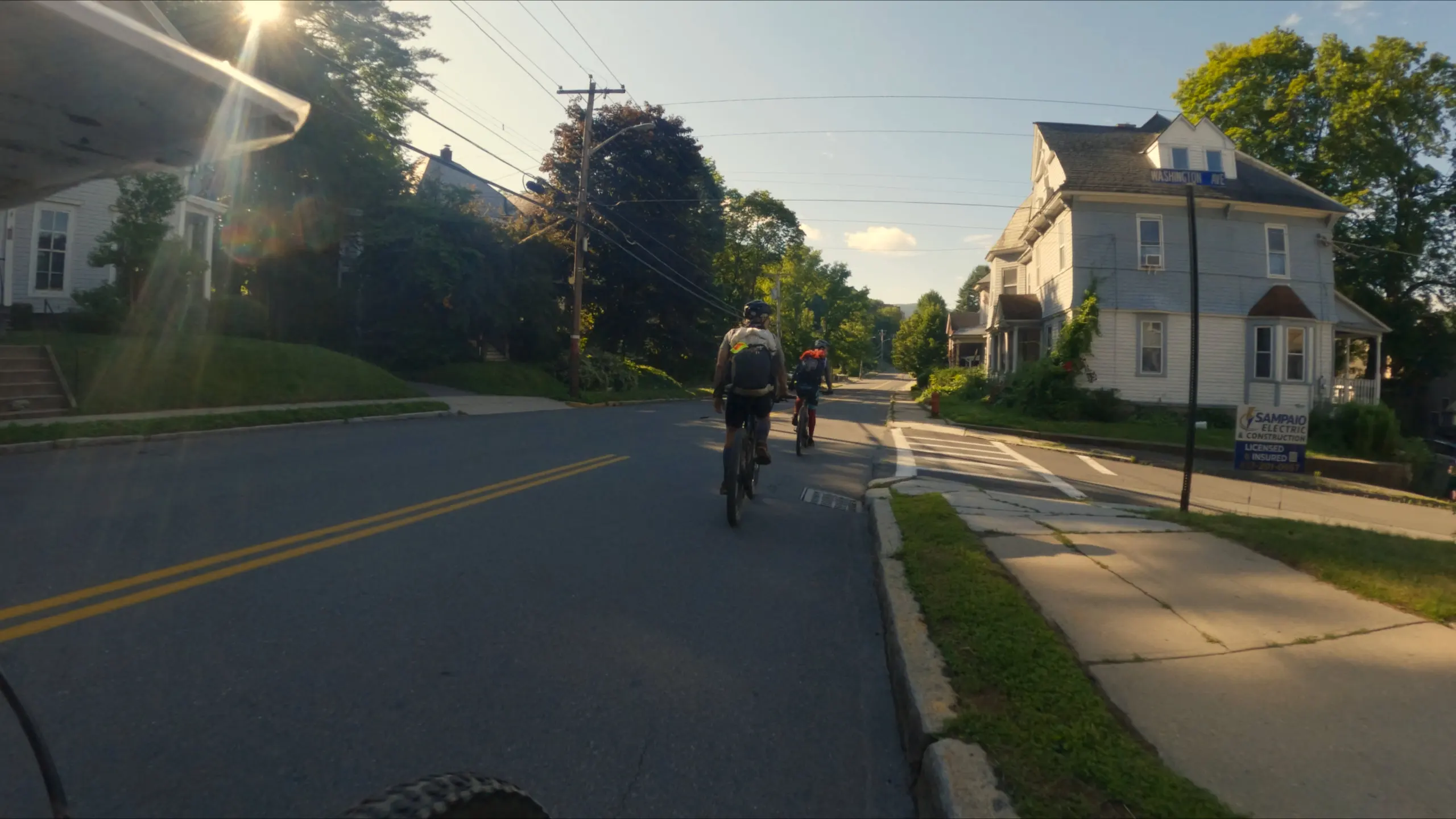
Somewhere in the final miles we crossed paths with a racer in similar bibs who asked if we were doing the five-day race, and it took me an embarrassingly long second to remember there was also a 24-hour and a full seven-day event running alongside us. My brain was somewhere else entirely by then. We rolled into North Adams, right past the dorm we’d started in five days earlier, to find Jason waiting with his family.
His leg was wrapped better than the last time we’d seen it, though we’d learn later he was still fighting an infection that required more cleanup once he got home to Missouri. He stuck around all week, following our progress and cheering us on even though he couldn’t be out there with us. That’s the kind of teammate he is, though we really wish he could have been out there with us the whole way, sharing in the memories firsthand instead of chasing them from a distance.
Reflections
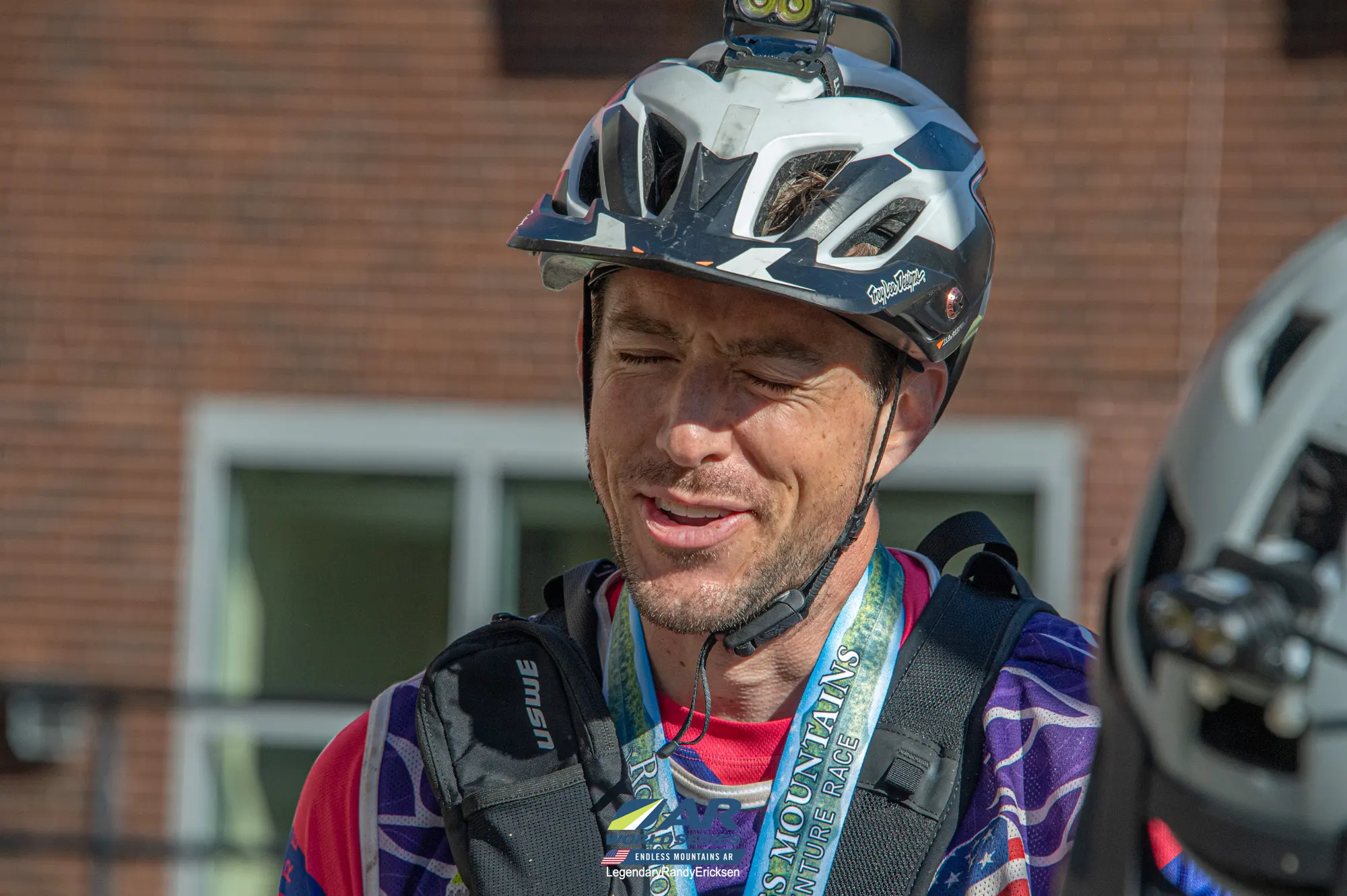
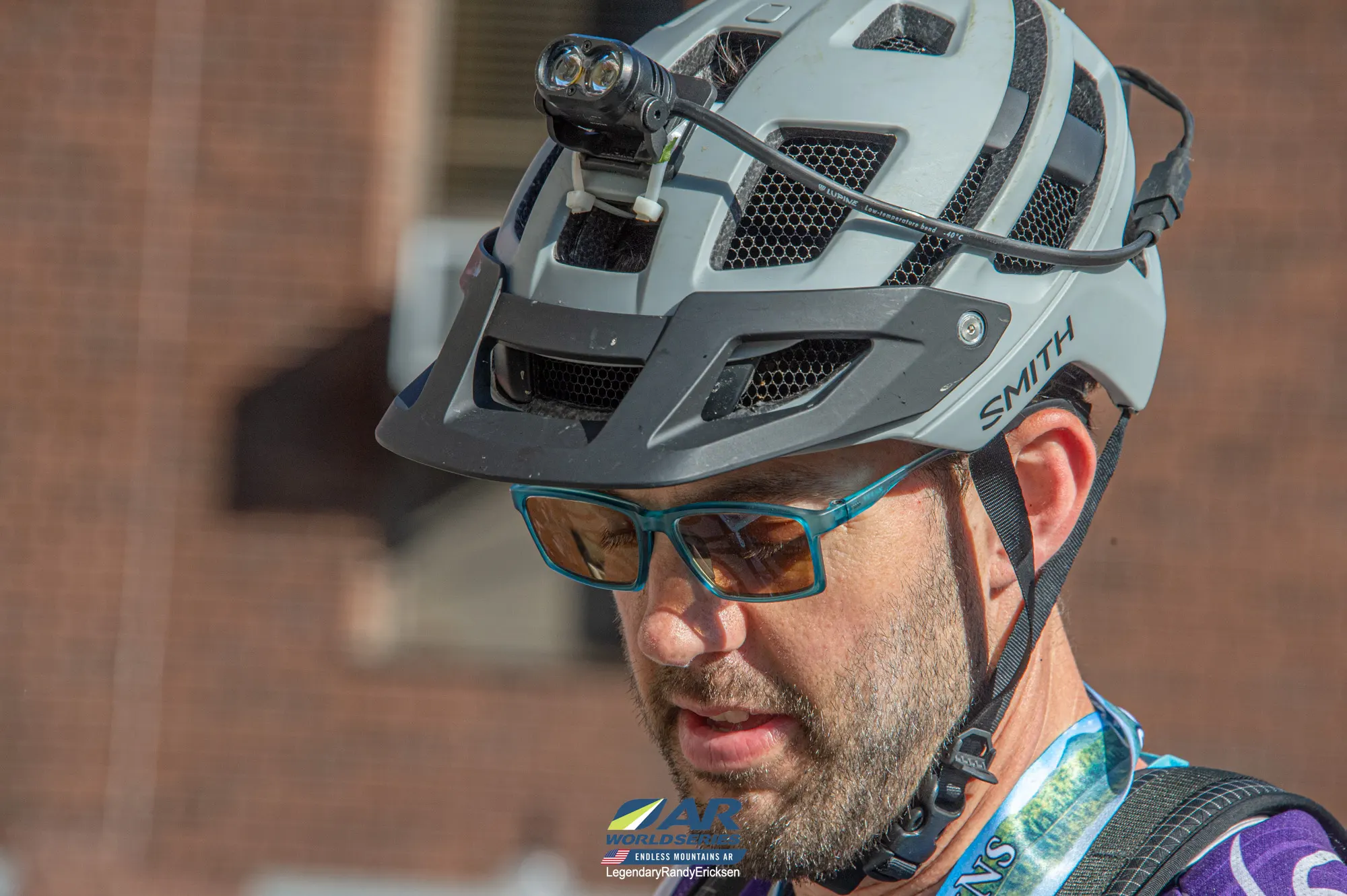
325 miles, 4 days, 22 hours, and 6 minutes, and we finished technically unlisted on the official scoreboard since our roster changed mid-race. But every mandatory checkpoint got hit, plenty of optionals along the way, and top ten pace by the numbers regardless of what the results page said. We also met Paul, Steve’s original teammate, who’d been sidelined by the same kind of bad luck that took Jason off course, and traded stories and photos with both of them at the finish. Showers, a few hours of sleep, and then the post-race awards with Jason, his parents, and his family at the table, exactly where we wanted to be sitting.
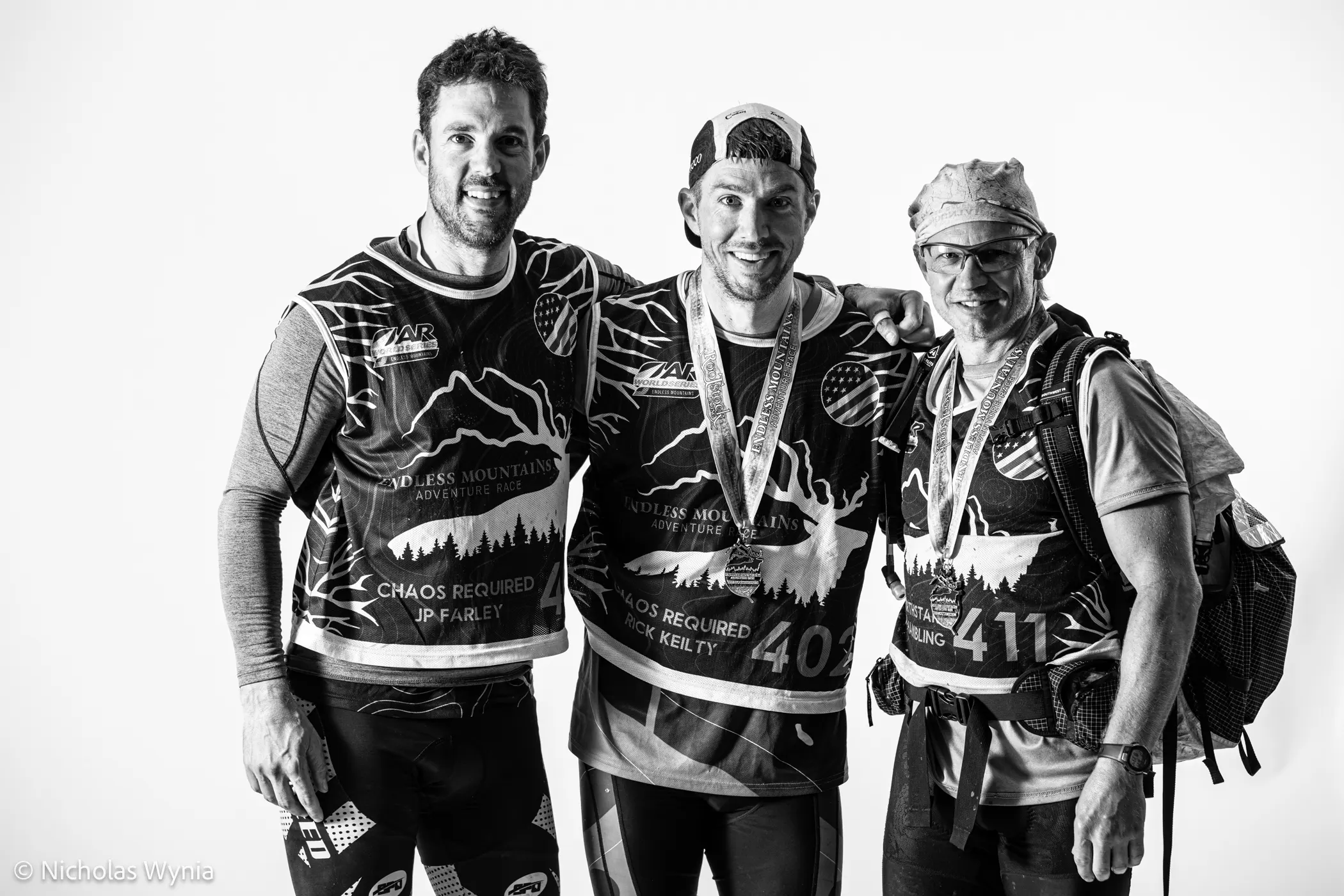
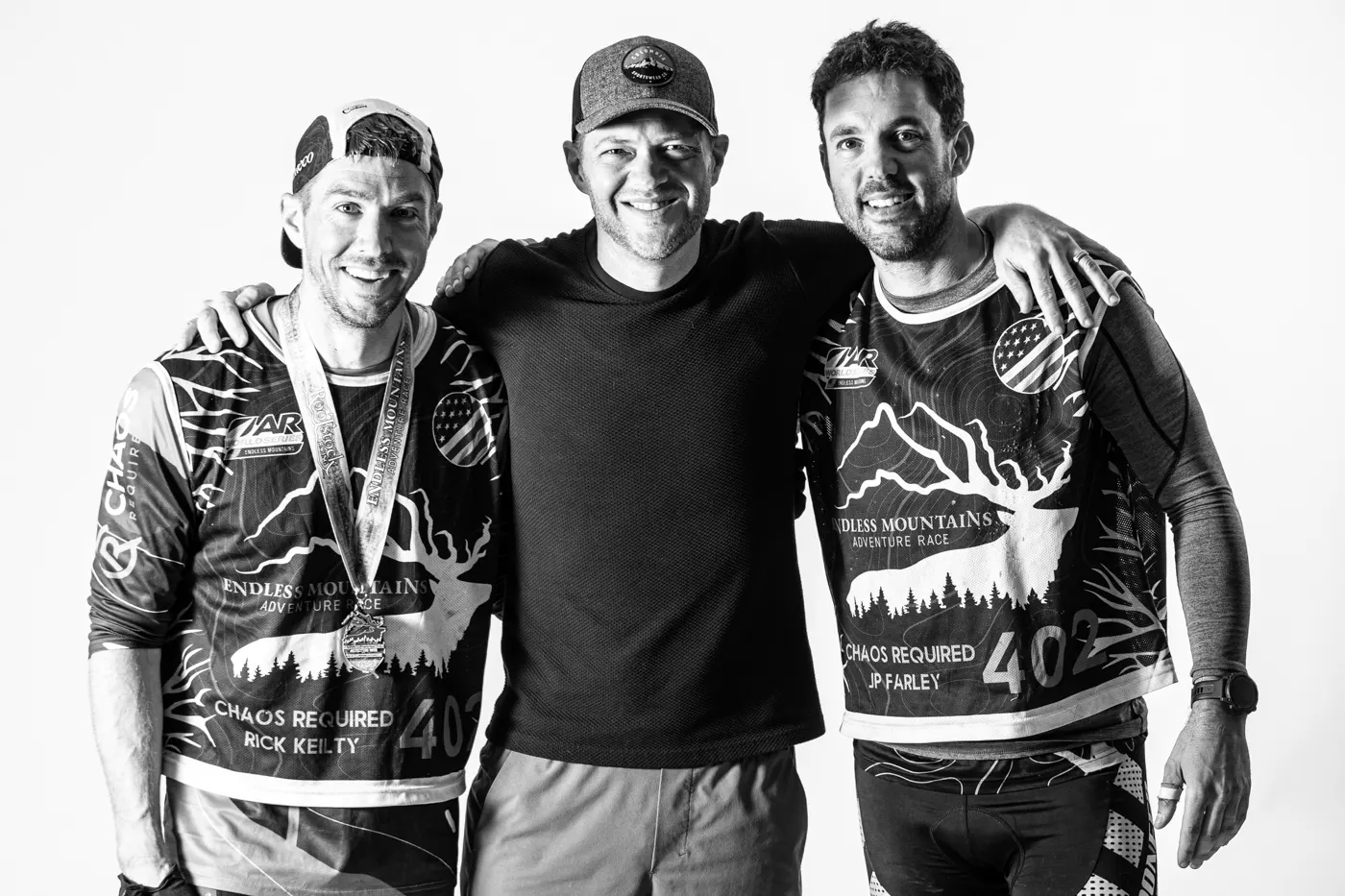
Abby and Brent handed us their inflatable donut award this year, given out for the team they feel has grown and pushed the hardest. Steve mentioned to Abby afterward that he’d had a good time racing with us, and she agreed, saying we were always solid to have out there, which was a nice thing to hear from someone who watches hundreds of teams come through every year.
There was a stretch a few years back where I genuinely wasn’t sure I’d keep doing this sport. I’d burned out on it and took a year off to figure out whether all the time and travel was still worth it. It turned out I missed it more than I expected, and this crew is the reason I came back: JP told me straight up that we could still go have fun in the woods together, and he was right.
This sport has introduced me to some of my best friends, I proposed to my wife in the middle of one of these races, and every time we pick up a new teammate, Jason answering the call on six weeks’ notice, Steve spending the whole tail end of the race laughing along with us like he’d been part of the crew all along, it reminds me why we keep showing up for these. He’s already talking about how we’re all going to have to link up and race together again sometime, with Paul along for the ride too.
We’ll be back in 2028. Hopefully with all four of our original teammates in one piece this time.